
Pride musical at the National Theatre – review
Matthew Warchus and Stephen Beresford’s stage adaptation of their 2014 film runs at the Dorfman until 12 September
 |
London
|
|
London
|
25 June 2026
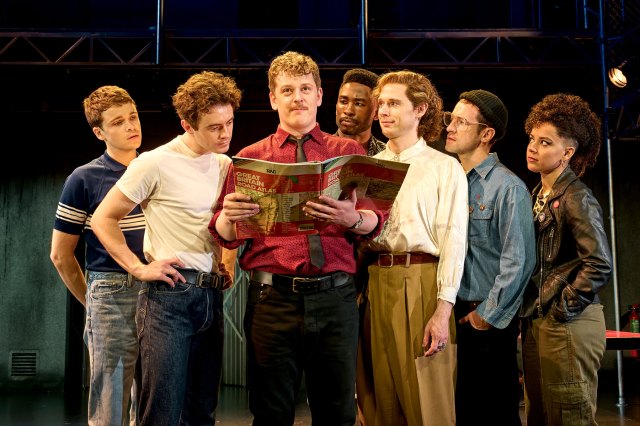
I bet Andy Burnham finds time to go to see Pride. The theme of this new musical is solidarity and community – the capacity of people to overcome prejudice and come together to effect change. It means that this telling of a true (or true-ish) story seems almost impossibly uplifting at a time when the politics of division are in the headlines every day.
In truth, there’s a fair amount of airbrushing about just how much division there was in 1984 when a group calling itself Lesbians and Gays Support the Miners (LGSM) was launched by a gay communist organiser called Mark Ashton (played here by Jhon Lumsden), who decided that as groups equally oppressed by the state, there was a common cause between the gay community fighting for its rights and the striking miners taking on the Coal Board and Mrs Thatcher’s Conservative government. “Perhaps the socio-economic circumstances for a Marxist overthrow have begun,” he announces to a lover expecting to be asked out on a date.
From that quixotic gesture, an unlikely alliance was born, a story first told in the film Pride, released in 2014. The same team – writer Stephen Beresford and director Matthew Warchus – are behind this reincarnation as a musical, supplemented by the considerable musical talents of Christopher Nightingale, Josh Cohen and DJ Walde, who produce a powerful set of songs in different forms.
LGSM have a lot of prejudice to overcome – one of the show’s major strengths is as a reminder of just how ostracised and attacked the gay community was in the 1980s – and find it hard to get the National Union of Miners to accept their campaigning and their donations. Then they accidentally stumble across the South Wales village of Onllwyn, where their efforts are accepted – reluctantly initially and then, as boundaries between the two tight-knit communities melt, with open arms.
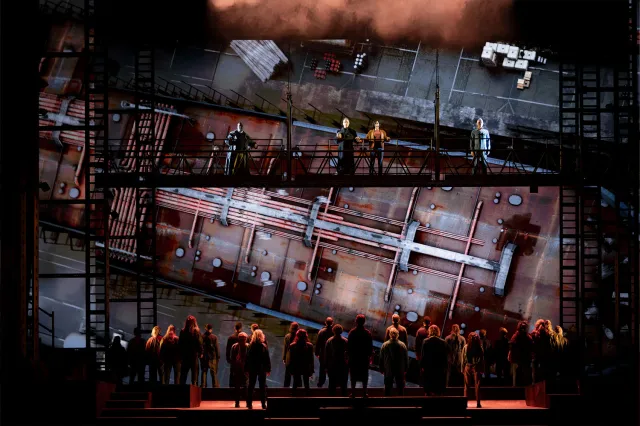
On Bunny Christie’s adaptable set of scaffolding, cleverly lit by Hugh Vanstone to change mood and scene, the musical moves through this story with great verve and good humour, while underlining its key themes. In the song “You Stood By Me”, there is the line “What I thought I knew about you/It vanished when – you stood by me” and as sung by miners’ leader Dai in Matthew Woodyatt’s baritone, it puts a lump in the throat. So does the moment when the ensemble rises to sing the great socialist anthem “Bread and Roses”. The singing throughout, accompanied by an onstage band under the direction of Jo Cichonska, is remarkably fine.
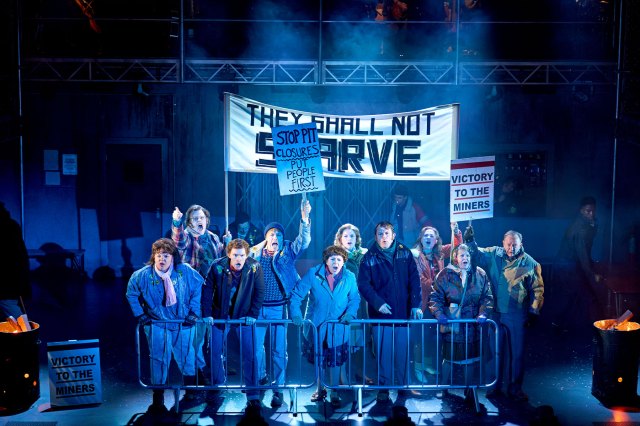
It is extraordinarily difficult not to be entranced by the sheer hopefulness of the story and the flair of the telling in the capable hands of this ensemble. True, the facts – in this co-production between the National Theatre and P&P Productions – have been softened and the rough edges of prejudice and resistance smoothed from the narrative even more than in the film. Here, it is not Martin’s knowledge of harassment laws that wins the miners over, but his friend Jonathan’s exuberant disco dancing turn at the welfare club disco.
But Samuel Barnett’s performance in that scene emphasises the musical’s merits. There is something beyond words about his immersion in disco, a grasping of the moment that accounts for Pride’s appeal. This is even truer of the opening of the second half, where Jonathan, who was one of the first people in Britain diagnosed with AIDS, sings of his intentions (“You Might As Well Live”) in a number that goes from melancholy to all-out razzle-dazzle, with fans, sequins and a glitterball. Barnett is quite extraordinary, catching each nuance of feeling and thought.
The song is in many ways more effective than the later “Light Perpetual”, a hymn to all the men who died, sung with great feeling and sparkling lights that are slowly extinguished. It’s a reaching for emotion that slightly overbalances the second act as the musical seeks to find a happyish ending to a story that is full of sorrow. The miners return to work, the larger community initially rejects the donation raised by “Pits and Perverts”, the concert organised by LGSM and named after a destructive Daily Mail headline. Brave people die or are defeated.
But the euphoria of the show’s conclusion, marking an event that really did change people and perceptions, is impossible to resist. Like Come From Away, a show it much resembles, its evocation of community is both heart-raising and tear-jerking. Its belief that life can be better catches a chord.






source on Google
Featured In This Story
Guide

Related Articles
See all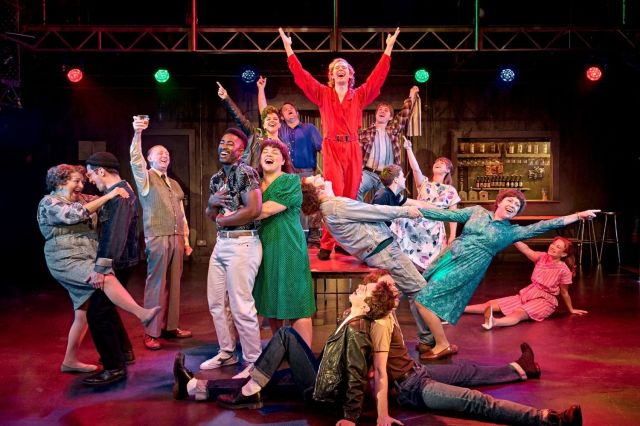
Latest Reviews
See all



Latest Videos
Kimberly Akimbo musical releases UK premiere trailer
The five-time Tony Award-winning musical is currently on stage at Hampstead Theatre