
Game of Thrones: The Mad King review – a titanic display of theatre magic
The world premiere production based on the global hit franchise runs at the Royal Shakespeare Theatre until 5 September
 |
Stratford-upon-Avon
|
|
Stratford-upon-Avon
|
9 August 2026
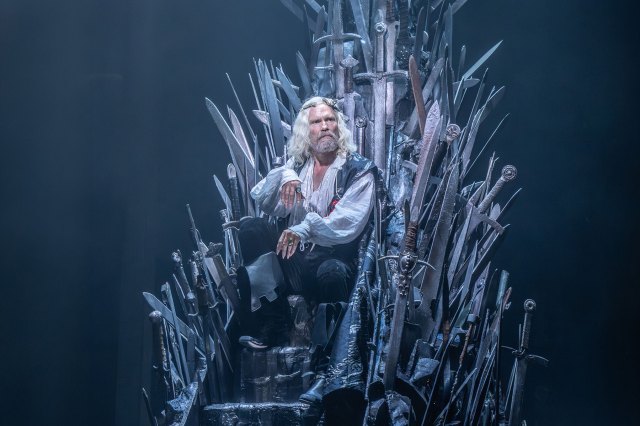
Five years in the making and a decade in the dreaming, Game of Thrones: The Mad King sweeps onto the stage with a rumble of drums and the courage of its convictions. It’s a triumph; a soaring, surging spectacle and a latter-day history play, both serious and popular.
The great achievement of this reimagining of George R R Martin’s universe by writer Duncan Macmillan and director Dominic Cooke is that it ties up plot points from the Song of Ice and Fire franchise in ways likely to satisfy avid fans of the novels and the subsequent TV series but simultaneously creates a narrative clear and engaging enough to entrance the only partially affiliated or the complete newbie.
This prequel is set 15 years before the first Game of Thrones novel at the jousting tournament in Harrenhal, where familiar figures from the houses of Targaryen, Stark, Lannister, Baratheon and Martell assemble, and where events unfold that set into motion an act of rebellion and the overthrow of mad King Aerys II Targaryen.
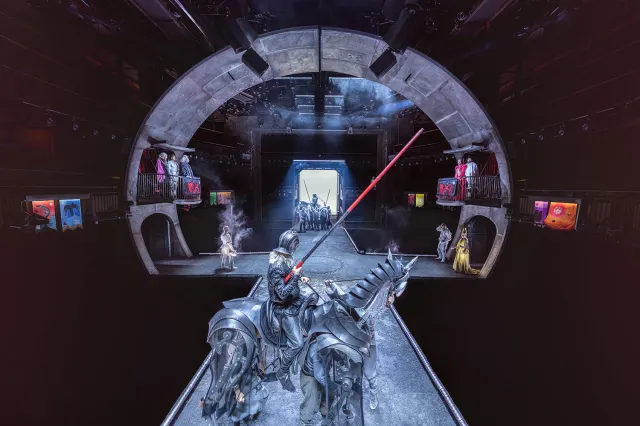
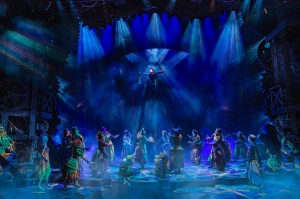
The actual opening is an extraordinary moment of theatre: a procession of rich coloured silks and fluttering banners, with kings and princes riding life-sized armoured horses, heads tossing as they move, a scrappy dog silhouetted barking at the scene. That dog, a manipulated puppet, is the sign of the love and care that has gone into the whole. No detail has been overlooked.
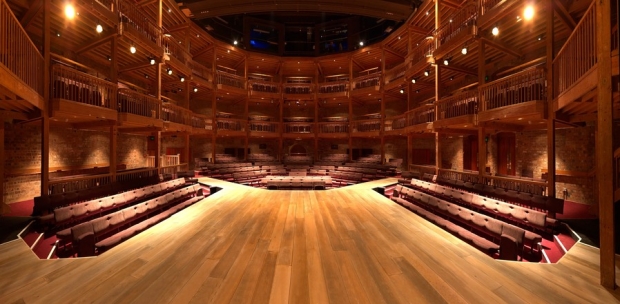
Chloe Lamford’s epic design strips back the space inside the Royal Shakespeare Theatre, building three tiers of seating around a cross of matted earth, with huge, dusky silver panelled doors at each end. Balconies flick down to provide vantage points for dignitaries. At moments, the famous Laughing Tree with its red heart-shaped leaves, appears at the centre.
Across this space, with thunderous inevitability, jousts, battles and tournaments unfold amidst smoke, blackouts and Jon Clark’s fiercely defined light. The puppetry and movement from Nick Barnes (Life of Pi) and Finn Caldwell (War Horse) of Lume and the fight direction from Bethan Clark sensationally stylise the acts of war, so that bodies and beasts are made up both of real actors and carefully sculpted models. Sections of armour, weapons, bodies fly across the ground and air with a terrific sense of impetus and weight.
There are visionary dragons too, red eyes blazing. Not to mention ravens arcing across the smoke with messages. And of course, an iron throne, rising imperiously through the stage, swords which represent acts of fealty pointing skywards as Michael Shaeffer’s crazed king clings to its dangerous surfaces, demanding his pyromancers burn people alive.
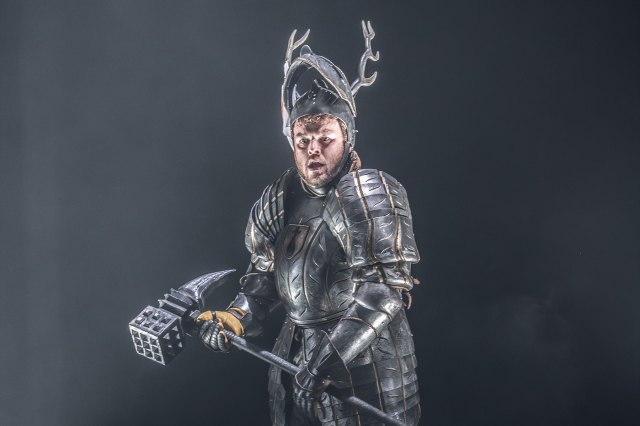
Shaeffer is genuinely terrifying and his first appearance – “Surprise!” he mocks, leeringly – with his hair wild, black hands with monstrous nails waving across his face, is the moment when the skill of Macmillan’s writing becomes obvious. The image is straight out of King Lear, and other scenes recall Hamlet and the History Plays, and the writing is Shakespearean in tone if not in form.
He has to deal with great gobbets of plot. “Tis not revelry that inspires Robert’s drinking but sorrow,” says Eddard Stark (an excellent Michael Abubakar, grounded and warm), before explaining rebel-leader Robert Baratheon’s entire backstory. But he makes time too to round out character and motivation, giving actors room to breathe and themes an opportunity to grow.
Baratheon is one of the beneficiaries of this approach. He remains a rough-hewn hero – “I may not dance around like some fancy bastards, but I can swing a f**king hammer” – but in Macmillan’s telling and Callum Woodhouse’s nuanced performance, he is not the drunken misogynist familiar from the TV series, but a wounded lover, a man whose life is forever changed when Lyanna Stark, played with shining integrity by Harmony Rose-Bremner, vanishes with Rhaegar Targaryen (Noah Ritter) and deprives Robert of his notions of home and honour.
As the action goes on – and it goes on for 225 minutes – Macmillan starts to tease out the themes of what makes a good person and a just society. “For what are we, if not the choices we make?” Lyanna asks, and that becomes an ongoing question as issues of fate, self-determination and the tensions between love and duty begin to peer out. Most importantly, in the second half, the non-stop action abates a little and there is room to touch on the entire notion of epic stories and why we tell them. “Wars aren’t won by those with most cause, but whose story’s best told,” says Eddard, the narrative’s conscience.
Amidst all the clamour, the pomp and circumstance, and the plotting, the humanity of these characters emerges: in the joshing solidarity and banter of the loving Stark family, in the still moment before battle when pregnant women sing of their hopes and fears, in the moment when a child could kill his father and choses not to, and the one where a man could not kill children but choses to do so. Underlining the significance, Tom Gibbons’ sound and Will Stuart’s music are an asset throughout.
Game of Thrones: The Man King isn’t as rich and dense as Shakespeare, though it owes him a clear debt and feels entirely at home in a place devoted to his work. It isn’t Wagner or Greek tragedy either, though their influence is keenly felt. There’s a bit too much fighting and not quite enough insight into the human soul.
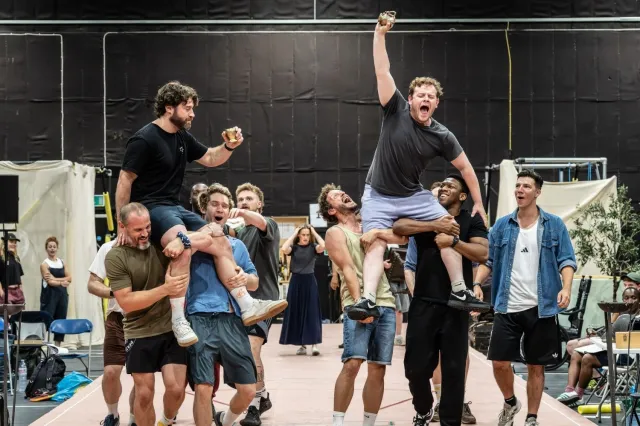
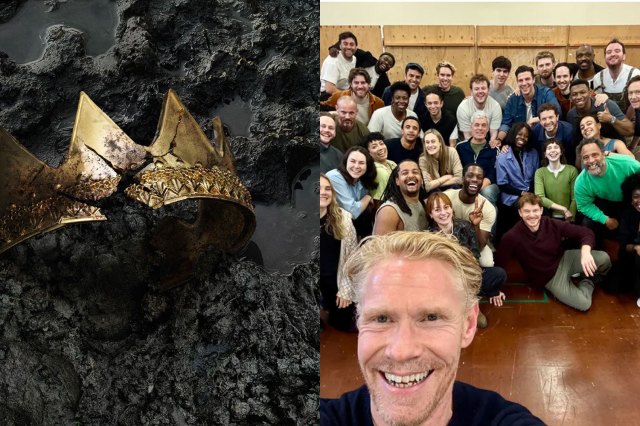
But it is a remarkable achievement, wonderfully directed by Cooke and superbly acted by every member of the 35-strong ensemble. The result is a brilliant exhibition of how theatre can create magic. It’s a clarion call for the power of imagination and skill in telling stories for the ages, making a room filled with others into an entire world.





source on Google
Related Articles
See all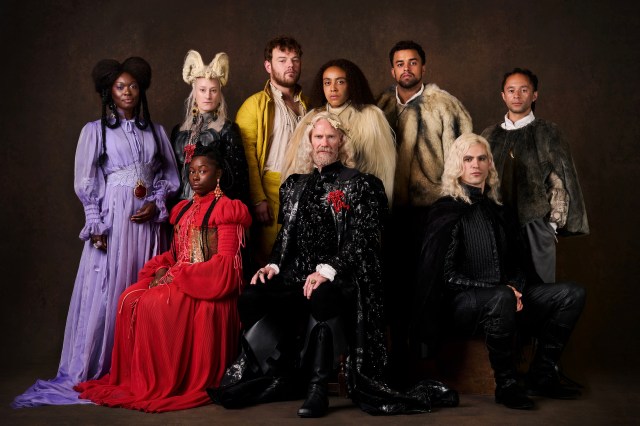

Related City Guide
Latest Reviews
See all

Latest Videos
Rory Kinnear and Natalia Osipova on the meaning of a good life in James Graham’s The Standard of Living
The world premiere play celebrated its official opening last night!