
Frank Wildhorn on how manga musicals could be the future of theatre
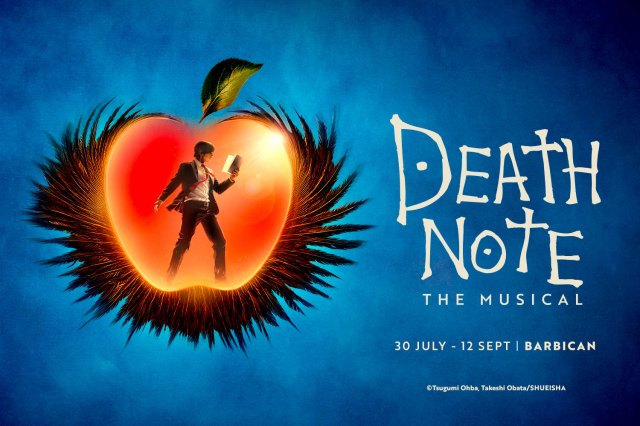
Death Note is coming back to London!
 |
London
|
|
London
|
27 July 2026
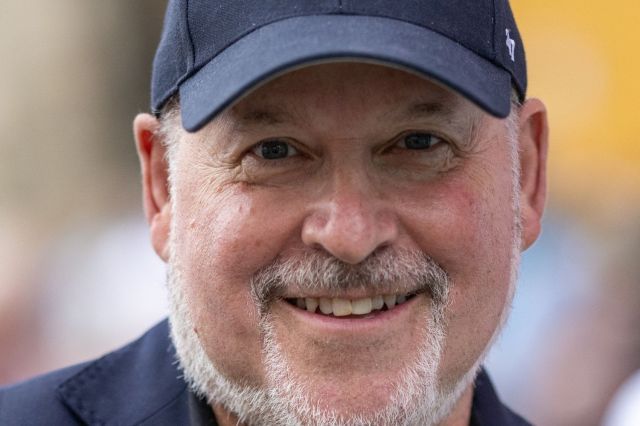
“When I first came to Broadway, I was the pop guy. That wasn’t a compliment,” starts Frank Wildhorn.
He recalls that in the 1990s, success in musical theatre seemed to require being Stephen Sondheim, or at least Sondheim-esque.
“But that was okay. I was just trying to be true to who I was,” he continues. Throughout our conversation, Wildhorn reels off a multitude of music. His favourites are the Beatles. But everything starts with classical composers Rachmaninoff, alongside Tchaikovsky, Stravinsky, Prokofiev, before moving through film giants John Barry and John Williams, Motown legends Stevie Wonder and Marvin Gaye, rock bands like the Eagles and the Doobie Brothers, and jazz greats Oscar Peterson and Thelonious Monk.
This eclectic mix of tastes is a melting pot for Wildhorn and has proven wildly successful. Since 1996, no other composer has had more original musicals produced on Broadway than him. At the same time, in 1999, 2000 and 2001, he had three – Civil War, The Scarlet Pimpernel, and Jekyll and Hyde – running concurrently. No easy feat.
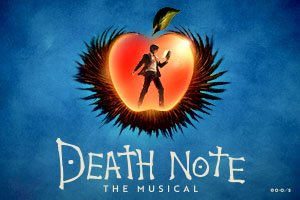
But even so, nothing could have prepared the music fanatic for what would happen when he composed the music for a stage adaptation of one of the biggest mangas of all time, Death Note. Big rock tunes help tell the story of a frustrated law student, Light, hell-bent on serving justice after discovering a supernatural notebook dropped into the human world by a Shinigami. With it, he can seal their fate within the minute.
“Power corrupts, and he becomes kind of a godlike figure,” Wildhorn explains that Light becomes known as Kira, and the police hire this kind of Sherlock Holmes of the future named L, and his job is to track down Light.”
What follows is a battle of good versus evil: “It’s power and corruption. It’s family, it’s the future. It’s finding your voice and how it’s gonna be told.”
These larger-than-life characters all derive from legends and myths. “My job is to find the musical vocabulary for the characters,” Wildhorn says, inadvertently drawn to morally ambiguous duos like Jekyll and Hyde, Bonnie and Clyde, and Light and L. “I’m constantly exploring the Gemini twins in all of my shows,” he adds, saying that duality is fun to write. “There is no black and white, it’s shades of grey, and we battle with that in our own lives every day. We are both Jekyll and Hyde; it just depends on how much of Hyde we want to let out.”
Nowadays, it appears that wealth outweighs accountability, so Light’s anguish and despair are recognisable. “He’s struggling with wanting to fix all this pretty quickly, you know? And he’s not wrong. He’s wrong in his method. He’s wrong in how he’s carrying out justice. But he’s not wrong philosophically by saying this justice system is so unfair, and let me do something about it.”
Death Note has been seen across the world, and will receive its full European production premiere at the Barbican this summer. The music is one part of the show that has required no translations between productions. “My life has a few philosophies, and one of them is music, like love, knows no borders. I’ve lived by that.”
“My career has been so eclectic that people who like different styles of music can hopefully find something in my music that they latch onto, and hopefully it inspires them, because there are so many greats that inspire me.”
Wildhorn insists he will forever be studying music and storytelling, citing his long-term collaborators Don Black and Leslie Bricusse as his favourite teachers. In honour of Bricusse, it has become even more of a desire for Jekyll and Hyde to have its long-awaited West End premiere.
But before that can happen, something monumental will take place. Wildhorn says that this production of Death Note marks only “the second time in history that London has staged a show with an entirely Asian cast.” The first time it happened was with Wildhorn’s second manga musical, Your Lie in April, a couple of years ago. “I really do feel that if a family with a young Asian child goes to the show and the child sees themselves in the character, they could be inspired to take voice lessons or perform. That’s joy.”
For many, Death Note has acted as an introduction to musical theatre – a cultural phenomenon presented through a new medium.
“I think ‘gateway’ is a good word, and let’s open the gate and bring in as many people as we can.”
It is helped by an exciting young cast of musical theatre favourites, as well as a creative team including “the hottest choreographer in the world” Fabian Aloise and costumes that promise to take fashion to a new dimension.
After 12 years of development and more than 70 songs, Death Note‘s journey to a fully staged London production is finally becoming reality. Next stop? Well, Wildhorn hopes to add another Broadway credit to his name.




source on Google
Featured In This Story
Related Articles
See all
Latest Reviews
See all




Latest Videos

Into the Woods: Children will listen – West End cast and creatives regale us their theatrical childhood stories
Careful the things you say…