
Death Note: The Musical review – a triumphant, fantastical manga thriller
The fully-staged UK premiere runs at the Barbican Theatre until 12 September
 |
London
|
|
London
|
12 August 2026
London’s musical theatre summer just got a whole lot more exciting. Death Note, first seen in Tokyo in 2015, comes swaggering into the capital for its English-language premiere (not counting a West End concert version three years ago) like some gleaming, glittering fantastical beast. This is a very big show in every sense: ambition, emotions, scale, spectacle, cast… and sheer entertainment value.
Inspired by the wildly popular manga series by Tsugumi Ohba and Takeshi Obata, Ivan Menchell’s book is such a deft, propulsive piece of storytelling that you don’t even need to be familiar with the source material to work out what’s going on. This Faustian tale of Light (Xander Pang), a Tokyo teenager who, through meddling by a couple of bored Shinigami (death spirits in Japanese folklore), receives a book whereby he can cause a person’s demise simply by writing their name in it, and how his newfound power corrupts him, is put over with commendable clarity and theatrical flair.
In the cold light of day, it’s utterly preposterous of course, but such is the world-building in Stephen Whitson’s epically stylish production and the consistency of tone in Menchell’s writing that, once you buy into the bombastic madness, this really is a terrific time in the theatre. It helps that Frank Wildhorn’s boppy, catchy music, which sometimes nods delicately to the show’s Japanese setting but mostly sounds like a James Bond soundtrack if it was written by ABBA (and if that idea doesn’t appeal to you, I doubt we could be friends) is so irresistible. A plethora of good tunes is married to incisive lyrics by Jack Murphy that know exactly how much tongue needs to be left in cheek.
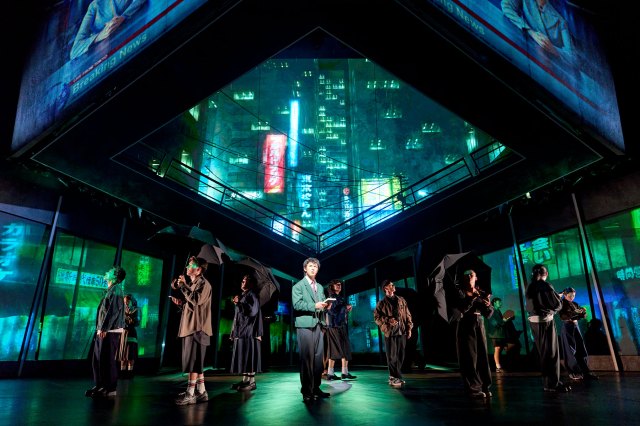
Death Note doesn’t look like any other musical we’ve seen, at least not in London. The slickly moving set pieces (designer: Jon Bausor) which include revolves, whole rooms sliding into view, and a gigantic encircling frame descending from above for the gods to observe the flailing mortals below, in tandem with Akhila Krishnan’s video design is one of the most strikingly successful examples of mixing up physical and virtual scenery I’ve yet encountered.
Jen Schriever’s lighting sends shards and strips of pulsing neon brightness through the atmospheric gloom, and bathes the Shinigami in an ethereal glow then opens out into dazzling colour for the concert sections for popstar Misa (Stephanie Zaharis, in a smashing UK stage debut), the nearest this unconventional tuner has to a love interest.
The overall effect is like watching the movie Blade Runner spliced together with a rock arena spectacular, and the sense of a towering, oppressive city of skyscrapers hemming its inhabitants in, is powerfully evoked. Some of the stage pictures (such as hordes of ensemble wandering inexorably through the night while Grace Mouat’s kind but remote white-clad goddess Rem contemplates the potency of human feeling in the anthemic “When Love Comes”) would not look out of place in an opera house.
Multi-award-winning choreographer Fabian Aloise creates movement that is dynamic, sometimes surprising, but very much an organic part of the strange, unsettlingly beautiful world the story unfolds in. Peter Hylenski’s sound design has an admirable clarity, although the volume levels could afford to be upped at a few key moments.
Pang is a superb find, charting Light’s descent from righteous youth to aggression and arrogance with real skill. He is a fine singer, although his vocal for the score’s best number, the soaring “Hurricane”, where Light realises exactly what he’s capable of, enthrallingly staged by Aloise, is a little underpowered. As his nemesis, the gifted youthful detective L, Colin Ryan, looking like Edward Scissorhands without the knife-work, provides a sensitive, engrossing study in quirky otherness, and fields a glorious voice.
West End favourite Mouat demonstrates an impressive extension to her range here, playing against type and delivering a mature, gravitas-laden performance as the icy, cautious deity drawn unwillingly into the mess of human emotions. Broadway’s Telly Leung is fabulous as gleeful, caustic Ryuk, the demonic Shinigami with a weakness for apples and making things as embarrassing as possible for Light.
The few moments when the show slides into camp tend to involve Leung but they provide a welcome contrast to everyone else playing the script as though they’re in a Shakespearean tragedy. If that can get a tad relentless, it at least means we are never in any doubt as to how much is at stake, and it’s impossible not to become invested in the story, daft though it is.
Ultimately, the worst thing about Death Note: The Musical is the fact that it’s only at the Barbican for a mere five weeks. It’s hard not to imagine this having a highly profitable further life; the production values alone outstrip most current West End musicals, and the haunting, majestic pop score is surely enough to inspire repeat visits from fans. This is a total blast.






source on Google
Featured In This Story
Guide

Related Articles
See all

Latest Reviews
See all



Latest Videos
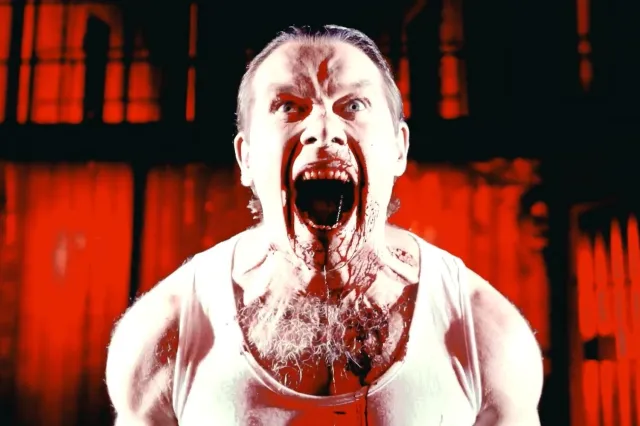
The Silence of the Lambs stage play releases new trailer
The world premiere is embarking on a tour