
The Children with Meera Syal at Lyric Hammersmith Theatre – review
Rachel O’Riordan’s tenth anniversary production of Lucy Kirkwood’s play runs until 3 October
 |
London
|
14 September 2026
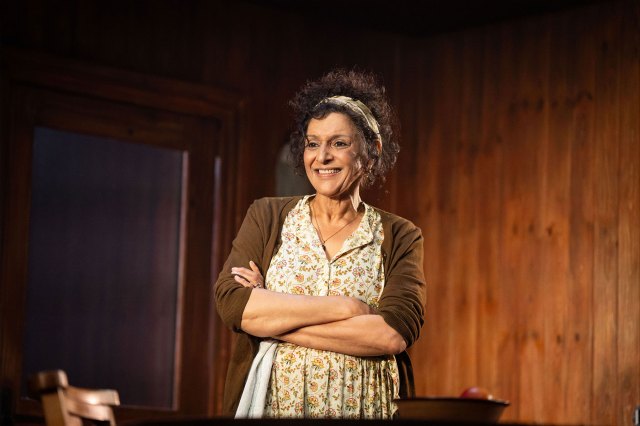
Lucy Kirkwood’s The Children, directed by Rachel O’Riordan, is a sharply observed and unexpectedly playful exploration of nuclear disaster, environmental responsibility, ageing and the choices we leave behind for the next generation. What initially appears to be a quiet reunion between old friends at a seaside cottage gradually becomes something far more unsettling and ultimately deeply moving.
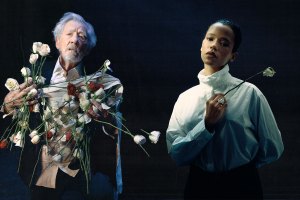
The production immediately establishes its world with a captivating opening. A futuristic-looking set bathed in blue light, the suggestion of nuclear catastrophe, and Kerry Fox’s unexpected visitor Rose entering with blood across her face and chest, stark against her white shirt, instantly capture the audience’s attention. The era is deliberately difficult to place, but there is an unmistakable sense of impending, or perhaps already occurring, apocalypse.
As Rose and retired nuclear physicist Hazel (Meera Syal, back on the Lyric Hammersmith stage) catch up on Hazel’s children and grandchildren, the evidence of disaster is woven subtly into everyday life. Tap water is avoided, bottled water carefully rationed, tea pre-boiled rather than freshly made, and even the lifelong milk in the carton becomes a reminder that this is no longer an ordinary world.
Kirkwood’s script is particularly effective at revealing the scale of the disaster through mundane details. Hazel’s recollection of “seawater boiling milk” is both shocking and haunting, while the mention of a farm sitting inside the exclusion zone gives a tangible sense of how environmental catastrophe has reshaped their lives. Information emerges naturally through conversation, allowing the audience to piece together what has happened without heavy exposition.
The performances are convincing and grounded, making the relationships feel lived-in rather than theatrical. Hazel’s husband Robin (Declan Conlon) is particularly enjoyable: his occasional snappiness towards life, his children and his wife sits intriguingly alongside his warmth towards Rose, creating a character who is both frustrating and deeply human.
The cast also handle the tonal shifts extremely well. The Children deals with radiation, environmental destruction, mortality and responsibility, but it is not relentlessly bleak. Moments of humour puncture the tension without undermining the seriousness of the subject. Instead, they make the characters recognisable, allowing the more devastating moments to land with greater force.
O’Riordan’s direction keeps the production fluid, even though much of the action centres on conversation. The interactions between the characters, with changes in tone, tension and humour, maintain the pace. The production also trusts its audience, allowing small details and fragments of conversation to build the bigger picture. This makes the world unsettling because it feels close enough to our own reality to be uncomfortable.
And in 2026, that discomfort feels particularly relevant. After the heat wave we have recently suffered, with summers seemingly getting hotter and hotter, The Children feels like a reminder that environmental responsibility is about far more than the threat of nuclear disaster. It asks us to think about the world we are leaving behind and what responsibility we have for protecting it.
Gary McCann’s set and Anna Watson’s lighting are instrumental in creating this atmosphere, while the production’s most effective visual and audio choices come towards the conclusion. Sea waves, soft violin and church bells “heard beneath the sea” create an incredibly moving final image (sound design by Holly Khan). Haunting without becoming overly sentimental, it gives the ending a sense of both loss and possibility.
At its heart, The Children is a warning about environmental consequences, responsibility and what we leave behind. The repeated idea of “leave the place cleaner than you find it” becomes a deceptively simple but powerful statement of the play’s wider message.
The production succeeds because it never lectures its audience. Instead, it entertains, unsettles and gradually invites reflection. What I expected to be a nice, sweet Friday-night post-work watch turned out to be funny, thought-provoking, unsettling and ultimately deeply moving. Highly recommended.






source on Google
Featured In This Story

Related Articles
See all

Latest Reviews
See all



Latest Videos

The cast of The Haunting of Hill House on jump scares, spooky stories and Halloween costumes
It’s time to go trick or treating at Hill House…