
The Pianist stage adaptation at the Park Theatre – review
Thom Southerland’s world premiere production runs until 28 November
 |
London
|
23 October 2026
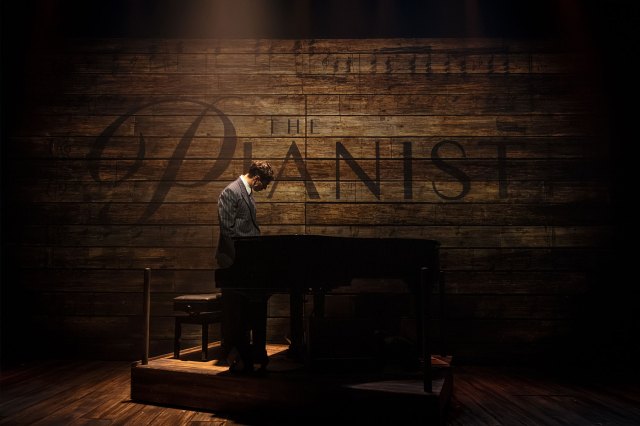
Wladyslaw Szpilman’s epic memoir of suffering, survival and musicianship was the basis for the 2002 Oscar and BAFTA-winning movie by Roman Polanski and starring Adrien Brody. Now, courtesy of adapter and director Thom Southerland, The Pianist is on stage, billed as a musical although really it’s a combination of a play where music is an essential component, and an edited retelling of the book, narrated by Daniel Krikler as Szpilman.
Quibbles over genre aside, Southerland’s take on The Pianist, utilising a fine company of actor-musicians, is effective and affecting, even if it excises some of the more harrowing elements of Szpilman’s text and leans too far into telling rather than showing. Composer and pianist Wladyslaw managed, extraordinarily, to endure a life-in-hiding in Nazi-occupied Warsaw during the Second World War while other Polish Jews were shipped out to the extermination camps. It’s remarkable, inspirational even, but the recitation of extended chunks of narrative sometimes feels untheatrical and blunts the force of this astonishing but frequently upsetting true story.
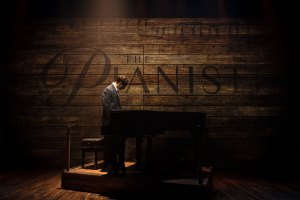
When the production really hits its dramatic stride, usually during grimmer moments such as when a child carrying supplies into the ghetto is bludgeoned by a Nazi soldier or Wladyslaw is caught smuggling ammunition to the Polish resistance, it has a palpable power and danger. There’s a particularly striking sequence where the Nazis are on the rampage sniffing out hiding Jews and Wladyslaw thinks his time has come: alongside forbidding sound effects, the music reaching a discordant, almost unbearable crescendo as Krikler, panic-stricken atop the omnipresent grand piano, prepares to hang himself rather than be taken alive. Sensationalist? Sure, but it’s terrifyingly potent, theatrical storytelling.
Most of the music is Szpilman’s own, arranged and orchestrated exquisitely by Simon Lee and stirringly played by the ensemble cast. Its lovely, fluid melodiousness, in tandem with the evocative design work of Andrzej Goulding (set and video) and Robbie Butler (lighting) initially conjures up a vivid, entrancing picture of inter-war Warsaw (“the Paris of the North”) before providing an ironic counterpoint when things turn really bleak.
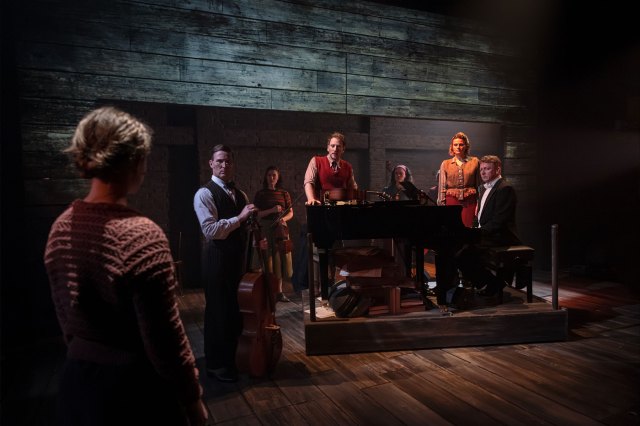
The singing voices are wonderful but it’s the acting that especially impresses, all the more so when you consider that these performers are also their own excellent orchestra. Rosalind Ford invests Szpilman’s mother with a heart-wrenching warmth and pragmatism, and Nitai Levi unflinchingly suggests his brother’s all-too-understandable fury. Oliver Grant draws a compelling portrait of the conflicted German Captain Hosenfeld whose innate humanity and appreciation of Wladyslaw’s artistry is at odds with the evil Nazi agenda. Other characters are more spectrally drawn but are nicely played.
Holding it all together in a performance of subtle intensity and brooding melancholy is Krikler as Szpilman himself. With his nervy, restless body language and steady, haunted stare, he conveys not only the self-absorption of the artist but also the guilt of the survivor, and the sheer bewilderment of a man who is having trouble believing the sheer depth of the horrors surrounding him. It’s a slightly curious leading role, essential to the story yet simultaneously removed from it, passive almost, as he observes and remembers, but Krikler manages it superbly. Pianist Malcolm Forbes-Peckham serves, brilliantly, as a sort-of alter ego, taking to the keyboard whenever Wladyslaw plays.
Southerland’s staging weaves contrasting moods together with skill: a whirling, breathless energy subsides into moments of quiet stillness and desolation that trouble and haunt. Gareth Tucker’s sound design is playful and unsettling, creating an aural landscape where beauty and shock can co-exist.
The Pianist only intermittently achieves its full emotional potential, possibly due to a central character who keeps himself, and us, slightly at arms length throughout. Crucially though, it never trivialises a particularly awful time in fairly recent history, while celebrating the resilience of humanity and the transcendence of art.






source on Google
Guide

Related Articles
See all


Latest Reviews
See all

Latest Videos

Disney’s High School Musical opens in London and the stars take a trip down memory lane
Bopping to the top at Troubadour Wembley Park Theatre!