
Sting at the Young Vic – review
Sophie Swithinbank’s world premiere play, directed by Nancy Medina, runs until 18 July
 |
London
|
|
London
|
24 June 2026
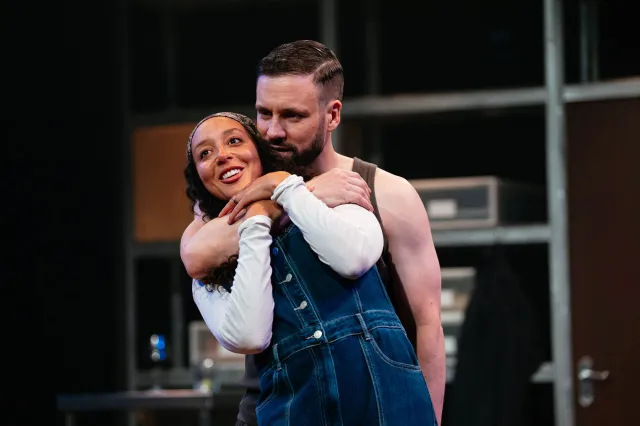
There’s a twist of sorts partway through Sophie Swithinbank’s three-hander Sting that elicited a collective inhale and exhale and moved the person sitting behind me to mutter “F**k me”. The revelation in question is shocking, yet not at all surprising. It’s painfully and depressingly predictable that those with the power to stop crime and bring wrongdoers to justice are all too often the perpetrators of abuse who exploit their professional status to keep it going.
Ash (Adelle Leonce) turns up for her first day as an archival assistant for Lily (Phoebe Ladenburg), who is writing a book about the way in which the so-called witches who were executed in the 17th century were victim-blamed. The mercurial Ash, who isn’t at all what Lily was expecting and doesn’t know how to pronounce “archive”, experiences a miscarriage on her first day (she hadn’t realised she was pregnant). Her partner Dom (Nick Blood) seems caring, but it quickly becomes apparent that the relationship is deeply dysfunctional.
Staged in traverse in the Young Vic’s Maria Theatre, Nancy Medina’s production is carefully and discomfortingly choreographed, in which Rachael Nanyonjo’s movement direction plays a crucial role. There are images of Ash dancing manically as if detached from her own body, and her violent sexual encounters with Dom are too painful to watch full on.
Ash never would have got the job because she, of course, would have been interviewed and her credentials checked, and it could be argued that Swithinbank perhaps hasn’t done her research as to what it’s actually like to work in an archive (I have visited many and worked in a couple). These days, you need a specialist Master’s degree and a ton of voluntary experience to even be considered for a minimum wage job, and competition will be fierce.
The archive in which Lily and Ash are working seems to be located in some kind of historic house (the setup is never specified) with no security. Also, an advance on an academic book and budget for a research assistant in the humanities? It’s more fantastical than the piece’s supernatural thread.
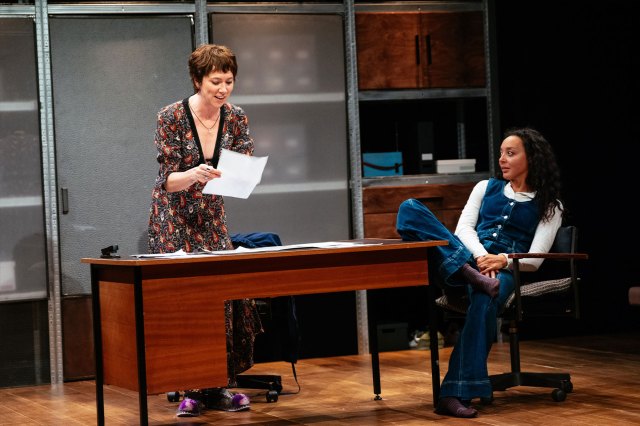
We learn that Lily, who seems to be a bit of a loner (sensitively conveyed by Ladenburg), was raised in a cult, and there are hints of an attraction to Ash (which appear to be at least partially reciprocated). However, for much of the second half, she is relegated to being the voice of reason, trying to do the right thing, but is manipulated and gaslighted by the authorities.
It’s also never clear whether she has been commissioned by the police to apply her historical expertise to a trio of local femicides or if she’s taken it upon herself (I’d lean towards the latter). Leonce’s performance as Ash vividly captures the character’s volatility and vulnerability, and Blood is all too credibly thuggish.
As the play hurtles towards its conclusion in the fashion of a revenge thriller (there’s even a bunny, who thankfully makes it out alive), it would benefit from trimming towards the end for greater cogency. Swithinbank is clearly talented, and there’s real richness, viscerality and compassion in her ideas and writing style, but greater attention to detail is needed in order to make the piece resonate without distraction.






source on Google
Featured In This Story
Related Articles
See all

Latest Reviews
See all



Latest Videos

Michael Ball performs “Pure Imagination” from Charlie and the Chocolate Factory
What you’ll see will defy explanation!