
Speculations at Marylebone Theatre – review
The world premiere of Torben Bett’s political thriller, directed by Trevor Nunn, runs until 3 January
 |
London
|
5 November 2026
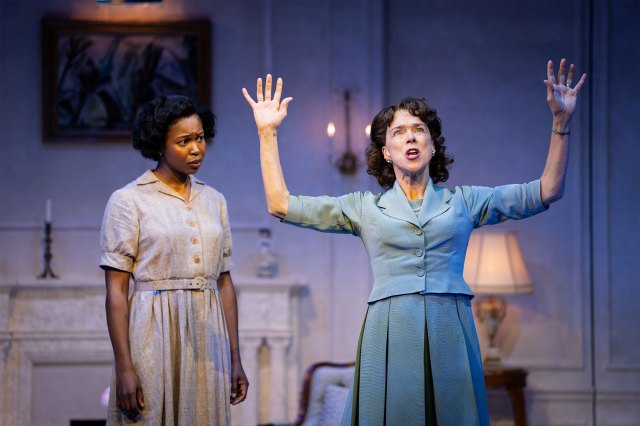
The protagonist of Torben Betts’s laborious journalism-themed new play is Dorothy Kilgallen, a New York columnist who was also well-known for her appearances on the panel show What’s My Line?. Kilgallen, however, was most proud of her work as an investigative journalist and, unsatisfied by the official explanations of the deaths of Marilyn Monroe and John F Kennedy (suicide/an accidental overdose and at the hands of lone wolf Lee Harvey Oswald respectively), developed her own theories about what really happened to these two cultural icons in two unpublished manuscripts.
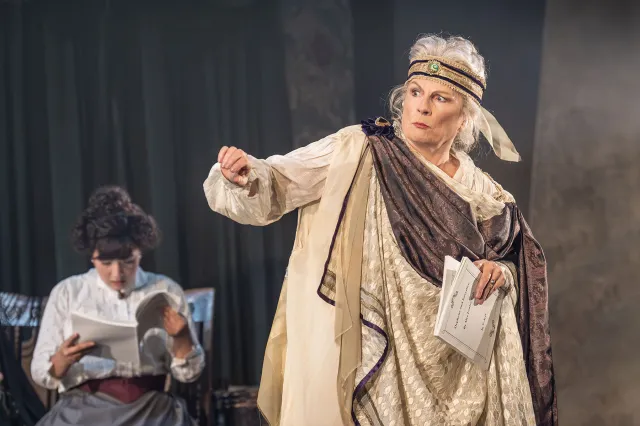
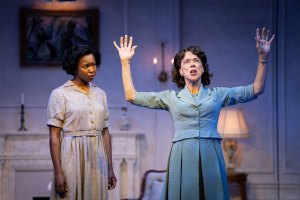
Betts’s set-up is that Kilgallen (Janie Dee) has been receiving threatening phone calls and implausibly confides everything to the fictional Flo (Gloria Obianyo), a young Black woman from Brooklyn and Kilgallen’s 11-year-old son’s new babysitter. Flo is also an aspiring journalist and believes that JFK’s charismatic brother Robert is America’s great hope. Through a triptych of two-handers, we witness Monroe’s encounter with Flo’s idol on the last night of her life in 1962, and a heart-to-heart between Lee Harvey Oswald (Joseph Potter) and New Orleans mafia boss Carlos Marcello (Ferdy Roberts) the following year as rendered by Kilgallen’s research and a bit of imagination to fill in the gaps.
Betts‘s writing and Trevor Nunn’s production both fail to grip and are hampered by a stilted talkiness. Designer Lee Newby provides an elegant drawing room/study that rotates to transform into Monroe’s bedroom and Marcello’s bar; it’s clever at first but quickly becomes a case of “here we go again” when each segment ends on a flat note rather than any kind of cliffhanger.
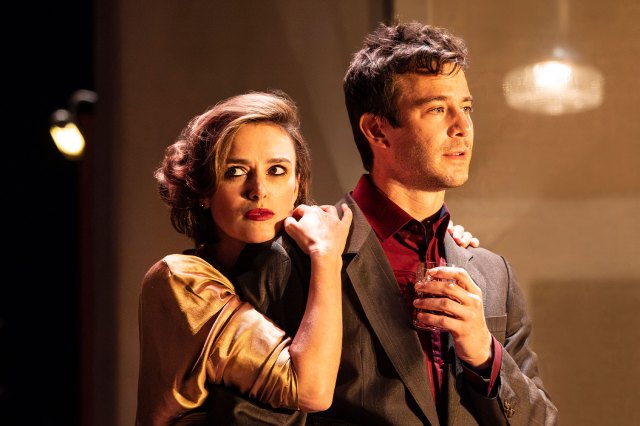
The scene between Monroe (Natalie Dunne) and Kennedy (Jolyon Coy) trudge through the same territory as the dismal Who Killed Marilyn? without quite as much prurience. Dunne has a particularly thankless task. At this stage of her life, she is seeking independence from the men who controlled her, while still longing for love and a family, but she never feels like a real person and all it does is beg the question of why she can’t be left to rest in peace.
Dressed in an elegant aqua two-piece that matches the furniture and her typewriter, Dee displays authority as the brittle doyenne of journalism; she enjoys being contradicted but would rather not be pushed too far or have it suggested that she has got carried away. Receiving a baptism of fire into the world of investigative reportage, Obianyo shows that Flo’s inquisitiveness would be a real asset in journalism, but the character only really functions as a receptacle for Kilgallen’s postulations.
Through Kilgallen as a mouthpiece, Betts concludes that the public is given palatable versions of the truth because anything more complicated would confuse them; men who “arrange” things all too often get away with it, and celebrity has a grubby side. Kilgallen herself was found dead at the age of 52 in mysterious circumstances (it’s hinted that the unnamed man she was seeing had a hand in it). Unfortunately, the speculations raised by this piece aren’t enough to make for compelling drama.






source on Google
Featured In This Story
Related Articles
See all


Latest Reviews
See all



Latest Videos
Little Dancer musical in the West End – first listen to Julian Ovenden and Laura Pitt-Pulford
Performances begin at Theatre Royal Haymarket in February