
The Smile of Her at Marylebone Theatre – review
Written and performed by Christine Lahti, the autobiographical play runs until 29 August
 |
London
|
|
London
|
17 July 2026
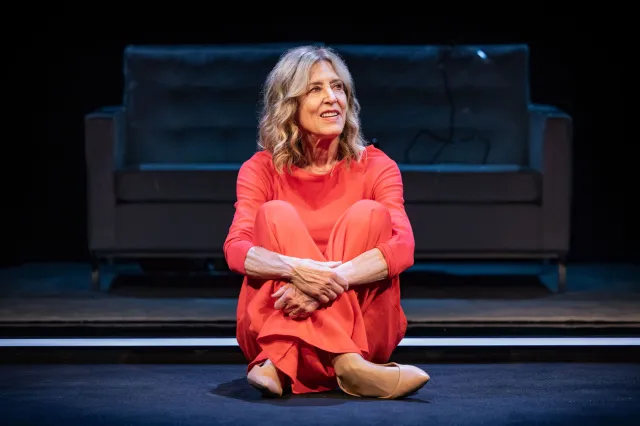
A few minutes into her autobiographical show The Smile of Her, actor Christine Lahti shares a childhood family photo: her surgeon father, glamorous mother, and their six neat-as-a-pin children beam down at the audience, the image of 1950s domestic perfection.
But the bows and shiny teeth belie a family in thrall to the era’s raging patriarchy – a system which, in this poignant play, unleashes a catalogue of trauma on the family, and dogs Lahti through much of her 40-year career.
Unfolding broadly chronologically, we begin in early childhood. Lahti’s father is repressed (“Never felt better in my life” is the undeviating response when asked how he is) and repressive: having feelings, otherwise known as “making a scene”, is forbidden. He also has impossibly high standards and is emotionally abusive to Lahti’s mother, withholding money or kicking her out of the car if she is “bad”. His wife’s own internalised misogyny trickles down to a young Lahti through problematic, depressingly enduring lessons: smile, make yourself small, boys push you in the playground (or in Lahti’s case, give you second-degree burns) because they like you.
Guided ably by director Mêlisa Annis, the adroit Lahti switches between playing her parents, siblings and younger self, although the latter is at times performed by the confident Jesamine-Bleu Gibbs, one of two young actors sharing the role alongside Isabella Ford. It’s an affecting choice, the weight of Lahti’s experiences feeling all the heavier on visibly young shoulders. It also allows for moments of tenderness and healing, as an adult Lahti faces her inner child.
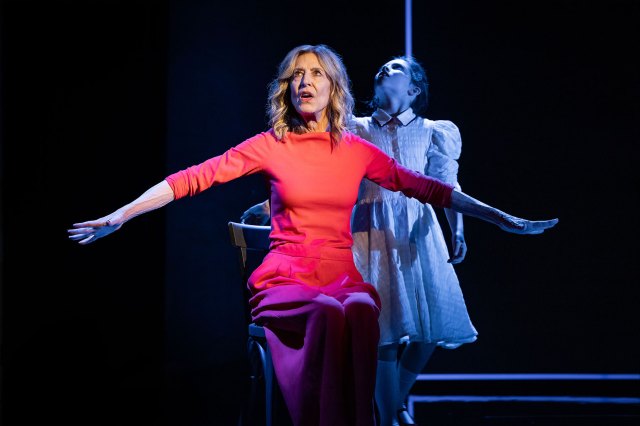
As she moves through college and her early career, unpicking the insidious lessons of her youth, battling show business’s misogyny, and railing against her mother’s anti-feminist views, Lahti’s script also gives us welcome moments of wit, which she delivers with a glorious potty mouth and seemingly instinctive comic timing: “I’ve never seen so many non-smiling women in one room in my life”, she deadpans, recalling her first encounter with the women’s lib movement.
Sarah Beaton’s deceptively simple set allows for intimacy and expansiveness – a plastic-wrapped sofa depicts the Lahtis’ formal living room but also the car her mother is ejected from and Hollywood’s casting couch. Coloured strip lighting plunges us into different eras of Lahti’s life, while the back wall hosts pictures and videos: a flurry of street signs whizzes by as a reeling Lahti stumbles home after being propositioned at an audition. Footage from her career though, such as her Golden Globes win, adds less to the play’s discussions and flirts with self-indulgence.
Indeed, walking that line is the show’s biggest challenge. Sharing personal trauma is a brave and exposing act; at times, it feels we’re witnessing a theatrical catharsis, as Lahti fights through tears to recount the tragic experiences of two of her sisters, and the horrifying effects of the patriarchy on one of her brothers. But at other times, the play’s focus feels a shade too introspective. And while many will be able to find the universal in the personal, some may struggle to see beyond the family’s pain to the broader issues at hand.






source on Google
Featured In This Story

Related Articles
See all


Latest Reviews
See all







Latest Videos
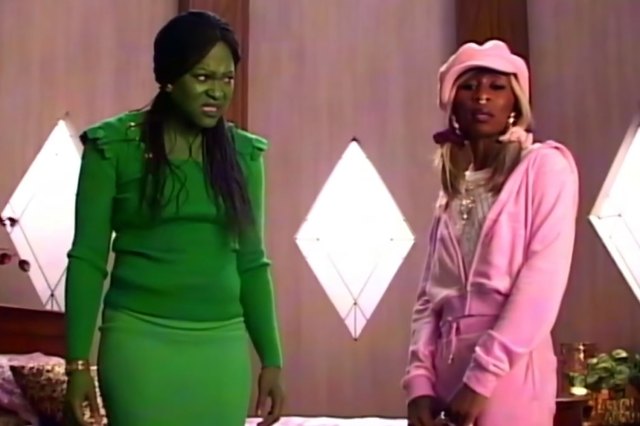
SNL UK and Cynthia Erivo parody Wicked with Nollywood sketch
The video was broadcast last night