
Trainspotting The Musical review – signal failure
Irvine Welsh and Stephen McGuinness’ world premiere musical adaptation runs at Theatre Royal Haymarket until 5 September ahead of a UK tour
 |
London
|
|
London
|
23 July 2026
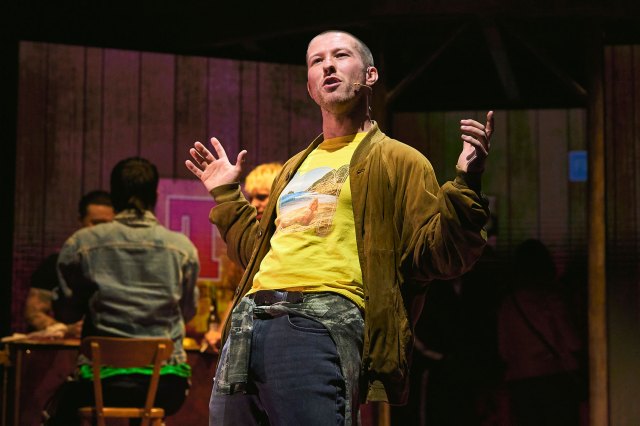
Cringe and boredom in one misconceived package that’s only shocking in all the wrong ways. Welcome to Trainspotting The Musical, which looks about as at home in the gilt and plush surroundings of its current Theatre Royal Haymarket home as a vegan in a steak house.
If Irvine Welsh’s seminal 1990s phantasmagoria of addiction, degradation and despair has to be set to music, maybe the operatic genre would best suit that wild, non-linear tapestry of obscene poetry, adrenaline and misery. What it doesn’t need to be is an incoherent musical that achieves the dubious distinction of being simultaneously distasteful and deeply tedious.
Caroline Jay Ranger’s version places chunks of vivid original text alongside songs by Welsh and Stephen McGuinness (aka dance music producer Stevie Mac) that evoke the ‘90s but are filtered through a sound design by Rory Madden that’s apparently set to a low enough level that won’t disturb the neighbours. In another own goal, the production includes songs connected with the acclaimed 1996 Danny Boyle movie (Lou Reed’s “Perfect Day”) or the period of the setting (Tears For Fears’ “Mad World”) that only serve to point up how inadequate the newly created songs are. Equally bizarrely, Heaven 17’s sinister banger “Temptation” is used as the finale music, in an unfortunate case of “here’s what you could have won” hubris.
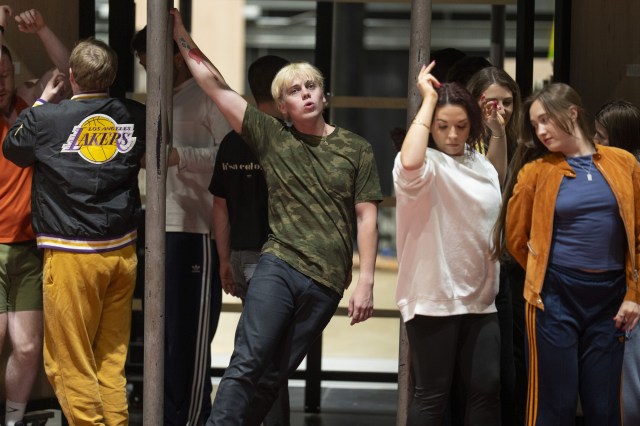
Anyway, what we did win is an unimaginatively staged farrago that maroons a talented acting company on an island of zero dramatic impact and ill-conceived visuals, where the most striking moment (Lewis Kidd’s drug-addled Renton, swimming joyously and free) is borrowed from the film. There’s lots of video used, none of it inspiring. Ranger shuffles her cast aimlessly around a static metallic unit set, as though staging a lacklustre Rent revival where she’s been told to remove any sense of urgency.
The heroin-induced line-dancing fever dream number needs to be experienced to be believed, and while one doesn’t expect a story of such denudation to be pretty to look at, it’s surely not unreasonable to expect to be able to actually see it. This is one of the visually darkest shows I’ve ever watched, with key moments unfolding in such gloom that only aficionados of the original will know what’s happening.
One of the musical’s advertising taglines is that “this show will transport you back to the ’90s”, but there’s nothing here that suggests why we’d want to return to that decade. The attitude to women is horrible, but so are the female roles in this show (having three of your underserved but terrific performers disporting to Republica’s “Drop Dead Gorgeous” is more embarrassing than empowering). That may track historically, but it makes for uncomfortable viewing.
The men have marginally more agency, but are written with such little detail that it’s impossible to become invested. When Renton bestows half of his haul of stolen money to Kieran Andrew’s sweet, surprisingly camp Spud instead of his other mates Sickboy and Begbie (Sheridan Townsley and Frankie O’Connor respectively, both superb), it makes little sense.
“Death is usually a process, rather than an event. People generally die by degrees, incrementally” observes anti-hero Renton, and I think my personal process may have started about halfway through the second act of this interminable mess. Veterans such as Rebecca McKinnis, Kieran Brown and Melanie Marshall deliver professional, credible work and Rosie Dignan scores a genuinely impressive West End debut as a young woman whose personal tragedy morphs into narcotic-induced deterioration.
Ranger’s production and Welsh’s writing have moments where they appear to send up the conventions of musical theatre, but the problem (one of many) is that you can’t Trojan Horse a genre where you apparently have no idea of why it works. Who is this for? Enthusiasts of the original will find it tame, lovers of modern musicals will spot how poorly executed it is, and it’s far too sordid for most families. Ultimately, it’s the ineptitude rather than the tricky subject matter that sinks Trainspotting The Musical. Choose life? Nah, choose to see something else.






source on Google
Featured In This Story

Guide

Related Articles
See all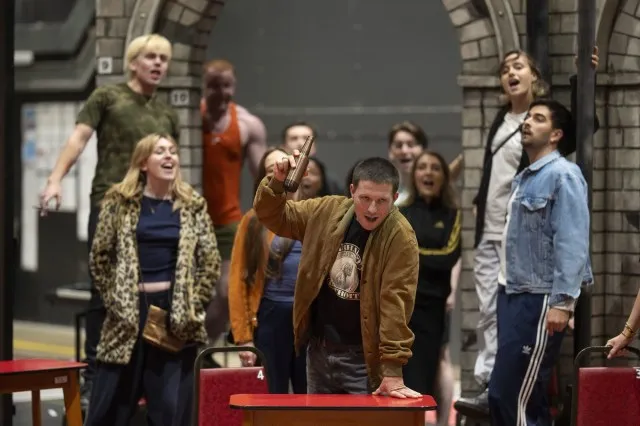


Latest Reviews
See all



Latest Videos
Pride musical – first look at new trailer
The hit show is heading down the Thames after its National Theatre debut