
The Bridge at Bush Theatre – review
Written and performed by Alaa Shehada, the solo show runs until 11 November
 |
London
|
3 November 2026
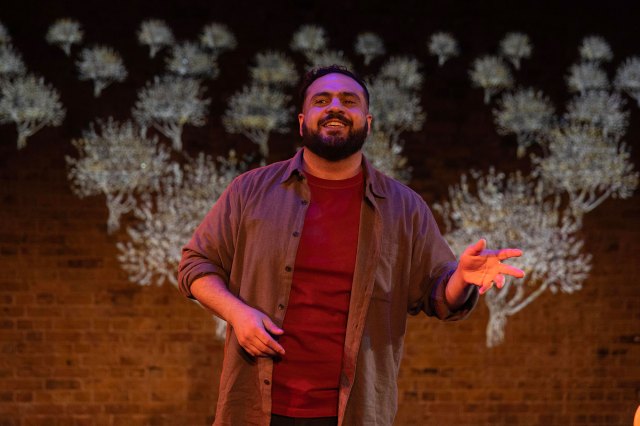
The Arabic word “sumud” means steadfastness or perseverance. For Palestinians, there is no greater symbol of this than the olive tree and this is the indirect focus of comedian and actor Alaa Shehada’s heartfelt and very funny one-man play, The Bridge.
Alaa is travelling from Jenin to Amman in Jordan, carrying a gift of olive oil from his mother for his aunt, made from the family’s own olive trees. He does this every year, and the journey should be short and simple. However, to complete the trip, he must cross “the bridge”. Known by various names such as the Dignity Bridge, the Allenby Bridge and the King Hussein Bridge, it is the only way Palestinians in the West Bank can leave or return home. It is a slow and arduous journey with endless checks, snaking queues and sudden closures.
Shehada focuses on humour amid the chaos of the journey, giving us a wide cast of characters he meets along the way. An endlessly upbeat bus driver, a confused old lady who sits next to him and steals his air conditioning, a gravel-voiced cigarette smuggler and his own uncle, who meets him while live on TikTok.
Through them he tells a very human story of family ties, personal history and the lasting impacts of colonialism. There is frequent mention of the dream of a Palestinian airport, a symbol of freedom of movement and autonomy. Rather than giving a political polemic, Shehada and co-writer and director, Sam Beale, let projections of historical quotes, such as Prime Minister David Lloyd George asking for Palestine as a “Christmas present” do the heavy lifting. It never preaches, but hits hard at the pomposity and thoughtless actions of the past: a cleverly sobering device for a predominantly British audience to absorb.
Shehada is an amiable and energetic performer who wants to entertain as well as inform. Like his previous work, The Horse of Jenin, the tone is light and comedic, with no sense of self-pity. Speaking in English, with frequent Arabic phrases, there is a lot of physical humour and interaction with the audience, making this production feel part play, part stand-up routine.
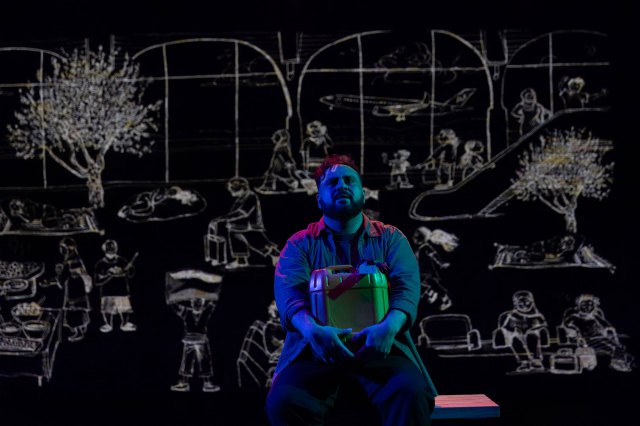
The olive oil that he carries is hugely symbolic: for Palestinians, the olive harvest is a vital economic revenue from trees that have been nurtured for centuries and holds a deep connection to history, family and community.
It is not until the end of the play that Israeli settlers are mentioned; taking over and destroying his family’s beloved farm. This is happening right now: in Gaza, an estimated 90 per cent of its two million olive trees have been destroyed and according to the UN, at least 160 Israeli settler attacks linked to the harvest were recorded in the first two weeks of October this year.
There is no set to speak of, just a bench and the yellow plastic container of olive oil. Jazz Thompson’s black and white illustrations are animated on the back wall, showing olive trees, Israeli soldiers, the fantasy Palestine International Airport and the bridge itself.
The Bridge is a fast-paced, funny and captivating production that astutely connects the gap between warm comedy and sobering reality.






source on Google
Featured In This Story

Related Articles
See all

Latest Reviews
See all

Latest Videos
Keira Knightley, Luke Thompson and Stephen Dillane on surveillance and kindness in uncertain times – The Lives of Others opens in the West End
Robert Icke’s stage adaptation of Florian Henckel von Donnersmarck’s Oscar-winning film is running at the Adelphi Theatre