
 |
Sheffield
|
|
Sheffield
|
7 September 2026
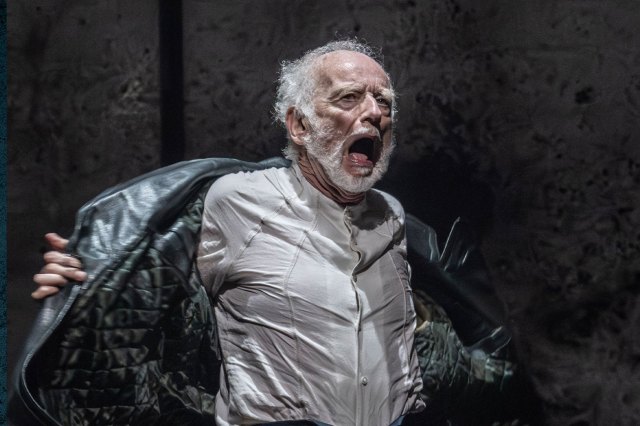
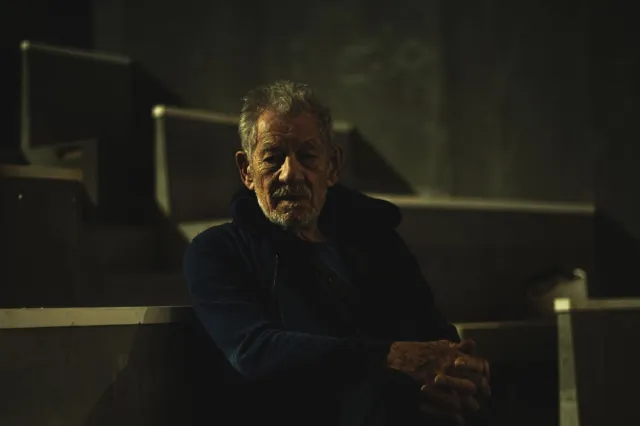
It’s somewhat ironic that the programme’s single article on King Lear is devoted to explaining that the play is about his three daughters and Edgar as much as Lear and then making the case for the importance of Edmund. In fact, Titas Halder’s production for Sheffield Crucible is efficient, but undistinguished, raised to another level by one performance only, Ian McDiarmid as Lear.
The plot of King Lear takes off from the opening moments: Kent and Gloucester talk briefly, Gloucester introducing Kent to his bastard son Edmund, then Lear enters, full of his intention to give up power while retaining his habits of luxury with a train of one hundred knights. We are barely ten minutes in before his daughters Goneril and Regan resolve to stick together in the face of this knightly barrage, his youngest Cordelia is banished for refusing to co-operate in a Trump-like flatterfest and Kent suffers a similar fate for speaking frankly.
Especially in a heavily cut production like Sheffield’s, this pace is maintained until it slows down for the attempted suicide of the poor blind Gloucester and, above all, the glorious scenes between Lear and Cordelia, the first a touching reconciliation, the second a scene of heart-breaking desperation.
King Lear is a play of disguise and change. Kent and Edgar deliberately disguise themselves as, respectively, the servant Caius and Poor Tom. The blindness, real or metaphorical, of Lear and Gloucester brings constant change before both ultimately reach acceptance.
In Halder’s production, the action ignites for the first time only when Regan and Goneril confront Lear at Gloucester’s palace: the implacable nature of his daughters shows through, Lear himself is losing touch with reality, the menace of Cornwall, soon to put out Gloucester’s eyes, emerges. The actual storm that follows lacks impact, but Lear’s madness now unfolds before our horrified eyes.
Kent (Mark Holgate) and Gloucester (David Birrell) make their mark early and skilfully negotiate the changes in character. Justina Kehinde’s forcefully intelligent Regan (another outstanding performance beyond that of McDiarmid) is a powerful presence throughout, while Katie Wimpenny’s Goneril grows in their later confrontations.
The two sons of Gloucester have less impact than one would have hoped. Fode Simbo as Edmund is not helped by being semi-concealed at first, and I would have expected “Now, gods, stand up for bastards!” to ring out with more authority. Harry Redding is saved to some extent by his Poor Tom episodes, but never registers a character as Edgar.
Finally, there is the Fool where Halder takes an unusual and thoroughly modern approach. Max Revell’s career has been mostly in dance and he excels in constant bodily contortions, a concept which seems to me at odds with the sardonic nature of the Fool. Halder also takes on the problem of what happens to the Fool after the line, “I’ll go to bed at noon” halfway through the play. As Lear exits for the interval, the Fool stays seated, a neat response to his disappearance, I thought. Then at the start of the second half, Halder overeggs the pudding. The Fool delivers Merlin’s prophecy, moved from earlier in the storm, then is unceremoniously bundled into a sack, only to reappear in the background for the death of Lear.
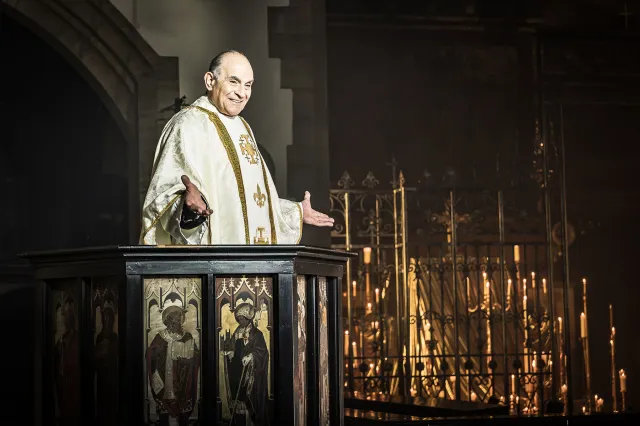
And that leaves the performance that lifts the production out of the routine: McDiarmid, mesmeric as King Lear. He appears full of dignity, smugly aware of the flattery he is about to receive, then flares into a tantrum that is more vicious than uncontrolled at Cordelia’s lack of co-operation. This viciousness co-exists with self-delusion in the descent into helpless madness. Then finally McDiarmid is at his best in the dream-like illusions, with sad touches of reality, in his late scenes with Gloucester and, especially, Cordelia (Bebe Sanders).
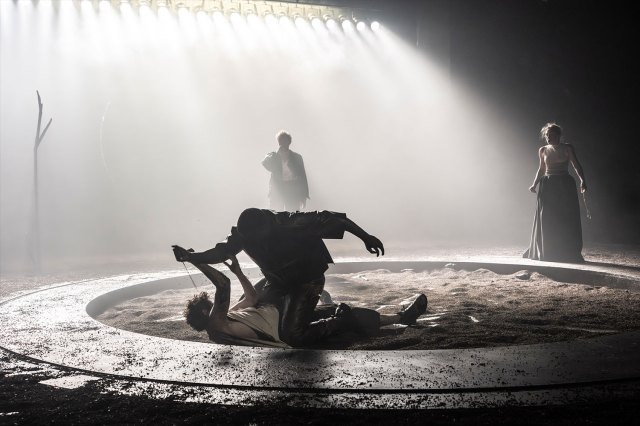
Richard Kent’s designs consist of a huge circle, with the stage covered in sand, and his costumes, though often striking, are an odd mix, visual magic only coming in the second half from the mist from which characters emerge mysteriously.






source on Google
Related Articles
See all

Latest Reviews
See all
Latest Videos
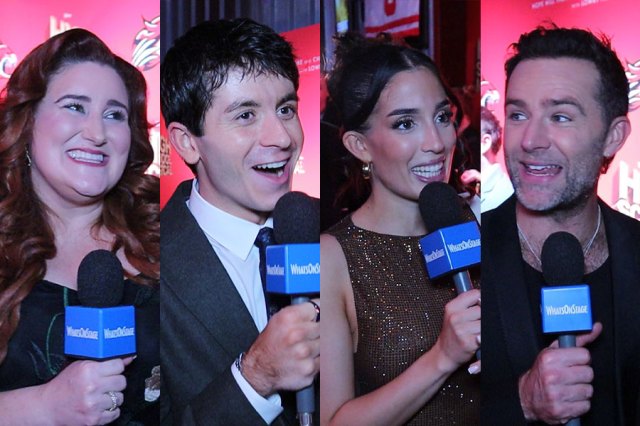
Disney’s High School Musical opens in London and the stars take a trip down memory lane
Bopping to the top at Troubadour Wembley Park Theatre!