
Holy Fool at Park Theatre – review
Rosalind Adler and Lea Sellers’ world premiere play, inspired by the true story of Soviet composer Dmitri Shostakovich, runs until 10 October
 |
London
|
|
London
|
4 September 2026
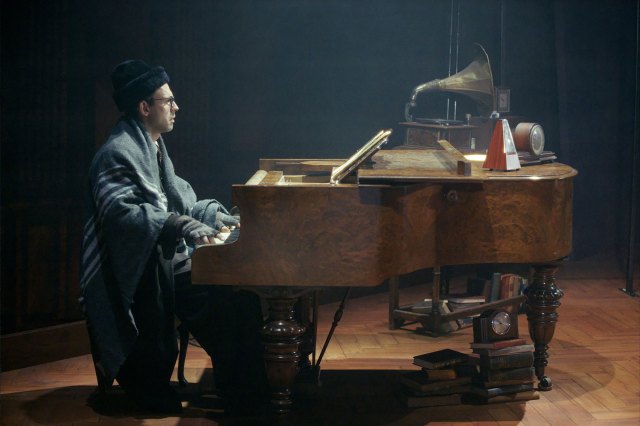
While Dmitri Shostakovich’s life is ripe for storytelling, Holy Fool doesn’t quite find the line of inquiry. It includes both too much and, when it counts, nowhere near enough.
Shostakovich lives on a knife edge as both a lauded artist and an enemy of the state, once escaping interrogation only because his interrogator was arrested right before the appointment. It’s this absurd terror that defines the era, but writers Rosalind Adler and Lea Sellers can’t quite find the balance, opting either for a misplaced lightheartedness or po-faced ominousness. Whereas this period had a very specific flavour, here it seems like any other tyrannical dictatorship, fictional or not.
Adler and Sellers make the mistake of trying to fit in too much of Shostakovich’s life, cramming decades into the first half, and then spending a tiresome amount of time focused on a fictional relationship. The idea being that this woman, Katya, was the reason Shostakovich finally decided to perform his fourth symphony, having buried it years before under pressure from Stalin.
It’s just not the most interesting part of his life, nor is there any particular meaning to be gauged from it, despite Adler and Sellers seeming to feel very strongly that there is; Phoebe Pryce’s Katya begging, pleading with Shostakovich (Benjamin O’Mahony) not to define himself by his strictures, or not to internalise his suffering, or not to give up on something – it’s not clear, but it is tiresomely fraught.
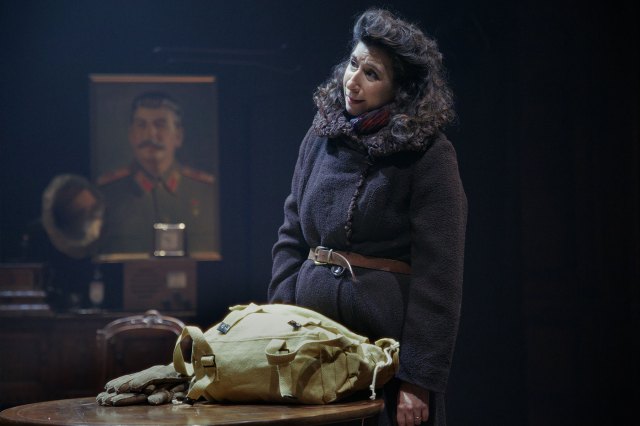
There is some discussion of the absurdity of Shostakovich’s position: Counting the minor and major notes to ensure the correct patriotic balance has been struck; the audience is enraptured, but one bad word from Stalin and everyone hates his latest symphony. But all this is glossed over in service of this other lesser plotline.
Designer William Fricker has gone to the effort of putting a baby grand piano on stage, piles of books stacked beneath. But the changes throughout are somewhat lackluster: We begin backstage before a premier, but we’re already in a living room. Swapping out the furniture near entirely in the final quarter, Fricker proves that such a thing is possible, but the Shostakovich family appears to move two or three times throughout the story, and the setting remains near exactly the same.
The best part of the evening is, of course, the soundtrack. To have created such powerful pieces under such immense strain and fear is miraculous, and I’m grateful to have a few moments in a darkened room listening to surely some of the best composition of the century. Other than this, the evening is neither offensive nor intriguing, but largely forgettable, a shame given what it might have been.






source on Google
Featured In This Story
Related Articles
See all


Latest Reviews
See all




Latest Videos
New musical Nero releases first listen with Andrew Barth Feldman
It is from the writers of Spring Awakening