
Baby at Brixton House – review
Gurpreet Kaur Bhatti’s solo show, directed by Milli Bhatia and starring Pearl Mackie, runs until 31 October
 |
London
|
|
London
|
15 October 2026
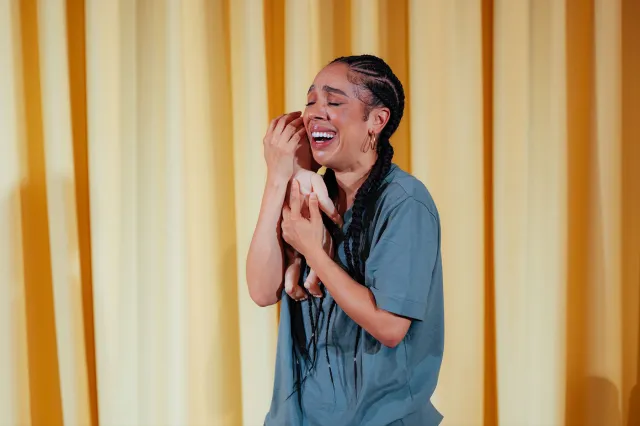
Gurpreet Kaur Bhatti’s powerful one-woman drama explores motherhood and the realities faced by women attempting to rebuild their lives after prison. Co-produced by Clean Break, the theatre company whose work centres on women affected by the criminal justice system, the show emphasises the constant battle against an infratructure that is unequal and can result in a never-ending cycle of hardship and exclusion.
Pearl Mackie performs as Baby, a woman whose attempts to get back on her feet are repeatedly undermined by systems around her. After being convicted of a crime and sent to prison, she gives birth to a daughter, Bliss. Baby’s daughter becomes a glimmer of hope, and motivation to create a better future for them both.
Directed by Milli Bhatia, the show is told through direct storytelling, with Mackie switching between first- and third-person narration. The play explores Baby’s experiences of childhood trauma, abuse, and the challenges of an unforgiving criminal justice system.
From young, Baby was faced with harrowing experiences. Her mother’s substance misuse left her vulnerable, while a relationship with an older man becomes controlling and abusive. These difficulties sadly continue after her release from prison. As Baby attempts to secure housing, find work and adapt to a frustratingly endless chain of probation officers, she is confronted by a society that seems more interested in “managing” lives rather than transforming them. To them, she’s just another number on a file.
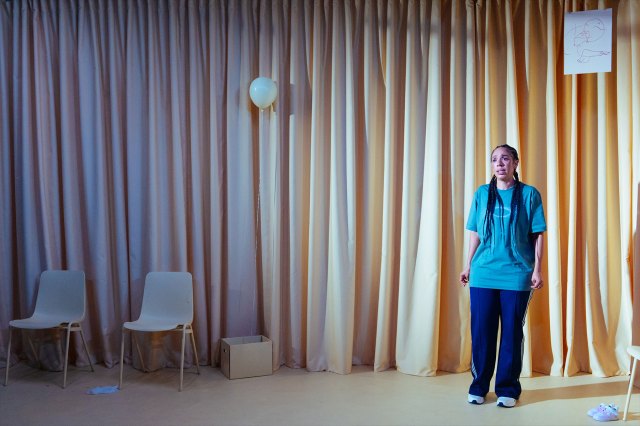
Motherhood is at the centre of the story; every setback threatens Baby’s chances of having custody of her daughter. Bhatti’s script raises an important question: how can people rebuild when the structures designed to support them seem determined to keep them trapped?
While the topics are powerful, the execution is perhaps less effective. There seems to be a disconnect between Baby’s experiences and how emotionally engaging the production feels. Baby endures so much – from childhood neglect and abuse to imprisonment and the ongoing challenges of bettering her circumstances. The script rarely pauses to examine how these experiences have shaped her. For example, the relationship with her mother could have been a good exploration into how this influenced Baby’s decisions and understanding of motherhood. The play seemed to move quickly between one difficult situation to the next.
Mackie gives a compelling performance. She has wonderful delivery and a commanding energy on stage. She also convincingly shifts between multiple characters in the story, supported by Elena Peña’s subtle yet effective sound design, which swiftly transports the audience between locations. Khadijah Raza’s pastel-yellow set design provides an interesting contrast to the story’s darker themes. We often associate yellow with happiness or hope – this optimism is reflected as Baby remains hopeful despite the overwhelming number of obstacles.
Overall, Baby highlights important questions around rehabilitation, parenthood and the barriers women face within the criminal justice system. It is a thought-provoking production and a strong example of Clean Break’s commitment to using theatre to challenge stereotypes and encourage audiences to reflect on women’s experiences of inequality.






source on Google
Related Articles
See all
Latest Reviews
See all





Latest Videos
New musical Nero releases first listen with Andrew Barth Feldman
It is from the writers of Spring Awakening