
The Cherry Orchard with Kristin Scott Thomas review – a smart and salty West End revival
Conor McPherson’s adaptation of the Chekhov classic, directed by Ian Rickson, runs at the Harold Pinter Theatre until 9 January
 |
London
|
|
London
|
13 October 2026
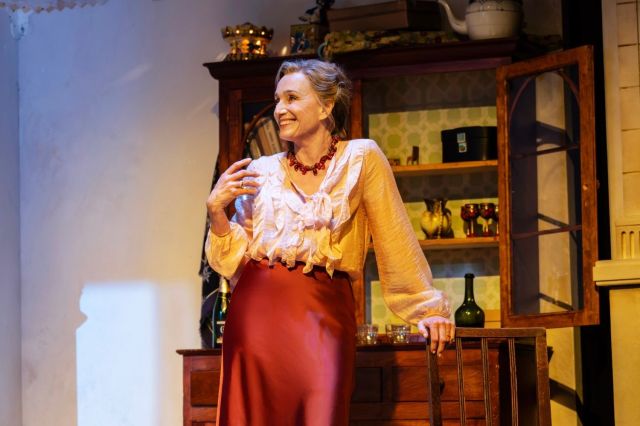
As with most great plays, there are multiple ways to do The Cherry Orchard. Last time I saw Chekhov’s rueful/comic depiction of a privileged family on its last legs, it was a production at the Yard, set on a dilapidated spaceship with trusty geriatric manservant Firs as a breaking down robot. There was the starry modern dress iteration at the RSC recently, while New York’s Park Avenue Armory just hosted Simon Stone’s Korean language version relocated to a corporate, dehumanised contemporary Seoul. Director Ian Rickson’s West End revival, in a new adaptation by Conor McPherson that doesn’t stint on the poetry or the crudity, goes for clarity and comedy but turns out to be more subversive than it initially appears.
For the first half, Chloe Lamford’s shabbily grandiose set, with a visible staircase leading to other floors in the soon-to-be-sold house, a corner installation of religious icons and candles, seems fairly traditional apart from the pair of adjacent doors redolent of classic farce rather than tragicomedy.
After the interval, the back wall opens to reveal garish 1970s style wallpaper and light fittings, and a battered old billiards table; it’s a useful visual metaphor for the new world encroaching on the old. The costumes by Sussie Juhlin-Wallén vividly evoke a late 20th-century Soviet Union with nods to traditional Russian peasant dress for the domestic staff.
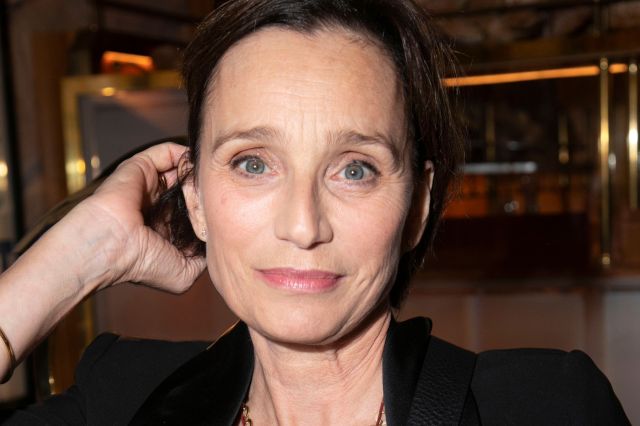
Kristin Scott Thomas surpasses her acclaimed Arkadina in The Seagull for the same director at the Royal Court then on Broadway in 2007/8, as a riveting Ranevskaya, albeit not necessarily the one we might’ve expected. Initially Stephen Mangan’s Lopakhin recalls her as being like a queen when describing how kind she was to him when they were teenagers and he was still an impoverished serf. When she appears however, returning to the Russian country estate after years in Paris, any regality is a facade; it’s in her bearing and in the benign but empty smile she bestows on all and sundry, even when holding back tears, but there’s an unhinged fragility that intrigues.
This Ranevskaya is a deeply damaged woman, still clearly traumatised by the loss of a child, pleadingly tactile with everyone she comes into contact with, and in permanent fight-or-flight mode except when self-medicating with alcohol when she thinks nobody’s watching. Her Parisian life is anything but easy according to younger daughter Anya (Anastasia Martin, watchful and compelling), and she repeatedly vacillates between imperious and needy. The sadness is palpable.
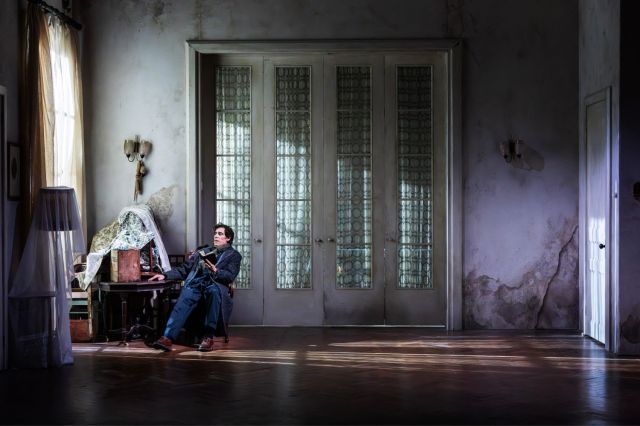
Mangan is equally memorable as Lopakhin. First discovered attempting to read the Bible before drifting into blissful, lengthy sleep (Bruno Poet’s unusually expressive lighting does a wonderful job of changing mood and time of day throughout), he’s awkward, chummy but with a brutal edge, the humiliations of childhood poverty near the surface despite his adult wealth. He’s also uncommonly funny. So is Peter Wight, superb as Ranevskaya’s boorish brother Gaev.
There’s not a false note in any of the supporting performances. Vinette Robinson’s heartbroken, practical Varya, Jack Riddiford’s sensitive Petya, Ruby Bentall as mysterious, magic-making governess Sharlotta, Noof Ousellam as a swaggeringly insolent manservant and Shubham Saraf’s dim but disarming clerk Yepikhodov, all hit with rare truth and force. Megan Cusack is a delight as upwardly mobile but highly strung housemaid Dunyasha. Crucially, they’re all inhabiting the same unsettled world of societal upheaval.
The veteran actors fare particularly well: Karl Johnson is glorious and very touching as ancient retainer Firs, unable to register that Gaev and Ranevskaya aren’t still the children he once tended to, and becoming viciously aggressive when his standing is questioned. Jeff Rawle’s money-grasping landowner, cheerfully announcing “I’ve had two strokes” while knocking back the wine, is another richly drawn characterisation.
Rickson’s direction is masterful, alive to every nuance, confidently embracing the dualities in Chekhov’s text: these people are deeply unhappy yet uproariously funny, and the sense of lives about to change forever is keenly felt.
McPherson’s script is salty and smart and, most laudably, never sounds like a translation. Not everything about the update works, but that’s a small quibble about an emotionally intelligent production that renders a classic play alive and accessible, while still satisfying the most exacting of Chekhov enthusiasts, and boasting one of the greatest ensemble casts on any current London stage.






source on Google
Featured In This Story
Related Articles
See all
Latest Reviews
See all



Latest Videos
Heathers The Musical releases new trailer with tour cast
Step into the candy store!