
King Lear with David Threlfall at the Royal Exchange – review
Matthew Dunster’s reimagining of the Shakespearean tragedy runs until 15 November
 |
Manchester
|
|
Manchester
|
9 October 2026
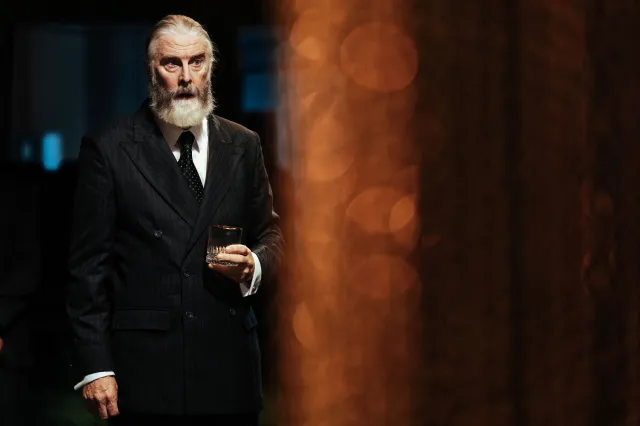
A brilliant Lear is at the heart of a production that struggles to give his daughters sufficient dramatic weight. David Threlfall delivers a compelling portrait of Shakespeare’s ageing monarch in this stylish but uneven production of King Lear at the Royal Exchange. A study in vanity, vulnerability and unravelling authority, his performance gives the tragedy its emotional heft. Yet, while Threlfall’s Lear burns brightly, the production struggles to make the three daughters at the centre of his catastrophic family drama equally persuasive.
Lear’s decision to divide his kingdom according to declarations of love sets in motion a devastating chain of betrayal, cruelty and madness. Threlfall captures the king’s imperious bluster and peevish need for affirmation, exposing the insecurity beneath the royal bluster. As his grip on power dissolves, so too does his certainty about the world and his place within it. There is genuine pathos in his descent, with flashes of bewilderment and tenderness cutting through the rage. This is a performance that understands Lear’s tragedy is not simply that he loses his kingdom, but to both lose his mind and to discover too late what love actually means.
There is a pleasing subtlety to how his descent into madness is approached as it now resonates for so many who have seen their own families fractured and traumatised by the impact of dementia on a parent. Threlfall leans into this, blending both gentle humour and moments of piercing cruelty to all his relationships. Director Matthew Dunster has opted to not have The Fool on stage, but instead use the character as Lear’s internal monologue. It works to a point but robs the audience of a vital and much-loved Shakespearean character.
Unfortunately, this production does not give real depth and substance to the women surrounding Lear. Goneril (here played by Nadine Shah, who also serves as a composer for the show), Regan (Lisa Diveney) and Cordelia (Isobel Akuwudike) are pivotal to the play’s emotional and political architecture, yet here their characterisations feel frustratingly underdeveloped. The sisters seem to lack the individual complexity and psychological texture needed to make their actions resonate fully. Goneril and Regan’s ferocious cruelty should chill, not merely serve as a convenient counterpoint to their father’s suffering.
It feels frustratingly implausible that Regan shifts from pleading with her father for moderation in his staffing levels to the barely imaginable sadistic brutality of poking out Gloucester’s eyes with the stiletto heel of her glossy Manolo Blahnik. In the same vein, Cordelia’s honesty should carry a moral force that makes her rejection of Lear both heartbreaking and consequential. Instead, the daughters too often feel like unnecessarily sexualised instruments of the plot rather than fully realised people, leaving a significant emotional gap at the production’s centre.
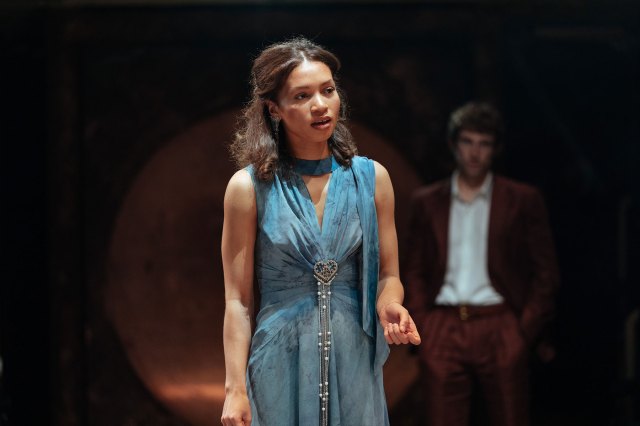
It is the men of the Gloucester family who provide a more satisfying counterbalance. The performances across this fractured faction are consistently strong, bringing conviction and humanity to another story of parental blindness, misplaced trust and devastating betrayal. The parallels between Gloucester’s fate and Lear’s are among Shakespeare’s most potent dramatic devices, and here the family’s anguish gives the production some of its most affecting moments.
Jonathan Slinger gives Gloucester both a natural nobility and genuine emotional depth as a parent who has got it badly wrong and seeks forgiveness. Paddy Stafford is excellent as the ambitious and conniving duplicitous Edmund. Tom Varey shines as Edgar, the good son who patiently supports his ailing father. He is especially affecting in his scenes as Poor Tom where his twitching vulnerability evokes the genuine compassion of Lear. Jason Done as Kent also proves a steadfast presence, his loyalty to Lear offering a welcome moral anchor amid the gathering chaos.
The set design by Anna Fleischle is highly stylized with its shimmering columns of chain that are designed to entrap or exclude. They look beautiful and are used to stunning effect when Lear is trapped in a torrent of rain during the storm. However, at times they interfere with sightlines or appear to force characters into groupings that block views of pivotal scenes. It strikes me as odd that in a homecoming season, a director who should know this beloved theatre in the round so well has seemingly failed to spot these issues.
Shakespeare’s great tragedy demands more than a magnificent king: it needs a family whose fractures feel painfully human. The exquisite Kintsugi design on the stage floor is designed to reflect the art of repairing broken things in a way that makes them stronger and more beautiful, so it seems horribly ironic that the seismic destruction here leaves a whole family utterly decimated.
Threlfall delivers the monarch in all his terrible, heartbreaking glory but this is a production that promises so much but never quite matches his stature.






source on Google
Related Articles
See all

Related City Guide

Latest Reviews
See all
Latest Videos

West End vs Broadway: Paranormal Activity – Ami Okumura Jones and Cher Álvarez on transatlantic terror
‘Tis the spooky season, after all…