
Desire Under the Elms at the Almeida Theatre – review
Ebenezer Bamgboye’s revival of the Eugene O’Neill classic runs until 23 December
 |
London
|
18 November 2026
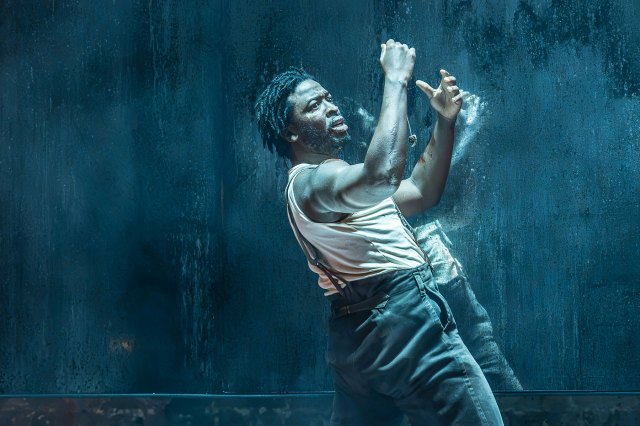
Eugene O’Neill’s 1924 play was banned for 16 years by the British censor on the grounds that its themes – illicit passion, infanticide – were obscene. The Times called it decadent, poisonous and degrading, which was slightly shortsighted given that the American playwright took his themes from Greek tragedy.
He based his plot on the story of Phaedra, who falls passionately in love with her chaste stepson Hippolytus, causing death and destruction all round. In Euripides, she kills herself after accusing Hippolytus of rape and her husband takes revenge. O’Neill’s imagination takes even darker routes and his study of misplaced desire can still feel shocking.
The problem is that it is also relentless and the text circles constantly around its themes once the vicious patriarch Ephraim brings his young bride Abbie back to his stony, hardscrabble farm in New England, where his son Eben clings to the land, believing it is his inheritance. It’s a tricky play, and one that is rarely performed.
As director, the immensely talented Ebenezer Bamgboye chooses to solve its problems by concentrating on the idea that Desire Under the Elms is essentially a psychological drama, where the external landscape is an image of the souls of all its characters, shaped by greed and thwarted passion. He throws everything at an expressionistic, visceral production that is always gripping – but all its inventiveness and commitment can’t quite raise the play to the level of insight that truly great O’Neill can achieve.
Some ideas work wonderfully. In casting the Black actor Zackary Momoh as Eben, Bamgboye raises the stakes. It means that Eben’s mother – who haunts the play like a ghost – was also Black and so when he talks of the land being rightfully hers, and of her cruel husband working her to death, the sharpness of that “enslavement” is underlined.
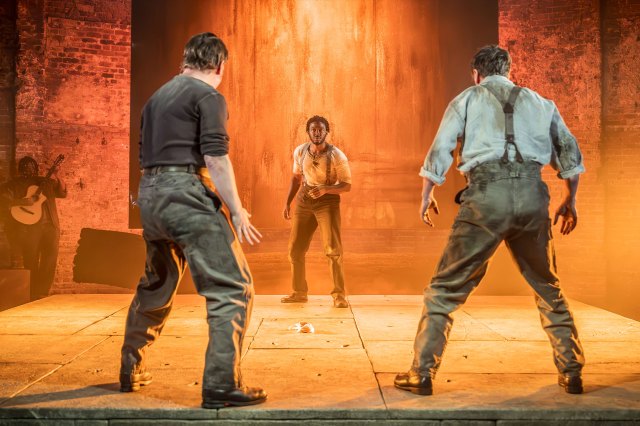
Momoh is magnificent, beautifully charting the confusion and sense of wrong that have warped Eben’s life, burying his essential kindness – his “softness” – under a weight of hurt. The arrival of Kelly Gough’s Abbie, sharply grasping at the home he believes is his, triggers a terrible weight of tragedy because both of them are already lost, their feelings real but trammelled by the circumstances of their lives.
The nature of their love is communicated in movement, brilliantly choreographed by Rose Ryan, that pushes them into angular shapes of longing: their bodies seem to be propelled together by powers beyond themselves. They barely touch, but the depth of their despair runs through every gesture.
Combined with Jack Knowles’ smoky lighting that matches mood changes with colour – bright reds, dark shadows, sickly yellows – that are reflected in the burnished panel at the back of Basia Bińkowska’s stripped back setting, this creates a heightened atmosphere of tension. In the early sections, the drama is underscored by live music from singer Choolwe Laina Muntanga, guitarist Tendai Humphrey Sitima, and the piercing trumpet of Nathaniel Wade. Later, less effectively, they become a chorus of spirits and the music is pre-recorded.
It’s a heady brew, carried by some excellent acting, though the non-realistic setting doesn’t leave Anthony Byrne any room to leaven Ephraim’s unredeemed anger and cruelty. In the end, both play and production strain for a level of feeling and meaning it can’t quite capture.






source on Google
Related Articles
See all


Latest Reviews
See all




Latest Videos
The Sorcerer’s Apprentice musical – take a first listen
The world premiere production begins performances at HOME Manchester next week