
Cyrano de Bergerac in the West End – review
Adrian Lester takes on the title role in the transfer of the production that won critical acclaim at the RSC
 |
London
|
|
London
|
26 June 2026
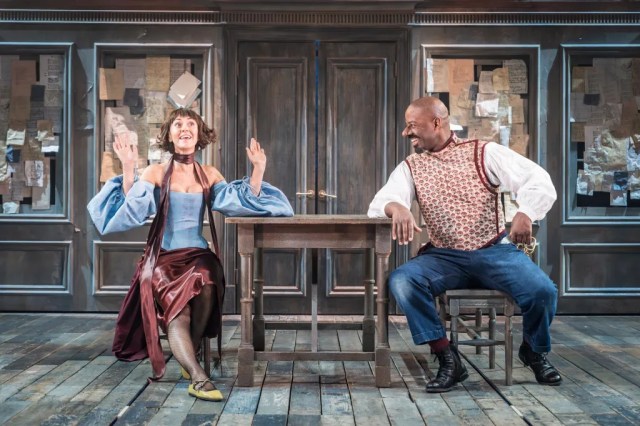
Sometimes a show waltzes, trippingly, from its original run into the West End for a bombastic victory lap.
Such is the case with Simon Evans and Debris Stevenson’s adaptation of Edmond Rostand’s 1897 tragicomic stage play, based on the very true tale of the French 17th-century duellist poet Cyrano de Bergerac. First seen in Stratford-upon-Avon last autumn, it readjusts a thrust staging into an end-on configuration for a London spell at the Noël Coward Theatre.
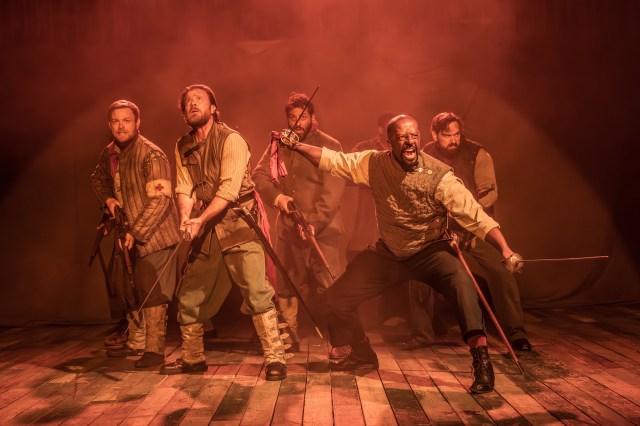
Evans, also on directorial duties, has little problem retaining the show’s enchanting heart and brio in its second home. His creative team – particularly set and costume designer Grace Smart and lighting designer Joshie Harriette – find moments of magic in the story of the martial man unable to confess his love for his childhood friend Roxane. Instead, he hides behind rampant wordsmithery and commandeers the naïve attractions of a fellow soldier Christian in order to express his feelings through trickery and artifice.
As Cyrano moves from Paris to the fateful frontlines and back, his deft savoir-faire is gradually dismantled to expose the bare brick reality of a man wracked by self-consciousness, chiefly caused by his misshapen and distinctive nose – the character’s most famous feature.
On the surface, Evans and Stevenson’s take feels fairly conventional – tracts of witty poetry in an assortment of different metres and styles, lashed together with period costumes and swashbuckling epées. It’s worlds away from Jamie Lloyd’s monochrome mounting that bookended the lockdowns with two London seasons. But, like their protagonist, the pair produce an effortlessly disarming and fleet-footed script with far more bubbling beneath the surface than initially meets the eye. Set against the backdrop of the bloody Franco-Spanish War, it is a meditation on mortality, of life lost and love never relinquished, even after death.
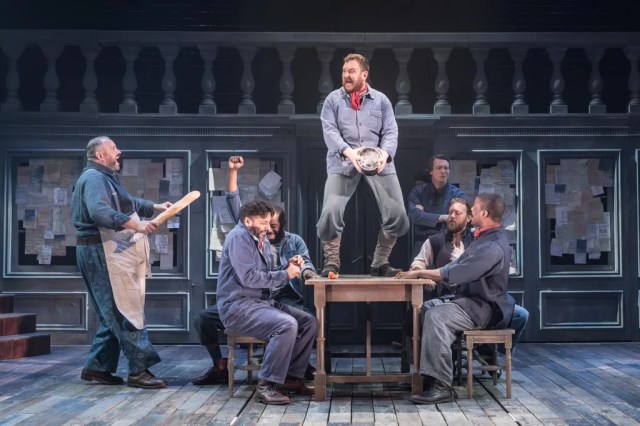
Of course, none of this would be so note-perfect without a strong company as its spine – and casting director Matthew Dewsbury pulls out every stop: Susannah Fielding bringing tireless wit and refreshing verve to Roxane, a woman stung by the memory of a shackling marriage and now desperately seeking liberation. Her howling final monologue as she reveals the truth underneath her forfeited life is chill-inducing. Levi Brown has winning charm as the provincial heartthrob Christian, from France by way of Wolverhampton, while an assortment of oddball and quirky figures flesh out the Parisian world. One hilarious conceit – a group of travelling musicians forced to follow Cyrano everywhere after a high-stakes bet – adds timbre and texture to scenes, thanks chiefly to the composing work of Alex Baranowski.
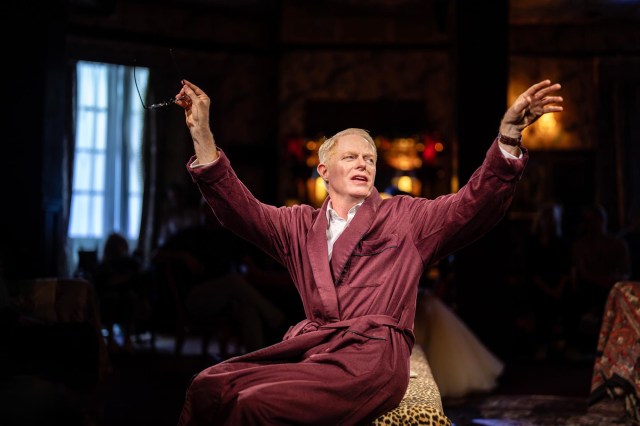
Any show has to live or die by the nose-sporting poet, and Adrian Lester delivers his best performance in donkeys’ years as Cyrano, at times playfully camp, other times sardonically steely as the tragic hero. He wears Cyrano’s flaws fearlessly on his sleeve, while another brilliant invention, the introduction of a juvenile shadow that is conjured from his youth and embodied by a voiceless young actor, works brilliantly.
In a time where words are inexorably churned out by every new AI model under the sun, having a play that so defiantly celebrates the power of prose and text on a page feels galvanisingly important. The London awards season may have only just started, but it’d be a surprise not to see Lester or Fielding’s names up in lights by its conclusion.





source on Google
Featured In This Story
Related Articles
See all




Latest Reviews
See all


Latest Videos
Michael Ball performs “Pure Imagination” from Charlie and the Chocolate Factory
What you’ll see will defy explanation!