Mayflies at Brown’s of Leith – Edinburgh Fringe review
Grid Iron return with a world premiere site-specific adaptation of Andrew O’Hagan’s best-selling novel
 |
Edinburgh
|
|
Edinburgh
|
11 August 2026
Grid Iron’s productions in Edinburgh’s Festivals are always talking points. Their brand of site-specific theatre makes each of their shows unmissable because, due to their venues, they’re often unrepeatable, and they’ve pulled out the stops for this production, which marks the company’s 30th anniversary.
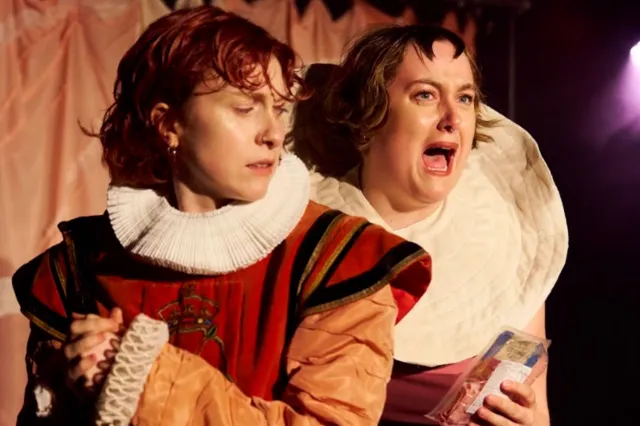
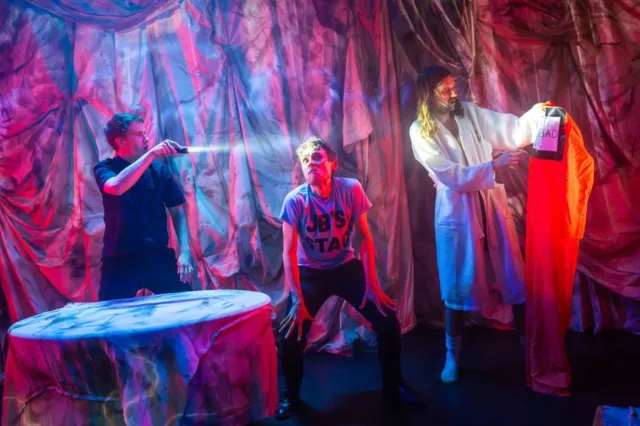
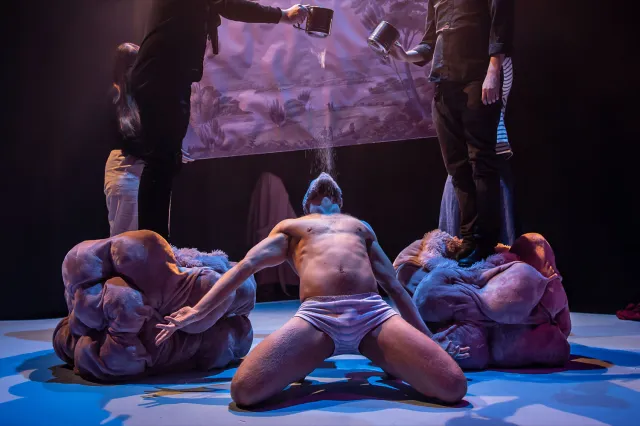
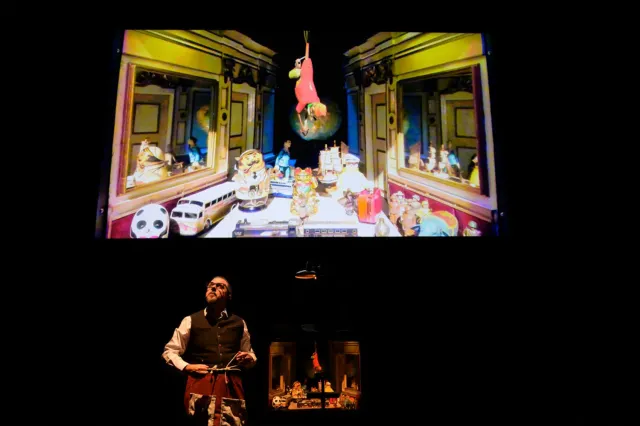
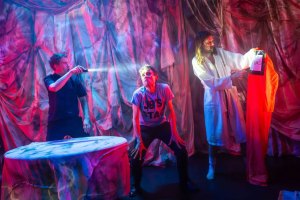
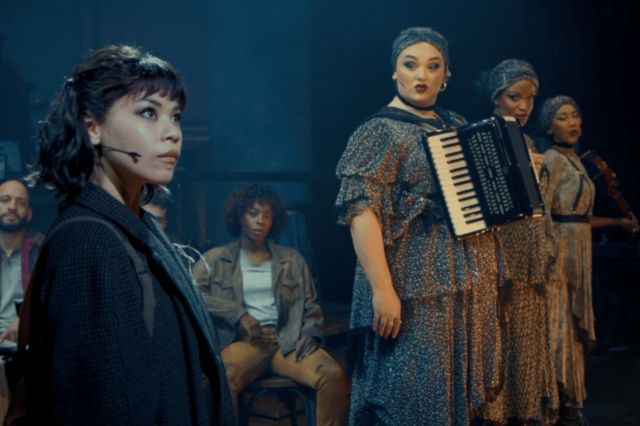
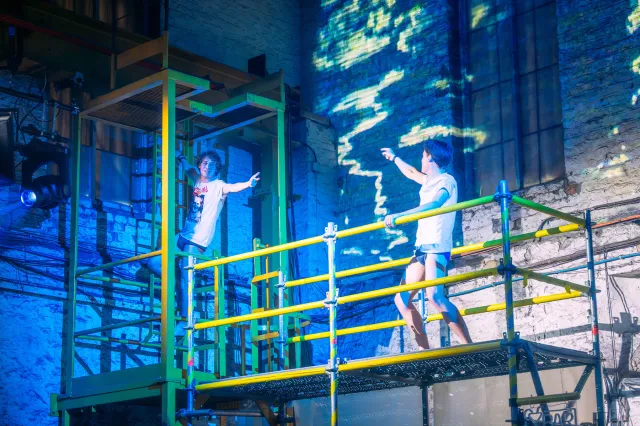
Mayflies is based on Andrew O’Hagan’s 2020 novel, and this play, adapted by its director Ben Harrison, takes place in a former engineering works in Leith, down by the shore. The audience sits still while the story unfolds around them, the actors making full use of the old industrial space, while projections and videos add colour to scenes which change so quickly that sometimes it feels like you’re caught up in a movie rather than a play, though they need to work harder to tame the boomy warehouse acoustic, which swallowed several lines of dialogue.
In one sense, it’s a coming-of-age story. Tully and Noodles are pals in their final years of high school in Ayrshire; one bookish, the other rakish. Reaching their maturity in 1986, the first half of the play focuses on a defining trip they take to Manchester, where they immerse themselves in the music scene and make discoveries both about themselves and one another.
It’s this opening slice of the play that’s the most compelling, partly thanks to the smart use of the space, but mostly because the actors playing young Tully (Jude Bain) and young Noodles (Kieran Devine) are so compelling to watch. They brim with not only the excitement of adolescents on the cusp of adulthood, but also with the intensity of young friendship that is formed by the places they encounter and the music they share.
The show’s structural problem, however, is that it feels like two plays instead of one, with two very different halves bracketed together. After the first half’s celebration of youth and potential, we telescope forwards decades to Tully receiving a terminal diagnosis and coming to terms with what that will mean for himself and those he loves. It’s a cold shower of adulthood that feels more like a wrench than a progression, and the lurch is enhanced by the fact that the script seems to be much more convinced by youth than by experience. Some beautifully poetic lines are lavished on the Manchester section, “the defining night of our youth”, and their adoration of Morrissey is touching both in its naivety and its beauty. In contrast, the profound questions of life and death posed by the second half feel almost workaday as the characters seem preoccupied with practicalities instead of poetry.
It’s the performances that save it. They don’t live up to their younger selves, but older Noodles (Matthew Pigeon) narrates the whole drama with pathos while Graham Mackay-Bruce retains some of Tully’s rakishness into adulthood. Lucianne McEvoy and Carmen Pierraccini play the men’s partners with sympathy and subtlety, and Paul McCole plays a host of supporting characters with dextrous flair. Both halves might not quite work in conjunction, but ultimately it’s the intensity of the human drama, rather than the atmosphere of the setting, that makes this worth seeing.
See all our latest Edinburgh Fringe reviews below.






source on Google