
The Long Drop at Glasgow’s Citizens Theatre – review
Written by Denise Mina and adapted by Linda McLean, Dominic Hill’s production runs until 20 June
 |
Glasgow
|
|
Glasgow
|
11 June 2026
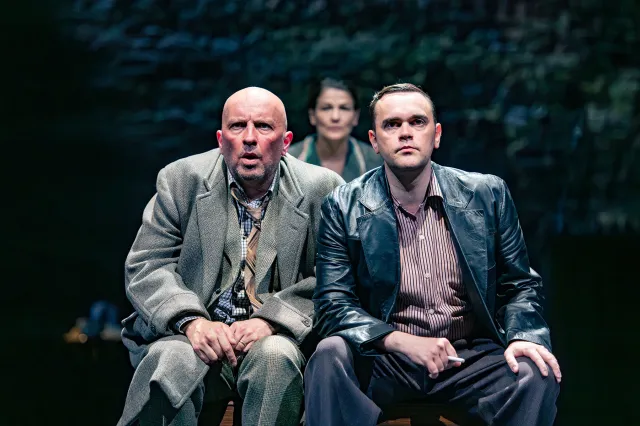
One thing’s for sure: nobody who sees The Long Drop in Glasgow will find it easy to imagine it being staged in any other city. It’s a show in Glasgow, of Glasgow, about Glasgow, and that’s a huge part of its appeal.
In many ways, the city is the most important character in this true crime drama, adapted by Linda McLean from the novel by Denise Mina, a pair of Glasgwegian girls themselves. Early in the play, in an uncharacteristically blunt piece of dialogue, a policeman gazes at the coal-stained buildings and wonders whether it’s really the heart and soul of the city that causes the blackness.
The Long Drop – the title is a reference to the hangman’s noose – tells the story of a grisly set of killings known as the Burnside Murders, and the several men accused in 1957 of committing them. The writing team do a brilliant job of bringing to life the Glasgow of the late 1950s, with perfectly observed accents (you won’t hear an “a” sound like this anywhere else), an encyclopaedic knowledge of the city’s layout, and, most importantly, the vitality of the Glasgwegian characters. The devoutly Catholic doting mother, the swagger of the drunks (and the pub landlady), the supercilious lawyers, the nasty organised criminals: whichever strata of life they hail from, they’re brought to life spectacularly by the McLean’s script and by the actors who inhabit them with such flair.
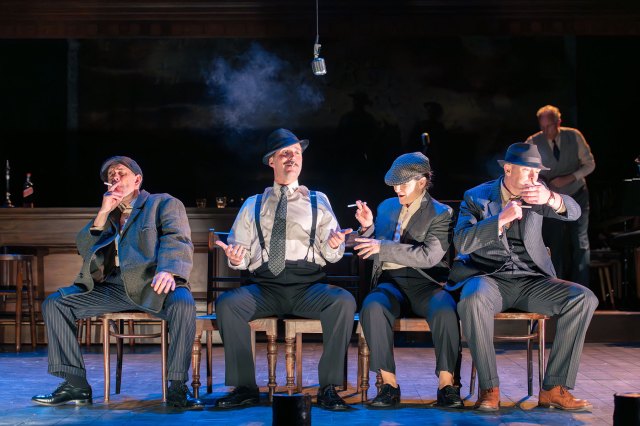
The cast of seven all play a multitude of roles, and they slip in and out of them with nothing more involved than a change of jacket or a switch of tone. It’s very much an ensemble achievement, but at the dark heart of the drama sits William Watt, the husband of one of the victims, brought to life by Keith Fleming with the claustrophobic intensity of a man who is in over his head. Next to him is Peter Manuel, the man who claims to know who really did it, played by Brian Vernel, who brilliantly inhabits both the nastiness and the absurdity of the character. Andy Clark and Robert Jack bring their characters to life with dazzling speed and a touch of humour, and Mary Gapinski plays all the women with pathos and punch.
Mina’s story and McLean’s script fragment the narrative in a way that means the audience needs to have its wits about it to follow what’s going on, and it uses lots of crime drama tricks to reinforce the idea that, for the first half at least, it’s rarely clear who is telling the truth.
If there’s a problem, then it’s with the second half, which early on makes a drastic shift towards certainty where previously there had been mystery, almost as though they’d switched writers at the interval. It also swerves into a filial drama for which no preparation had taken place and indulges in a few longueurs as we await the foreshadowed denouement.
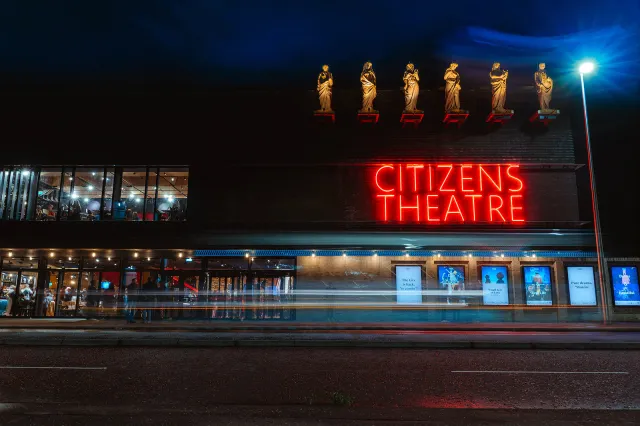
You stick with it for the strength of the characters, however, and the delight with which it evokes a particular time and place. It helps that it’s expertly directed by Dominic Hill, the Citizens Theatre’s artistic director, because it makes a strong (and kind-of-inevitable) end to the pretty marvellous year the venue has had since its reopening. However did we manage without it?






source on Google
Related Articles
See all

Related City Guide

Latest Reviews
See all




Latest Videos
Kimberly Akimbo musical releases UK premiere trailer
The five-time Tony Award-winning musical is currently on stage at Hampstead Theatre