
Blogs
What to make of Michelle Terry’s decade at Shakespeare’s Globe
Terry has announced plans for her departure
 |
London
|
27 October 2026
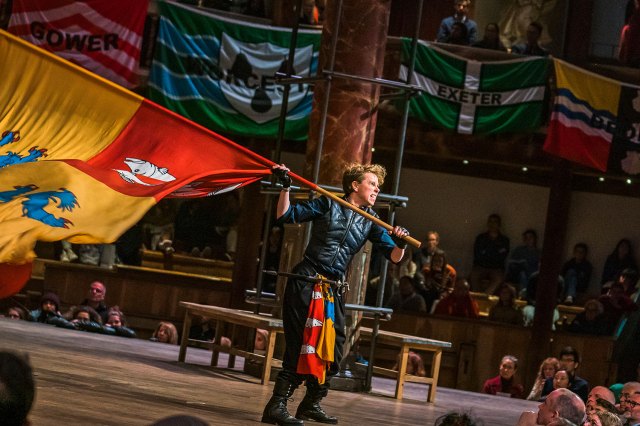
Michelle Terry has announced her departure date as artistic director of Shakespeare’s Globe at the end of 2027, marking the conclusion of a ten-year tenure that began when she succeeded Emma Rice. By the end of her spell, she’ll have been at the Globe for a third of its lifetime – comparable in length to previous directors Mark Rylance and Dominic Dromgoole.
Her leadership of the Bankside venue has been defined by a visible, performance-led presence, frequently on stage in iconic roles – first as Hamlet, but also as Lady M, Viola, Puck or Mother Courage (returning next summer). Under her tenure, the theatre’s success often felt closely tied to her individual turns.
Terry’s leadership featured bold and often incredibly successful programming choices, particularly around gender-neutral casting and gender-conscious productions. I’d say all things considered the hits outweighed the misses. Notable successes beyond the Shakespeare revivals included Charlie Josephine’s I, Joan, the new musical adaptation of Pinocchio and Morgan Lloyd Malcolm all-female production of Emilia, which went on to transfer to the West End. The electricity that hummed around that Wooden O during Emilia‘s run will be unforgettable to this writer.
These productions reinforced the Globe’s standing as a venue for new writing, demonstrating that some of the most influential contemporary plays of the century could originate there. Even play revivals felt ambitious – putting Arthur Miller’s The Crucible outdoors was a very savvy decision – and when not programming Shakespeare, she was always programming plays that felt like they could be in conversation with Shakespeare’s Globe.
Beyond the main outdoor theatre, Terry advanced a distinct vision for the Sam Wanamaker Playhouse: her tenure expanded the unique indoor space’s repertoire beyond Shakespearean drama to incorporate works by Henrik Ibsen and Anton Chekhov. While this isn’t completely groundbreaking (Rice even got a new musical into the wood-panelled space), this definitely made the Wanamaker an attractive prospect for the finest actors of the London stage wanting to chew on fresh shows – the Wanamaker made regular appearances as host venue for performers on the Ian Charleson Award shortlist, for example.
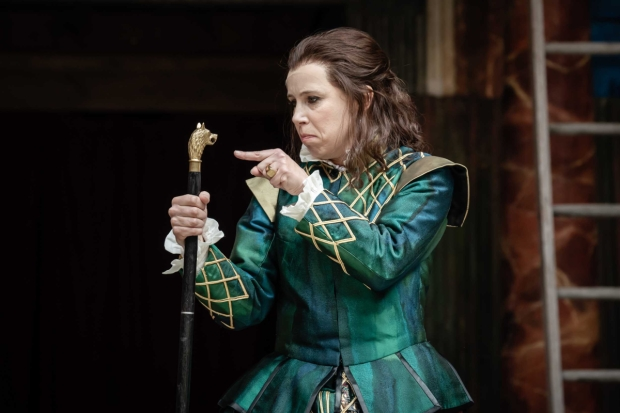
© Marc Brenner
Terry’s tenure was not without controversy. The production of Richard III sparked debates and criticism surrounding disability representation and ableism, alongside legal challenges that drew public scrutiny. Leading from front stage definitely meant drawing more criticism than most artistic directors experience.
That said, Terry was also one of the few remaining artistic directors who led major theatrical institutions through the pandemic and remained in place for its aftermath. She steered the Globe through unprecedented closures and reopened the outdoor space with vigour, while preserving core accessibility initiatives such as the £5 standing ticket scheme and making a firm statement about the theatre’s role in combating the climate catastrophe.
Her time at the Globe certainly represented a steadying of the ship following the departure of Rice, despite facing distinct challenges of its own. As the search for her successor begins, questions remain over whether the board will appoint another actor-director or return to a director-led model: there does seem to be a stronger argument for continuity over radical change.
As regular Globe performer and SNL star George Fouracres put it: “She grew compassion and intellectual endeavour here like Elizabethan gardeners grew periwinkle and marjoram, so now the whole place is green and blossoming with them. She is kindness on stilts and her legacy will grow as long as our hearts live at the Globe.”




source on Google
Latest Reviews
See all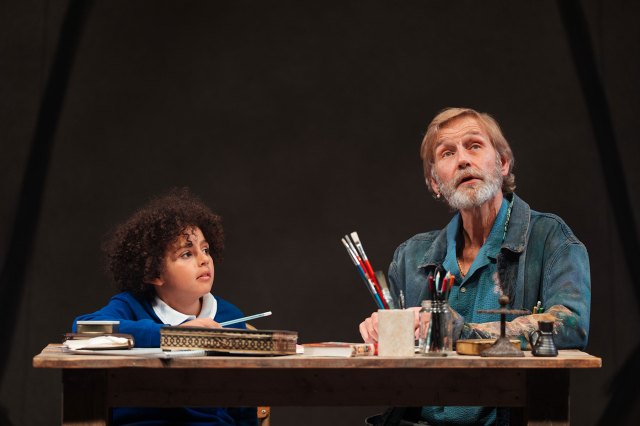

Latest Videos
The cast of The Haunting of Hill House on jump scares, spooky stories and Halloween costumes
It’s time to go trick or treating at Hill House…