
Tristan & Yseult at Theatre Royal Bath and on tour – review
The Kneehigh and Emma Rice Company revival will be touring until April 2027
 |
Tour
|
18 September 2026
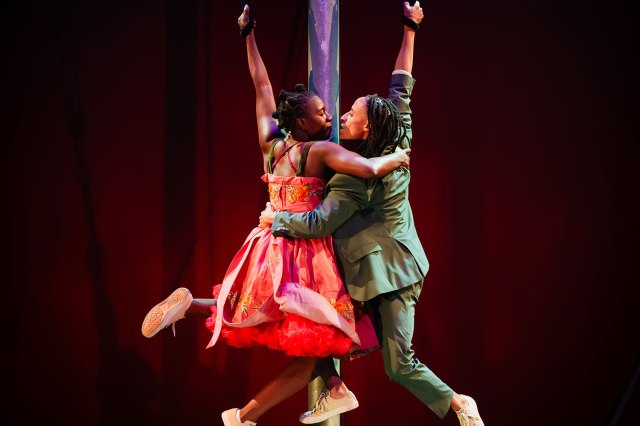
Twenty years after it first premiered, Emma Rice’s Tristan & Yseult still feels like one of the defining pieces of British theatre this century. Alongside her A Midsummer Night’s Dream, it remains the clearest example of what makes Rice such a distinctive theatre-maker. Where so much British theatre is built around words, psychology and literary interpretation, Rice has always been interested in feeling. She understands that some emotions are simply too big, too messy and too contradictory to be fully expressed through dialogue alone. Her theatre reaches for something more instinctive.
This ancient tale of doomed lovers is the perfect vehicle for those instincts. Love here isn’t polite, literary or restrained. It’s intoxicating. It overwhelms reason, destroys judgement and leaves chaos in its wake. Rice finds endless theatrical ways to communicate that intoxication, creating images that express what language never quite can. She remains almost unrivalled when it comes to staging romantic and carnal love. Throughout the evening, bodies become emotional landscapes: Skin glistens beneath Malcolm Rippeth’s lighting. Music surges through the production whenever words become insufficient. Characters sing because speech can no longer contain what they feel. Time and again Rice finds ways of externalising emotion, making internal states thrillingly visible.
The use of height remains particularly striking. Raised platforms become expressions of emotional distance and longing. Lovers reach for one another across levels. Characters climb, fall, vault and hover above the action below. At key moments Tristan and Yseult appear almost suspended within their own private world, elevated by passion and separated from reality. It is simple stagecraft transformed into something genuinely poetic.
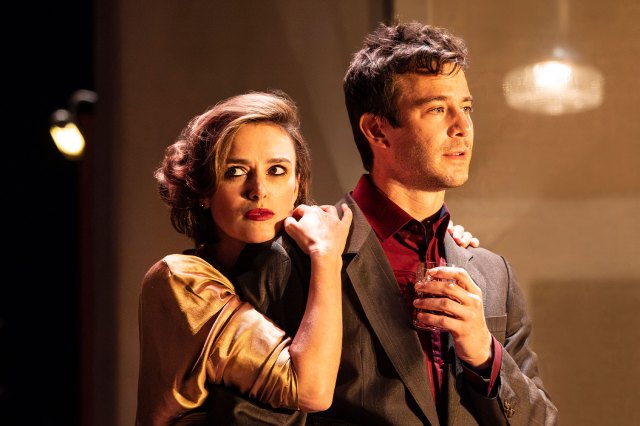
And there are images here that still take your breath away. This is theatre that thinks visually first, though the central performances are strong throughout. Nandi Bhebhe brings real steel to Yseult. She refuses to become merely a victim of fate or a passive romantic heroine. There is intelligence and determination beneath every decision, making her eventual tragedy all the more affecting. John Leader’s Tristan operates in a near-permanent state of emotional surrender. Frequently shirtless and utterly consumed by feeling, he often resembles a Romeo who’s fallen in love with the very idea of being in love. It’s a performance built on openness and vulnerability, and it serves Rice’s heightened world well.
Stephanie Hockley proves particularly affecting as Whitehands. At first she is almost impossibly glamorous, like a character who has wandered out of a 1960s French film, all oversized sunglasses, pouts and immaculate poise. Yet as events unfold and the facade begins to fracture, genuine hurt emerges beneath the surface. Hockley handles that transition beautifully.
Tom Fox first appears as the sneering Morholt, but it is his Brangian that becomes the evening’s emotional anchor. The role often threatens to become comic relief, the sensible woman repeatedly forced to tidy up after everybody else’s terrible decisions. Fox certainly lands the laughs, particularly around the infamous bed-trick sequence, but what lingers is the sadness underneath. Each compromise demanded of Brangian strips away another piece of her. By the end, what began as comedy has become unexpectedly tragic, a portrait of somebody repeatedly asked to sacrifice themselves for other people’s romance.
Yet perhaps inevitably, this revival loses a little of the magic that comes from original creation. The cast are uniformly excellent, but there are moments when you become conscious of actors executing something brilliantly rather than discovering it afresh. The production has acquired a professional slickness over the years. Nothing is technically wrong with that; indeed much of it is extremely impressive. But occasionally you find yourself longing for the sense of artistic danger that accompanied those earliest versions.
Still, that is a minor reservation about a major work. The songs soar, the imagery astonishes and Rice’s ability to stage emotion remains extraordinary. If some of the rough edges have been smoothed away by time, the heart still beats as strongly as ever. An iconic production finally back on the road, Tristan & Yseult remains essential viewing. Every theatre lover should see it at least once. Even with a little commercial sheen softening its original wildness, it remains one of the landmarks of 21st-century British theatre.






source on Google
Related Articles
See all


Latest Reviews
See all





Latest Videos
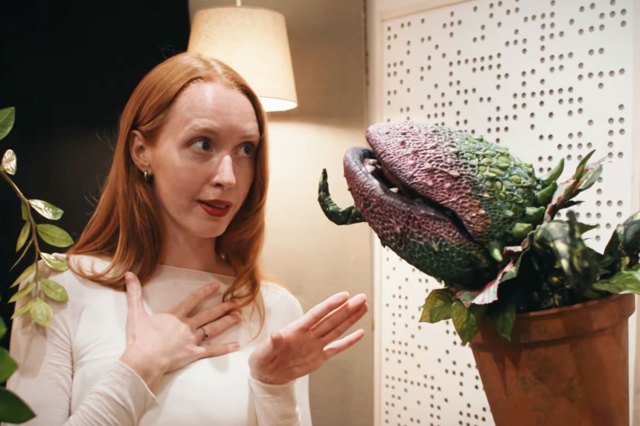
Jessie Elland performs “Somewhere That’s Green” from Little Shop of Horrors
From Manchester to Liverpool!