
Phantom of the Opera at 40: Why it will never become a museum piece
We sat down with director Seth Sklar-Heyn
 |
London
|
|
London
|
6 October 2026
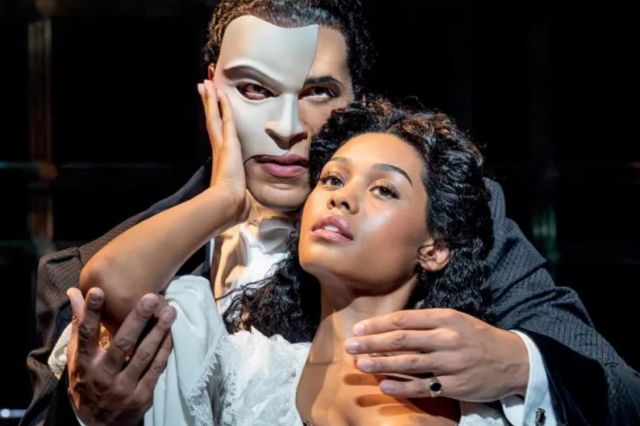
A lot has changed in 40 years, but Phantom of the Opera in the West End has always remained a constant.
It’s a bucket-list show, a must-see for theatre fans and novices alike, with an appeal to tourists from across the world as a destination in the heart of London.
“For all of the advancements in technology that we’ve experienced in our lives, and the expectations of what comes from new technology that we see daily, Phantom of the Opera, as a physical, tangible theatrical piece, has been able to remain at its core just that: a theatrical piece,” says Seth Sklar-Heyn, director of the current production playing at His Majesty’s Theatre since 2021. “And that’s really remarkable.”

Sklar-Heyn is calling from Germany, where another production of the show is in rehearsals. He lives and breathes all things Phantom, having started out as an assistant stage manager on Broadway in 2000, before climbing the ranks. Along the way, he has developed personal and professional relationships with the legendary creatives, affectionately referring to “Hal” and “Gilly” and the advice they offered him.
“There’s a great sense of being a practising historian of the piece. But there’s no point in embracing what it was and saying it can’t change,” he says, “It will never stay alive if our approach to it is to make it into a waxwork.”
“We have to allow it to continue to flex. We have to allow the company and actors and singers and musicians today to inform the material and deliver it in a way that’s true for them.”
“What I’ve had to learn is: hold on to that over here, and then with this hand, disrupt. Keep it moving. Don’t let it settle. Don’t let it just be what it was.”
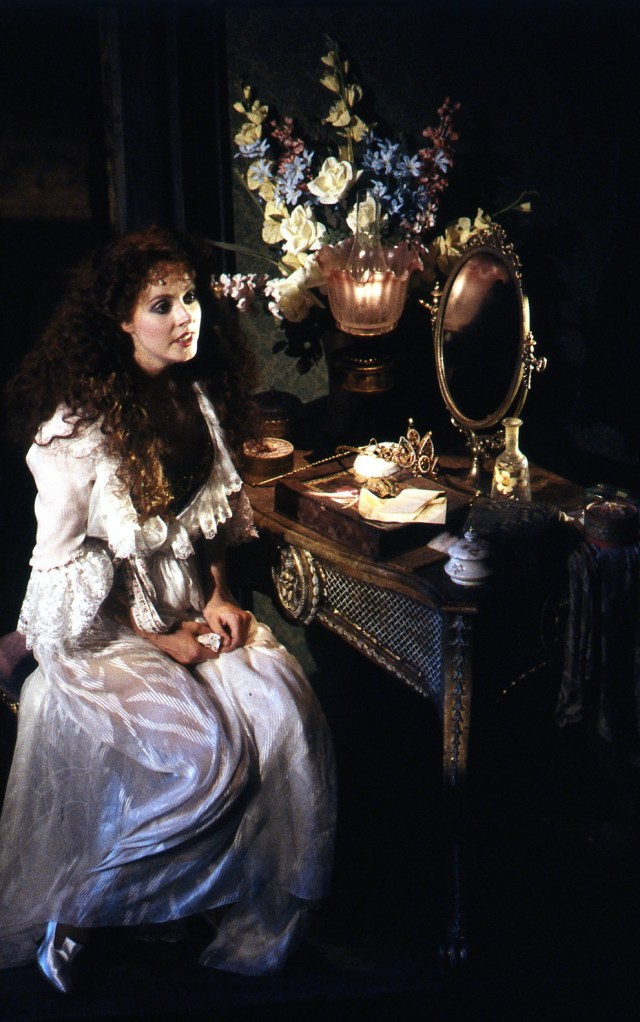
It helps, then, that the audience is given freedom to take what they want from the production.
“There’s a lot of space in Phantom of the Opera for the audience to exist, and it means that you’re going to have an individualised experience seeing the show,” the director says. “The design is built for [them] to fill in the gaps and come up with how this world actually exists.”
He elaborates: “The audience isn’t given that much when it comes to [the characters’] histories or some of the narrative points within the story. Plus, you’ve just got this guy in a mask. There’s a lot of space in there to ask questions.”
The archetypal characters – those of a disfigured musical genius haunting an opera house, the young soprano, Christine Daaé, he falls in love with, and Raoul, the man she adores – exist in theatrical drama.
“In ways, it’s an old-fashioned theatrical piece. We have wings and portals; we have drops that fly in and out. We have surprise and misdirection with light, whether it’s a pyrotechnic effect or truly a light bulb…
“And it’s a high romance. I mean, God forbid we have more high romance on stage. Don’t we all want to just get lost in the wash of a full orchestra, sweeping us along through someone else’s story? Don’t we all wish to be Christine with a cape?” He asks.
It’s right, then, that the director says: “I think of it all through Christine’s lens… The wondrous spectacle of the descent on the tipping bridge, the boat, the candles coming up out of the lake as we arrive in the Phantom’s lair – it’s all through her eyes. It would be completely different if somebody else were taking us there. She chooses to go through the mirror, so we follow her.”
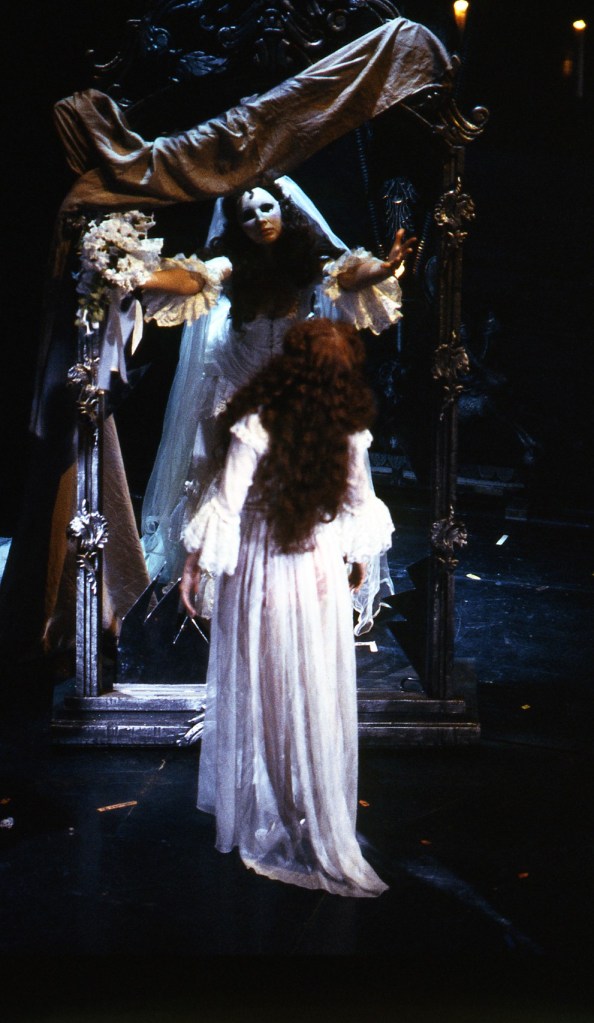
He continues: “It’s not about her being manipulated. It’s about her being intrigued enough, or needing some connection: something’s missing in her life. In this moment, this is the thing she thinks might close the gaps.”
As she embarks on a journey in unfamiliar territory, the audience is right there with her.
Andrew Lloyd Webber’s soaring score, with the rock organ and crashing crescendo, is so universal. “There are times when you don’t need the language,” Sklar-Heyn says. “You have the visuals, the musical themes and motifs, which in turn take you into the action and drama of the story.”
“It helps introduce people to what it is to go to the theatre and to let a story envelop you.”
Maria Björnson’s original costume and set designs created a heightened reality: “[She] took the real world, real history, real silhouettes, real designs of the time, and then broke the rules… By making it inherently theatrical – whether it’s the performances, the writing, the use of music to advance the story, or the visuals – it’s timeless. You can’t actually put a date on it, which means it’s never getting old.”
Though Phantom hasn’t dated over its 40 years, it has changed and evolved. Some of those changes are purely logistical; for example, fabrics aren’t always available, and each craftsperson takes a different approach when building new set pieces.
“Every time it’s handmade, it’s put through a different process, and as a result, the piece is never the same as it was the last time.
“It continues to evolve and change according to the hands it’s passing through, and the eyes it’s being studied by.”
Crucially, Sklar-Heyn has a lot of respect for the piece. “We’re always coming back to what the original creators were looking to achieve, based on what we’ve been taught and what we know, while allowing ourselves here and now to make sure that it works for today.”
It was, in fact, Cameron Mackintosh who gave him the advice for the job of directing the new production: step back, ask questions, and get on with it.
“I have a book where I’ve compiled every single piece of paper and note that I could find by any of the creative team, whether it was before my time, during my time. Every meeting I had with Hal Prince, I voice-memoed.”
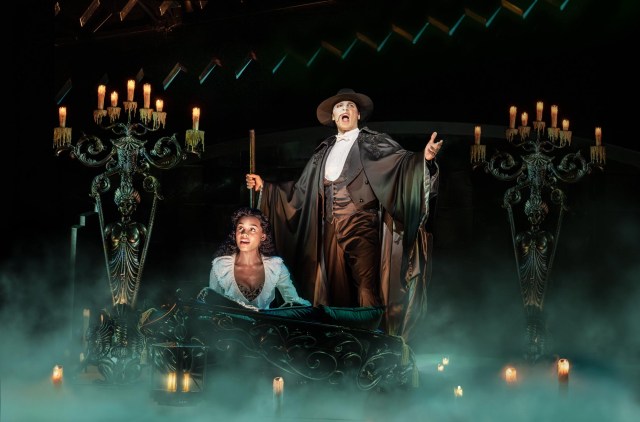
But he won’t simply recreate the past: “When people say to me, ‘How do you maintain Phantom?’ Well, the goal is not to make it exactly what it was yesterday, or five years ago, or ten years ago. The goal is to embrace how the creative team has approached the material.”
“I maintain it by allowing it to breathe. I want to see what the company is giving me tonight, and I’m going to respond to what’s on stage tonight. That will inform what happens tomorrow.”
“I want to meet your expectations. But I want to surpass your memory of what it is if you’re returning to the piece. I want to take what you walked away from the show with the first time, if you’re making a return visit, and completely surprise you.”
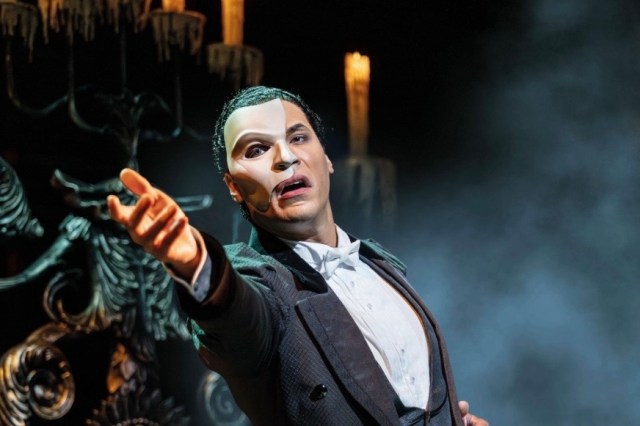
The 40th anniversary cast, which stars Jordan Donica, Beatrice Penny-Touré and Rhys Whitfield, has had this direction: “Don’t finish the story for the audience. Present these actions, present these events, be with one another, but don’t finish the story. Don’t tie up the loose ends for the audience. It’s the audience’s job. And it’s also their right.”




source on Google
Featured In This Story
Related Articles
See all
Latest Reviews
See all
Latest Videos
West End vs Broadway: Paranormal Activity – Ami Okumura Jones and Cher Álvarez on transatlantic terror
‘Tis the spooky season, after all…