
Jesse Tyler Ferguson and Charlotte d’Amboise talk Truman Capote and cancel culture
The pair star in the London premiere of Tru
 |
London
|
|
London
|
30 September 2026
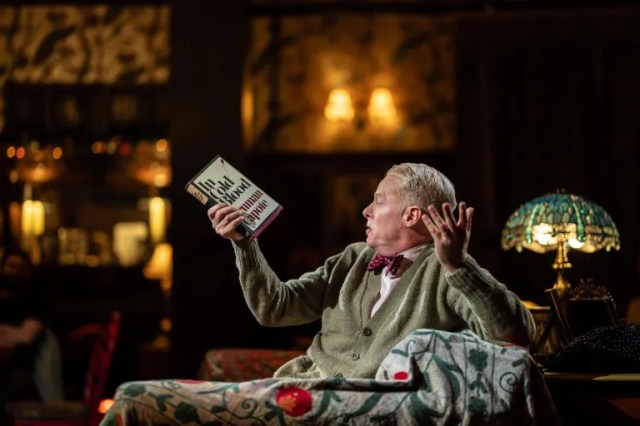
Before Gossip Girl, there was Truman Capote.
A writer obsessed with the truth, or at least his version of it. His apartment, where Jay Presson Allen’s Tru plays out, is stuffed with overpriced paperweights, antique ceramic cats, and Tiffany lamps. These treasured possessions, displayed to cement his social status, can instead be seen as props for a carefully constructed facade.
From humble beginnings, he transformed into a fixture of New York’s elite. But when the writer published humiliating stories of the company he kept, he found himself ostracised.
Jesse Tyler Ferguson takes on the gigantic role of the writer, slipping his feet into black velvet mule slippers, and prowling the apartment like a caged animal, a telephone wire trailing behind him. We meet Capote in the lead-up to a lonely Christmas in 1975, after he has been exiled from high society after Esquire magazine printed La Côte Basque, 1965, in which he revealed secrets about his wealthy friends.
“Why did they think I was around?” he asks in the play, which is made up of an estimated 70 per cent of Capote’s own words, and adds, “I am a writer.”
I’m hesitant to call Paul Farnsworth’s design a ‘set’; instead, he has transformed the Menier into Capote’s apartment, with audience members seated on dining chairs, armchairs and sofas within an encompassing installation.
“It’s very environmental. I really do feel like people are in my space and I’m in their space in a really beautiful way,” Ferguson says.
Rich Turkish rugs and leopard-print upholstery turn the apartment into a playground, while Capote’s famous works, Breakfast at Tiffany’s and In Cold Blood, his defining account of small-town murders, loom in the story. He signs off handwritten letters and faxes: “T. R. U. True,” while name-dropping the likes of Marilyn Monroe and Ava Gardner, and insisting that he danced with Louis Armstrong.
The space is littered with mementos – framed photos, handwritten notes, all kept as evidence of his celebrity and proudly displayed.
“[Capote] is a very famous American writer, but even in America, as people are getting older, he’s becoming someone who is in our history, in our past…” Ferguson says. His acquaintances, meanwhile, remain fixtures of popular culture: “So plays like this are very important, I think, because it generates excitement.”
Ferguson, who many will recognise from his five-time Emmy-nominated performance as Mitchell in Modern Family, is no stranger to talk shows and the machinery of celebrity culture. Born in the year the play is set, the actor is now in a similar period of life to the Capote he is playing.
“He really was famous for being famous, like many of our celebrities today. Although he was a great writer, he sort of became infamous on the talk show scene, and I became fascinated with him in that capacity too, just as a character.”
Across the 85-minute runtime, Capote interacts with the audience, sharing gossip and stories and seeking their validation.
“It is a bit of a mountain to climb every night. Fortunately, it doesn’t feel like that when I’m doing it… I have to really just live in it, else I’d look at the enormity of it, of the task at hand, and crumble.”
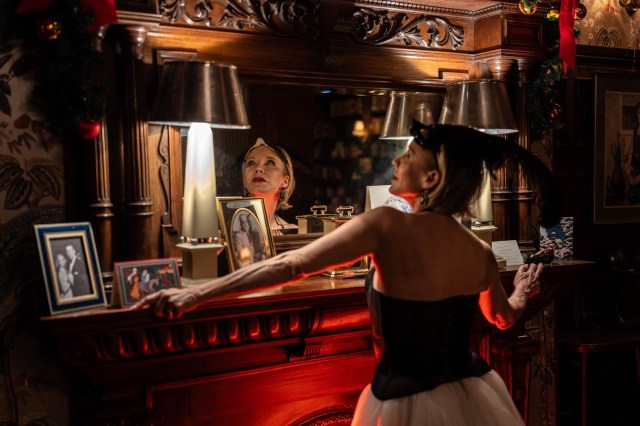
Ferguson isn’t completely alone on stage; he is joined by dancer and actress Charlotte D’Amboise, who embodies the high society women who Capote kept in his company. She observes and haunts him.
D’Amboise grew up in New York City, frequented spots like Studio 54: “My life wasn’t too far from theirs; I just wasn’t rich like them. But I did hang with them because my father was an artist and they like to have artists around.” As a result, she feels a particular connection to the Swans.
“I think the world has changed tremendously,” D’Amboise says, “In those days, there was a very, very small group that was the elite…. Now, you have so many famous and rich people. I mean, just overkill. It’s very, it’s very different.”
“Everything is out of proportion now. Everything is more than.”
Ferguson sees another parallel between Capote’s world and our own: cancel culture.
“I always consider [Capote] to be the beginning of cancel culture, and certainly we are living in that now. I think that there’s a lot of the stuff that Capote navigated, that we’re also still navigating today.”
He continues: “There’s this fascination with housewives and reality TV, and he was already feeding into that by airing out the secrets of his friends.
“We were getting to see a peek behind the curtain of people’s lives, and he tapped into something that we were hungry for. Now we exploit that greatly, and people actually sign up for it. Back then it was a real betrayal of trust. So I just find those parallels really interesting.”
Capote never let anything get in the way of sharing a good story. And this play, receiving its London premiere, tells a stunning version of one that time threatens to forget.




source on Google
Related Articles
See all
Latest Reviews
See all





Latest Videos
Gillian Anderson and Billy Crudup on staging a ‘boxing match’ in the round in Who’s Afraid of Virginia Woolf?
Marianne Elliott’s revival of the Edward Albee classic is running at London’s @sohoplace