
Hit Machine at Soho Theatre – review
Jonathan Caren’s new play, directed by Daniel Bailey, runs until 15 August
 |
London
|
|
London
|
15 July 2026
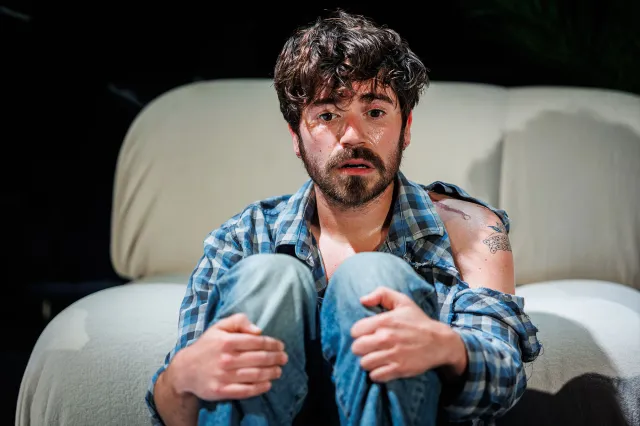
The bitterly estranged brothers of Sam Shepard’s True West get the music business treatment in this new American play by Jonathan Caren. Hit Machine, receiving its world premiere at Soho Theatre in a glossy production by Daniel Bailey, isn’t a direct adaptation of that seminal drama, but the parallels are inescapable. From the deep-seated family traumas and toxic rivalry, to the loafer younger brother muscling in on the elder sibling’s hard-won professional success, the shadow of Shepard hangs heavy over this enjoyable but slight new piece.
Where Shepard’s uptight but affluent Austin in True West was an acclaimed Hollywood screenwriter, Caren’s Wes (How I Met Your Mother’s Josh Radnor) is a multi-millionaire, platinum-selling record executive. He’s disturbed over on the West Coast in his gleaming hi-tech home (convincingly evoked by set designer Amelia Jane Hankin) by his puppyish wastrel of a younger brother Alex (Noah Galvin), a struggling New York-based musician, ostensibly to plead for help for their financially stricken mother.
There are old scores to settle, and family wounds are reopened. Wes and Alex’s father was abusive, and the younger son has long-term scarring, both emotional and physical, from when, as a child, he tried to intervene in a particularly nasty attack on their mother. Alex resents the emotionally distant Wes not just for his extraordinary wealth (“how can you ever be wrong when you’ve got all this money telling you how right you are?”) but also for getting far away from the damaging family dynamics that have stunted his own development.
Galvin portrays Alex as a fascinating ball of pain, humour and nervous energy, still longing for his brother’s approval while simultaneously beating himself up for it. Radnor’s role is more one-note in terms of the writing (how many ways are there to express disapproval and exasperation?!), but he’s such a good actor that he finds some interesting colours in Wes’s laconic defensiveness and grudging dispensations of creative advice to his eager little brother (“don’t stop halfway and call it genius”). They make a fine team, one that elevates a script that too often tends towards clichés and mawkish sentimentality into something satisfyingly watchable.
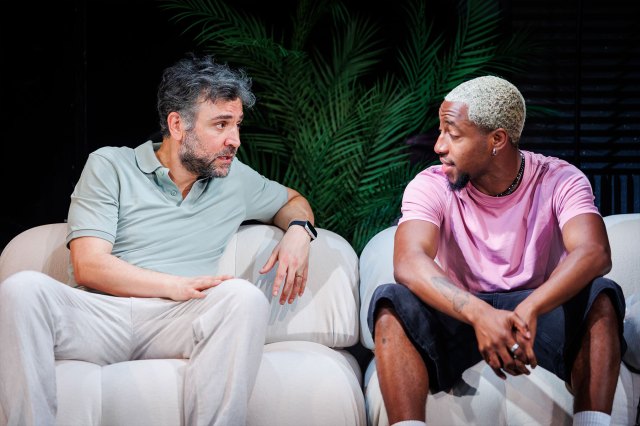
There’s a lot of music in Hit Machine (courtesy of electronic muso C J Harper and triple Grammy-winning Ben Harper), and it’s the one aspect where the show feels genuinely original. Having musicians of that calibre involved, and the casting of Khalil Madovi, terrific as a rap megastar, impressed with Alex’s creative output (much to Wes’s chagrin), lends the piece a unique authenticity.
Bailey’s direction is slick and pacy, teasing every scrap of tension and humour out of writing that engages but never truly surprises. The 90 minutes zip by.
Taken as a whole, Hit Machine works though: the luxury casting of the two American leads really pays off, Madovi feels like a star in his own right, the show looks great, and the musical aspect is fascinating.






source on Google
Featured In This Story
Related Articles
See all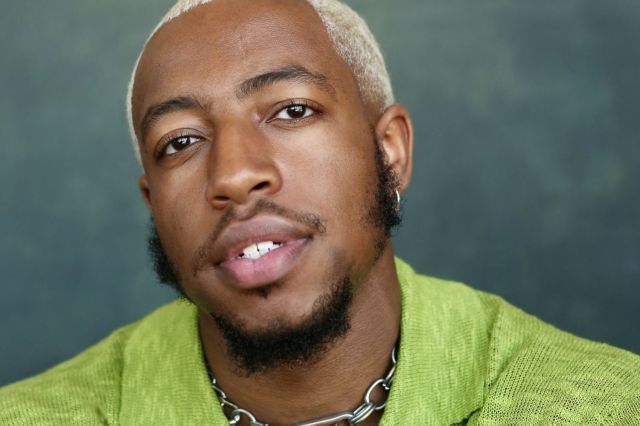


Latest Reviews
See all





Latest Videos
New musical Nero releases first listen with Andrew Barth Feldman
It is from the writers of Spring Awakening