
Giffords Circus director Cal McCrystal: ‘Physical comedy is an international language’
The circus spectacular has returned for its 2026 tour
 |
Tour
|
|
Tour
|
27 May 2026
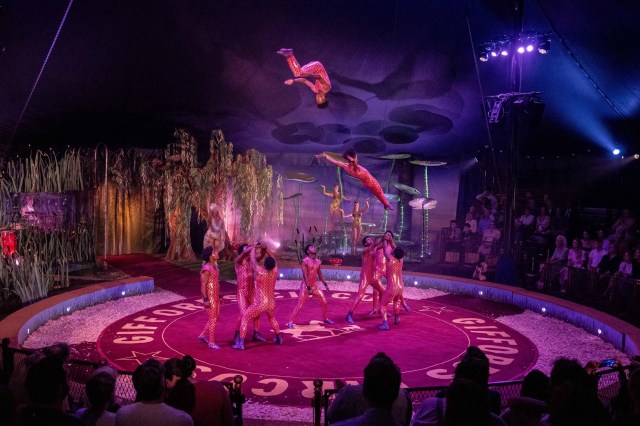
“I try to be a very performer-focused director,” McCrystal notes. “It’s always about sort of getting to know someone and finding the bits of their personality that will work best for the audience and bringing that out”.
Currently helming Giffords Circus’s 2026 production, McCrystal spoke with WhatsOnStage about the inspirations behind the new show, navigating shifts in audience expectations, and his remarkably packed multi-year schedule.
For Giffords Circus, innovation is structural rather than erratic. The circus introduces a brand-new theme each year, a choice driven by a desire to give loyal audiences a completely fresh experience from the previous season. “The motivation really is to find something that will be completely different from the year before so the audience has a very different experience,” McCrystal explains.
McCrystal notes that the narrative anchor for the 2026 production draws directly from traditional British iconography. Inspired by classic children’s literature, specifically the anthropomorphic animals of Kenneth Grahame’s The Wind in the Willows, the performance introduces a highly specific visual landscape inside the tent.
The scenic architecture features a beautiful willow tree replete with bulrushes and other flora. While the atmosphere leans heavily into a nostalgic aesthetic that appeals to Giffords’ regular attendees, McCrystal insists on maintaining a story. “We do have a cutting edge in the narrative that threads the whole show together,” McCrystal emphasizes. “It’s a very modern edge… we want to be able to pick themes that we can walk hand in hand with comfortably within the show”.
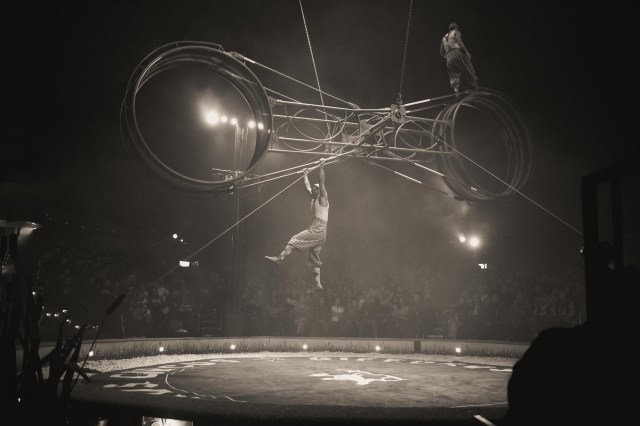
A notable logistical feat in the 2026 show is the integration of the Wheel of Death. Fitting an act of this scale into a touring big top presented significant structural hurdles; early rehearsals saw performers clearing the tent’s cupola by mere millimetres.
McCrystal shares that the physical precision required to deliver the act within such a confined space has ultimately rendered it one of the most technically breathtaking sequences in the production. “I never dreamed we’d have a Wheel of Death,” McCrystal admits. “We found this act fits within millimetres. The guys, Valencia Flyers, who we first met rehearsing it, they were banging their heads on the cupola, and we were thinking, ‘Are we going to be able to do this?’ But there was a way of doing it so that the number actually is breathtaking to watch”.
McCrystal is very much drawn to the global consistency of his work, noting that physical comedy remains highly resilient against shifting social codes, functioning as an international language that translates consistently whether performed in London, the Edinburgh Fringe, Las Vegas, or China. “The same thing gets a laugh in China as it does in London, Edinburgh Fringe, or in Las Vegas,” McCrystal observes. “Physical comedy is a wonderful kind of international language”.
The reality of directing a touring circus demands intense physical and operational discipline. The Giffords schedule is notably gruelling, requiring the cast to perform two shows a day on weekdays and three shows daily across Saturdays and Sundays, balanced by just two rest days a week.
“It is quite a demanding schedule,” McCrystal describes. “Circus people, it’s an odd life… it’s a very nomadic life. But you do get these incredibly dedicated people that take so much pride in every single performance. It’s very humbling to watch how hard people work”.
Giffords Circus frequently bypasses urban arenas in favour of heritage sites across the Cotswolds and southern England. A substantial portion comprises multi-generational devotees: “Two-thirds of the audience have seen it at least once before and have possibly been coming for 10 or 15 years,” McCrystal says.
This enduring appetite for live performance is something McCrystal connects directly to the post-pandemic landscape. Giffords was one of the few organisations able to maintain operations during COVID-19 lockdowns by removing the sidewalls of their tents to classify as an outdoor event. McCrystal reflects that rather than damaging his career, the period intensified the public’s desire for shared, interactive communal experiences. “After the lockdown, I think there was a taste for a collective experience,” McCrystal asserts. “There can be no greater collective experience, I think, than in comedy, where it’s so interactive. People just love to laugh”.
Looking ahead, McCrystal’s professional footprint shows no signs of contracting. Later this year, his schedule includes directing The 39 Steps in Derby, alongside ongoing opera projects. “I feel very lucky every day with what I’m invited to do,” he concludes. “I’m taking bookings into 2029 now… It’s not that unusual in the opera world to book so far ahead because they do have to if they want the big opera singers. But it’s great to have these other gigs, which I really love.”




source on Google
Related Articles
See all

Latest Reviews
See all

Latest Videos
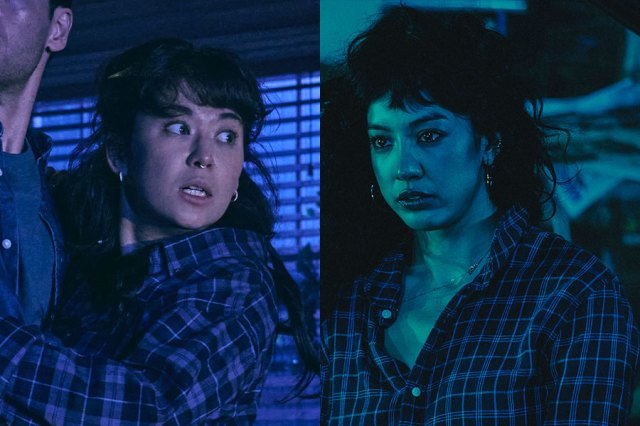
West End vs Broadway: Paranormal Activity – Ami Okumura Jones and Cher Álvarez on transatlantic terror
‘Tis the spooky season, after all…