
Five career-defining Jamie Lloyd productions
Today, 12 November marks the director’s birthday
 |
Nationwide
|
12 November 2026
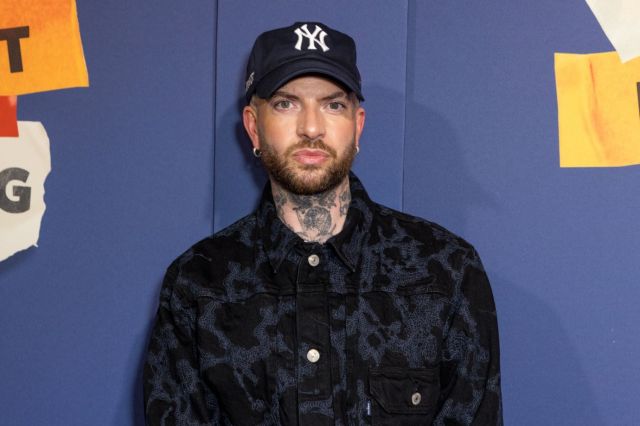
Blood-splattered muscled torsos, black boxer shorts, wooden chairs and stripped-back sets. The Jamie Lloyd aesthetic has is instantly recognisable.
And it is an aesthetic that has Hollywood stars ready to be cast and audiences clamouring for tickets. Since 2006, Lloyd has been building up his identity as one of the world’s most exciting directors, making new out of familiar material. As well as that, his relationships, theatrical instincts and willingness to challenge expectations have made his career as extraordinary as it is today and led him to develop his trademark look.
The Caretaker
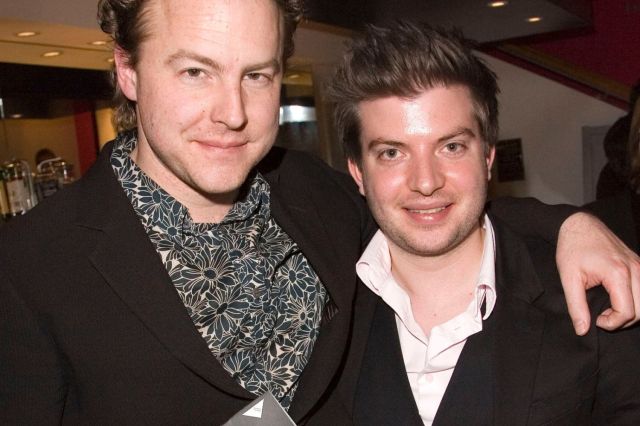
Connections have been crucial, and this was the case right from the very start. Lloyd made his directorial debut with Harold Pinter’s The Caretaker at Sheffield’s Crucible, where Pinter himself attended and arranged a London transfer in 2007. Lloyd returned to the writer in 2018, directing a dedicated six-month season of Pinter’s short works at his namesake West End theatre. It was aptly titled Pinter at the Pinter and concluded with a smash-hit revival of Betrayal starring Tom Hiddleston, Zawe Ashton, and Charlie Cox.
Away from Pinter, Lloyd has tackled works by other famed artists, including Jean Genet’s The Maids, Christopher Marlowe’s Doctor Faustus, Edmond Rostand’s Cyrano de Bergerac, Anton Chekhov’s The Seagull, and Henrik Ibsen’s A Doll’s House, all under a contemporary lens.
The Pride
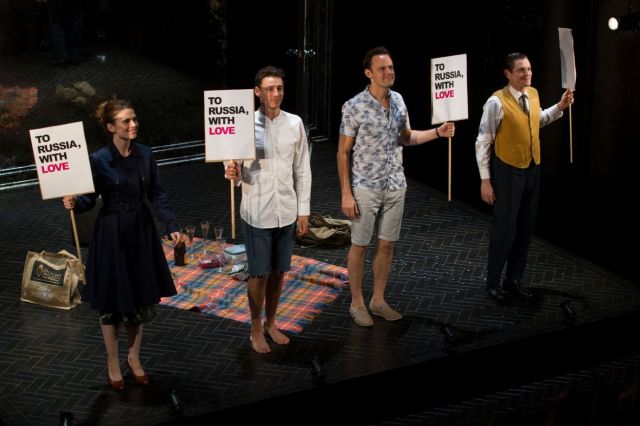
The world premiere of Alexi Kaye Campbell’s drama The Pride debuted in 2008 at the Royal Court under Lloyd’s direction, with a cast including Bertie Carvel, JJ Feild, Lyndsey Marshal and Tim Steed. It earned Lloyd his first Olivier Award for Outstanding Achievement in Affiliate Theatre; since then, he has picked up a directing award for Sunset Boulevard and shares several Best Revival trophies.
With a few extra years under his belt and with the freedom, confidence and pull that comes with being artistic director, Lloyd revisited the piece in 2013. As part of his Trafalgar Transformed season, the show evolved, starring Hayley Atwell, Harry Hadden-Paton, Al Weaver, and Mathew Horne. Long-time creative collaborator Soutra Gilmour’s set was largely comprised of one big mirror acting as a backdrop, and reviews commented on the effectively sparse design. The same season, politically charged on the doorstep of Whitehall, also included Macbeth with James McAvoy and The Hothouse with Simon Russell Beale and John Simm.
It isn’t unusual for Lloyd to return to work and evolve his creations; he did it too with Evita (which we’ll discuss more below!) and with Cyrano de Bergerac, which he first directed in 2012 in New York. However, he is now mostly remembered for his more radical award-winning adaptation at the Playhouse Theatre in 2019 starring James McAvoy.
Urinetown
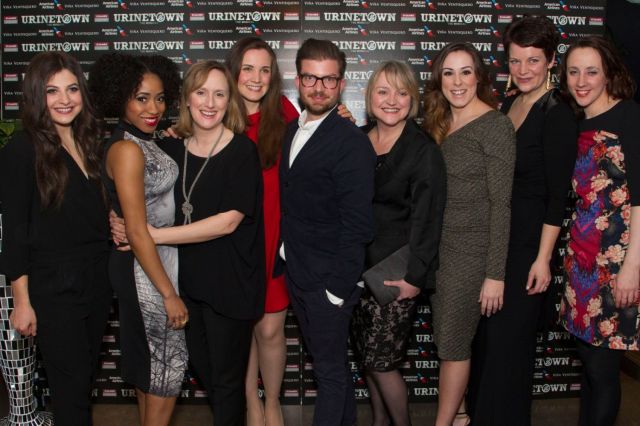
Most of Lloyd’s credits are plays, but he sure knows how to make an impact with a musical. His first was the highly successful Piaf with Elena Rogers, during his impressive tenure as associate director at the Donmar Warehouse. The revival, trimmed to a neat and snappy 90 minutes, transferred to the West End and Buenos Aires. After that came Assassins, this one – with a cast including Catherine Tate, Aaron Tveit, Andy Nyman and Jamie Parker– was set in a carnival fairground. This production sounds like the perfect analogy of Lloyd’s whole ethos. His childhood, growing up with a mother who ran a fancy-dress business and introduced a variety of characters into his life, is well documented. The fun is undercut with darkness, including an abusive stepfather.
His West End revival of Urinetown, the satirical and irreverent musical about peeing, follows that lead. In press materials, the director said that it is an “off-kilter look at a dystopian future that chimes with our times.” In addition, Lloyd has staged shows in unconventional spaces. He staged The Pitchfork Disney “in the cramped, squalid basement of Shoreditch Town Hall,” and our WhatsOnStage reviewer called it “immersive, but mostly claustrophobic.”
Around this time, Lloyd was due to direct the musical adaptation of Back to the Future, though he ultimately withdrew due to creative differences. He was adamant that he would not make a cut-and-paste of the movie on stage, and made the admirable decision to walk away from a major project that did not align with the career he was chasing.
Sunset Boulevard
The minimalist design of a maximalist musical led the conversation behind two of London’s biggest musical revivals of Sunset Boulevard and Evita. Gilmour, once more, was the aesthetic visionary behind the multi-award-winning shows. In the first, Pussycat Doll Nicole Scherzinger had a star turn as Norma Desmond, as the production used restraint and control to trigger conversation about women and aging in the public eye. Evita, first staged outside at Regent’s Park, then expanded inside at The London Palladium, cast Rachel Zegler, a wronged young woman ostracised for speaking out, as the misunderstood first lady Eva Peron. It put the tale under a contemporary lens of a modern-day influencer-style figure. Both performers have popular appeal, and their casting evolved the original work.
Scherzinger’s blood-splattered black slip dress became an iconic reference point, as did Zegler’s show-stopping performance on the balcony of The London Palladium, attracting thousands of fans. And, of course, there was Tom Francis’ “Sunset Boulevard” walk down the streets of London and New York beamed live into the theatre. The camera-ready moments (courtesy of the revolutionary Nathan Amzi and Joe Ransom for Sunset) broke Lloyd into wider popular culture, making some of the hottest tickets in town accessible for all to enjoy. This is an imperative part of the company, which strives to offer affordable ticket prices.
Much Ado About Nothing
Lloyd and, by extension, the Jamie Lloyd Company have a family feel about it. There are key creatives associated with the company: Gilmour, choreographer Fabian Aloise, lighting designer Jon Clark and more, while performers return for multiple productions and transfers. A host of starry names have been part of the company, including Jessica Chastain, Keanu Reeves, Alex Winter, Emilia Clarke, Martin Freeman, Uzo Aduba, Gemma Chan, and many more. Early in his career, Lloyd assisted on major productions: Trevor Nunn’s Anything Goes and Michael Grandage’s Guys and Dolls, later going on to work with the Donmar.
Recently, the relationship focused on Shakespeare, after he staged three plays in one year: Romeo and Juliet, The Tempest, and Much Ado About Nothing.
The latter recently started performances on Broadway and took most of its praised cast, including Hiddleston, Atwell, and Mason Alexander Park, with him. The production marked a shift for the director, who floods the stage with pink confetti and Aloise’s fun choreography for a social media-ready curtain call. Twenty years after his directorial debut, Lloyd has spent the time working out how he wants theatre to be, and is now loudly embracing the spectacle.




source on Google
Related Articles
See all


Latest Reviews
See all




Latest Videos
Take a first listen to new musical Ayla ahead of one-night-only concert
The show runs at the Other Palace at the end of the month