
Cloud 9 at the National Theatre – review
Dominic Cooke’s revival of the Caryl Churchill play runs at the Lyttelton until 13 January
 |
London
|
11 November 2026
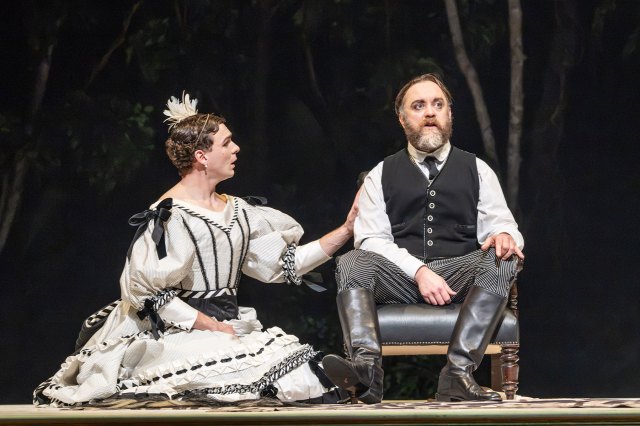
Caryl Churchill’s Cloud 9 was written in 1978, and first performed in 1979, yet it lands on stage like a radical blaze of hope. It’s still incendiary, still challenging, still surprising.
1979 was the year of Amadeus and Faith Healer, but also of On Golden Pond, and it feels astonishing to imagine this breakthrough play by an up-and-coming British writer arriving to shatter conventions both of theatricality and of thought.
It binds together two very distinct strands. The first half is a farcical examination of British Colonialism and its effect on the social and sexual identities of the individuals who ran the Empire. The second bends time; it takes place in London in 1979, but it brings those characters together 25 years later, when they are trying to define and explore new ways of living with themselves and with others.
This fine revival, directed with immense sensitivity and poise by Dominic Cooke, makes the breaking of the frame of the past explicit. In Miriam Buether’s design, the opening act – set in Victorian Africa, with a backdrop of lush foliage and heavy light – is enclosed by an ornate gilded arch; heavy red curtains close between five scenes that play like tableaux.
After the interval, the plaster curlicues are shattered and lie across the stage, making a kind of adventure playground. The red curtain lies discarded on the front rows and the audience from those seats now sits on stage, joining in the singing of the song that gives the play its title. “It’s upside down when you reach Cloud Nine.”
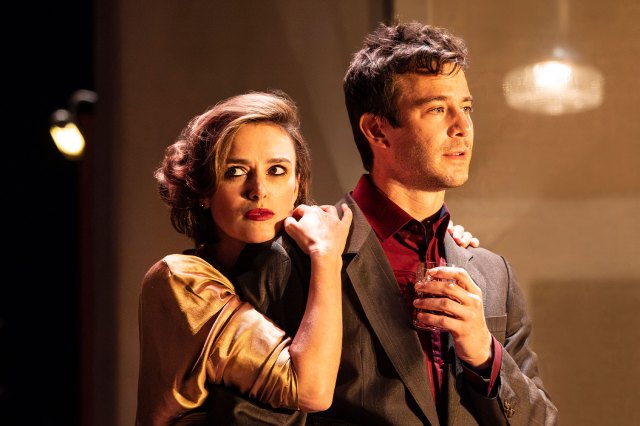
The effect of this is both to distance the imperial past and to make it clear that it shapes the sexual and gender identities of the people growing up in its shadow. The structural audacity of this idea is further emphasised by the fact that the play requires gender-switched casting: in both acts male actors play Betty, the Victorian wife conforming to her husband’s image of her, and her son Edward.
Bearded Samuel Troughton is the bullying, blustering patriarch in Africa and a six-year-old child in 1970s London. Samuel Wyer’s textured costumes put men in corsets, and women in deliberately restrictive pantomime crinolines that bob as they move. The drums of revolution beat in the soundtrack of both halves.

There’s a danger in writing about Cloud 9 that you make its questioning of sexual politics sound serious. Part of its joy, is just how funny it is. The first part plays not only as a parody of colonial life – with its Christmas picnic, toasts to the Queen and the flag, and constant emphasis on rigor and rightness – but also as a sex comedy, where unsuitable couplings are expressed in florid terms.
Sometimes – as when Tom Mothersdale’s cad-like explorer Harry reveals his passion for Edward, who is a seven-year-old child – the joke shocks. The character of the black servant Joshua, who has so absorbed white attitudes that he can ignore the British killing of his parents with apparent equanimity, is deliberately uncomfortable. He was originally played by a white actor. Here, Eloka Ivo both emphasises the stereotype, yet allows considerable, dignified complexity to emerge beneath.
Churchill is suggesting, I think, that the times force people to adopt roles, and that reshaping the world away from the heavy hand of history is always a complex affair. In the second part, Ivo plays Gerry who is in a relationship with the grown-up Edward, two gay men trying to discover how to fulfil their own sexual needs.
Victoria (Charlotte Ritchie), who was represented by a ventriloquist’s dummy in Africa, is reading books about feminist awareness but married to Martin (Mothersdale again), who is writing a novel about women told from the women’s point of view, yet unable to shake off patriarchal attitudes. “There’s no point in being so liberated, you make yourself cry all the time.”
The writing is explicit. These are characters who are all discovering their sexual beings, however non-binary and gender-fluid that might be, and in finding themselves, they might actually begin to shake off the entrenched attitudes that shape society. The individual who perhaps goes on the longest journey is Betty (beautifully played with simpering sadness in the first act by Sam Thompson and with strait-laced dignity in the second by Ellen Robertson) whose final acceptance of herself and the people around her is unexpectedly and heart-raisingly emotional.
It’s a great play, superbly staged, dazzlingly rich. The politics of gender may have changed in the intervening years, but Churchill’s always rigorous willingness to grapple with the hardest questions makes its ultimate tolerance and acceptance of the right to be different piercingly relevant today.





source on Google
Featured In This Story

Related Articles
See all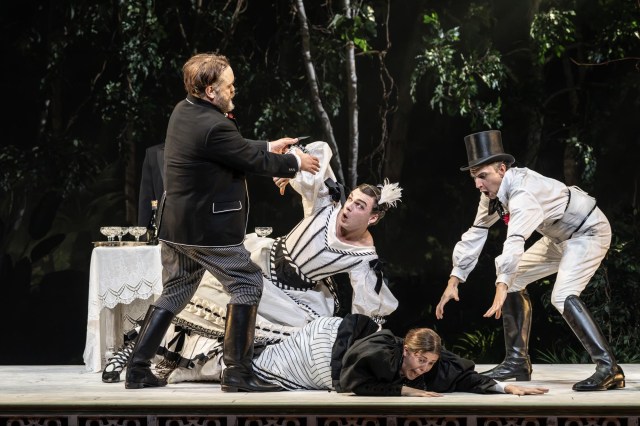


Latest Reviews
See all





Latest Videos

Jessie Elland performs “Somewhere That’s Green” from Little Shop of Horrors
From Manchester to Liverpool!