
Business plan submitted for Streatham Hill Theatre’s commercial use
Director Thom Southerland and designer Morgan Large spearhead the attempt to bring the venue back into use for stage shows
 |
London
|
12 November 2026
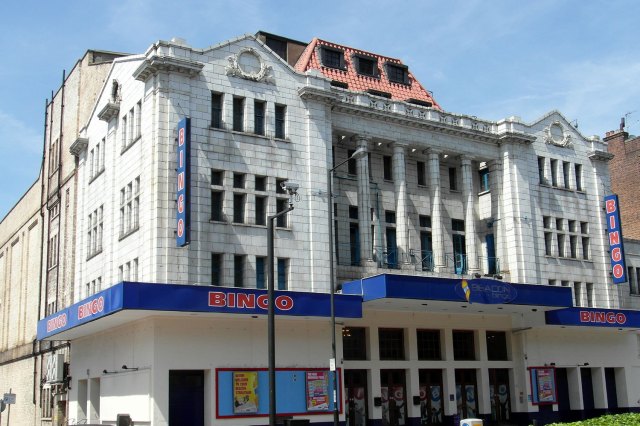
A consortium led by theatre director Thom Southerland has published plans to restore Streatham Hill Theatre and return the Grade II listed building to use as a commercial theatre, as a separate planning application from the venue owners seeks to convert the space into a church.
Built in 1928, the venue was the last theatre designed by WGR Sprague and staged shows until 1962, when it was converted into a bingo hall. It was listed in 1994. The theatre’s new owners, Ruach City Church, have submitted a planning application to Lambeth Council in April 2025 to change the building’s use to a place of worship. The application is being opposed by campaign group Friends of Streatham Hill Theatre, which is calling for the venue to be restored as a working theatre.
The consortium led by Southerland, which includes theatre designer Morgan Large and has worked in partnership with theatre groups including Troubadour Theatres, has developed a detailed business plan for the building’s future. The confidential plan was submitted to the owners and other stakeholders, with a topline summary made public.
The proposals would see Streatham Hill Theatre, currently on the “Theatres at Risk” register from the Theatres Trust, become a commercially viable presenting venue, hosting touring musicals, plays, dance, family productions, an annual pantomime, comedy, live music, concerts, cabaret and special events.
The programme could also include productions transferring from the West End, major touring companies and international artists, alongside selected new productions and co-productions.
The plans also include corporate events, awards ceremonies, filming and private functions, supported by renewed hospitality facilities, bars and a café.
Community engagement would form another part of the proposed operation, with school partnerships, subsidised tickets, youth theatre, workshops and creative learning programmes. Local amateur theatre companies, community organisations and creative practitioners would also be encouraged to use the building for performances, rehearsals and events.
The restoration would seek to preserve the theatre’s historic auditorium, architectural features and stage machinery, with heritage tours, open days, exhibitions and talks forming part of its future programme.
The consortium’s proposals also identify the potential economic benefits of reopening the venue, including increased business for local restaurants, cafés, bars and shops, as well as employment and training opportunities.
Southerland said: “Streatham Hill Theatre is too important to remain dormant. We have developed a comprehensive plan for its future, and believe there is an extraordinary opportunity to bring this remarkable building back to life. Our ambition is to create a major theatre for South London, bringing outstanding touring productions, musicals, comedy, music and family entertainment to the area. But just as importantly, we want to create a building that is genuinely part of its community. A place where young people can discover the arts, where local schools and community groups have a home, where emerging talent can develop, and where audiences can experience world-class entertainment on their doorstep. We want Streatham Hill Theatre to become a building that inspires, employs, trains, entertains and belongs to Streatham. This is an ambitious project, but the vision and the plan are in place, and we are ready to move forward.”
Friends of Streatham Hill Theatre, who have been campaigning for the venue over a number of years, commented on the Ruach City Church proposal: “The planning application is to change the theatre into a Place of Worship. However, Streatham does not need another church. It has nearly 30 churches already, but no working theatres at present. There is a large empty church only a few minutes from the Theatre. It seems absurd to lose a purpose-built theatre by turning it into a church when there is an empty purpose-built church nearby.”
The campaign group is encouraging supporters of the theatre restoration to contact Lambeth Council’s leadership and councillors, Streatham MP Steve Reed and London Assembly member Marina Ahmad to express their views.




source on Google
Related Articles
See all

Latest Reviews
See all



Latest Videos
Take a first listen to new musical Ayla ahead of one-night-only concert
The show runs at the Other Palace at the end of the month