
Kohlhaas review – Arinzé Kene mesmerises in tragic tale of equine injustice
The show’s run wraps up this evening in Brighton
 |
Brighton
|
|
Brighton
|
5 May 2026
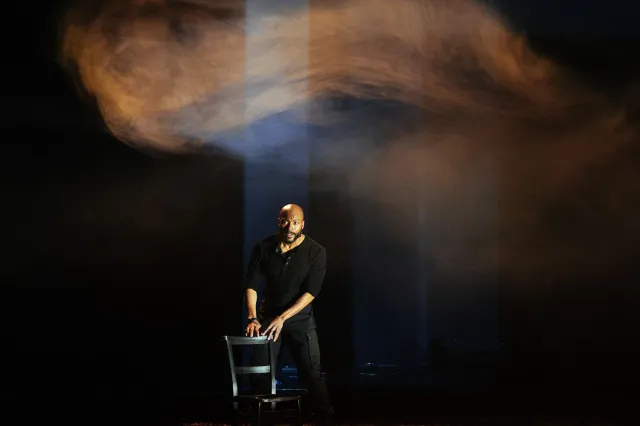
The newly, and exquisitely, restored Corn Exchange provides a sparse, echoing arena for Kohlhaas, a production that interrogates the breaking point of obedience and order.
It’s an apt choice of venue (built as a riding school for George IV’s horses), given it details a case of equine injustice played out across a nation. Horse stories do seem to be all the rage at the moment – Equus being revived at the Menier Chocolate Factory while War Horse trots back onto the Olivier stage at the National. All are wildly different.
Directed by Omar Elerian and performed solo by Arinzé Kene, Kohlhaas is a faithful translation of Marco Baliani and Remo Rostagno’s Italian play – itself an adaptation of Heinrich von Kleist’s 19th-century novella. Though the source material is centuries old, Elerian has said this staging is profoundly shaped by the recent past: he embarked on the project during the pandemic, against the backdrop of the George Floyd protests.
The plot remains a clinical study of systemic failure. Michael Kohlhaas, a 16th-century horse dealer, is a breezily optimistic man of graft who operates entirely within the legal frameworks of the German principalities. When a local baron arbitrarily seizes two of his black stallions and, without reason, forces them to be kept in a pig sty where they whither away, Kohlhaas is incensed: he initially seeks redress through the courts, but failure to gain ground is not due to a lack of evidence, instead a lack of influence. The aristocracy closes ranks, the law protects the protector, and Kohlhaas is left with a choice: accept the injustice or embark on a journey to seek retribution.
With remarkably few bells and whistles (there’s some excellently subtle fire effects courtesy of installation and costume designer Ana Inés Jabares-Pita), Elerian’s production forces a rigorous critical analysis of what insurrection actually looks like. It asks at what point a crusade for justice becomes a monstrosity of violence. In our current climate, if the law is used as a tool of the elite to make fools of those who follow it, does the citizen still owe that law their fealty?
Kene carries this question for a blistering 90 minutes, beginning as an endearing, principled (and arguably naive) merchant but rapidly evolving into a physically abrasive insurgent. This transition is handled with remarkable nuance: Kohlhaas is systematically hardened by his environment, at risk of being extinguished by the very social order he initially firmly believed in. Hopping between characters and armed only with a chair, Kene operates with unwavering clarity – multi-roling parts from court, to the stable and beyond.
Supported by Jackie Shemesh’s dynamic lighting and ethereal smoke effects, the production moves with a lean, urgent pace. It marks an important milestone: Brighton Festival’s first original work produced in its 60-year history. I doubt this is the last we will see of Kene and Elerian’s journey to the 16th century.





source on Google
Related Articles
See all


Latest Reviews
See all


Latest Videos
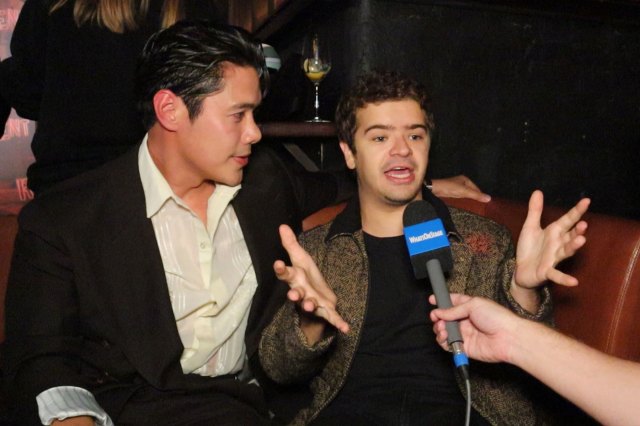
Gaten Matarazzo and the cast of Rent on living “La Vie Bohème” in the musical’s 30th anniversary year
Luke Sheppard’s West End revival is now officially open at the Tom Stoppard Theatre!