
Into the Woods moves to the West End – review
Jordan Fein’s multi-award-winning revival is now at the Noël Coward Theatre
 |
London
|
|
London
|
7 October 2026
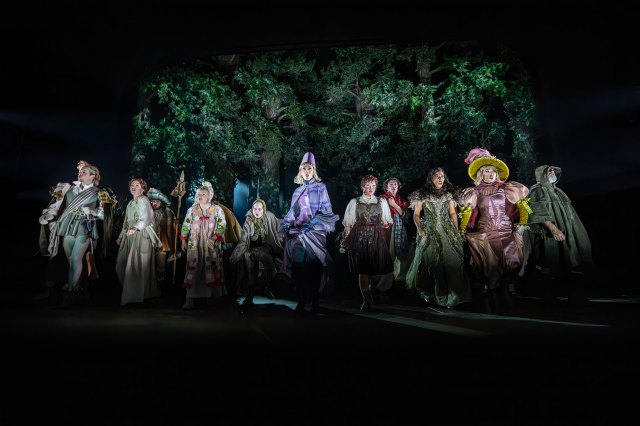
A show inevitably transforms when it transfers from the expansive, sprawling canvas of a venue like the Bridge Theatre into the proscenium frame of a West End space like the Noël Coward Theatre.
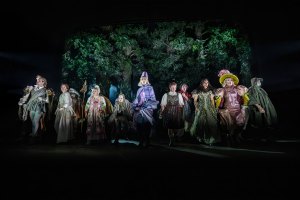
In the case of Jordan Fein’s production of Stephen Sondheim and James Lapine’s Into the Woods, this shift in venue feels distinctly plush, immediate, and intimate as it retreads the familiar path of a variety of fairy tales, each given a twist as they diverge wildly from the recognised telling.
Designer Tom Scutt does not skimp on the greenery: giant trunks and tangled foliage once more spill across the stage, creating an almost impenetrable, overwhelming forest. Yet the woods continue to naturally provide a metaphor for all the gnarly realities of life, and Fein leans into that transition with clarity as the show moves into its emptier, sparer second act: bringing out the moral complexity and murky miasma of mixed messaging that Sondheim and Lapine have such joy in meticulously creating.
Fein acutely understands the narrative’s psychological curve. Life itself, initially defined by concrete security and strict objectivity, becomes an abstract world as time progresses. By the time act two arrives, any sense of rigid structure ebbs away, leaving only the ominous warning, or perhaps reassurance, that children will listen.
That thematic weight relies heavily on the ensemble, and returning cast members from the 2025 Bridge run deliver performances that have only heightened. Gracie McGonigal’s Little Red Riding Hood remains magnetically fun, but now carries noticeably deeper emotional resonance in numbers like “You Are Not Alone”. She is matched by fresh additions who fit seamlessly into the staging. John Dagleish and Laura Pitt-Pulford make for a mightily fun double act as the Baker and his Wife, running literal and figurative laps across the stage during the frantic first act. Alongside them, Simbi Akande’s note-perfect Cinderella and Keith Ramsay’s quirky, oddball Jack establish an engaging, motley crew at the heart of the journey.
Fun aside, is this the second award-winning musical production in a row where Dagleish has taken over from Jamie Parker when a show moves to the West End, after The Curious Case of Benjamin Button?
Stealing whole acts in their wake are the two princes, played by Matthew Seadon-Young and Lucas Koch. Designed as ultimate scenery-chewers, their renditions of “Agony” build to bring the house down, with Seadon-Young also doubling as a vocally standout Wolf with “Hello, Little Girl.”
The centerpiece performance, however, comes once again from Kate Fleetwood’s Witch. Fleetwood appears more nimble, more playful, and ultimately more truthful than in her Bridge iteration. It’s a classic case of a critic being able to return to a performance months after a first press night. She presents a woman who has stared straight into the awfulness of the world and found a deep well of cynicism to drink from. Her delivery of “Last Midnight” unspools to reveal a jaded, angry, and almost violent aggression, marking it out as one of the best single performances on any West End stage right now.
The heightened intimacy of the West End auditorium allows fine details in Scutt’s design to shine through, such as the way Cinderella’s gowns subtly “grow” and expand with each successive midnight as her wish snowballs. This visual detailedness is matched by technical design work from lighting designer Aideen Malone, sound designer Adam Fisher, and video designer Roland Horvath. Fisher’s sound design makes full use of the new space, pushing a subwoofer vibration through the stalls that goes well beyond what was achievable at the Bridge. Paired with Horvath’s video projections, the arrival of the giant becomes a moment of genuine awe, rattling the theatre to its core. A production that has lost none of its magic.





source on Google
Featured In This Story
Related Articles
See all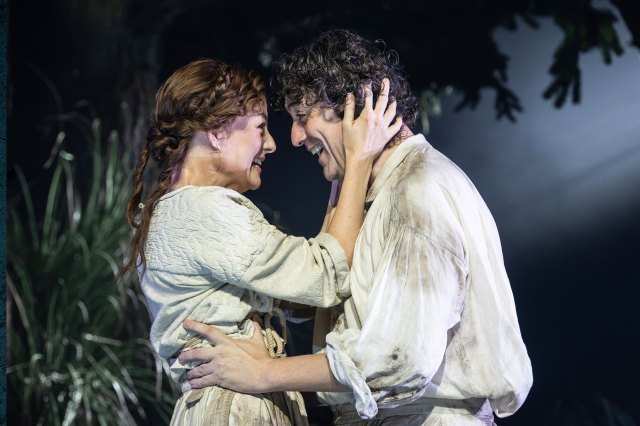


Latest Reviews
See all



Latest Videos
West End vs Broadway: Paranormal Activity – Ami Okumura Jones and Cher Álvarez on transatlantic terror
‘Tis the spooky season, after all…