
End with Clive Owen and Saskia Reeves at the National Theatre – review
The world premiere production, marking the final chapter of David Eldridge’s trilogy, runs in the Dorfman until 20 December
 |
London
|
|
London
|
21 November 2025
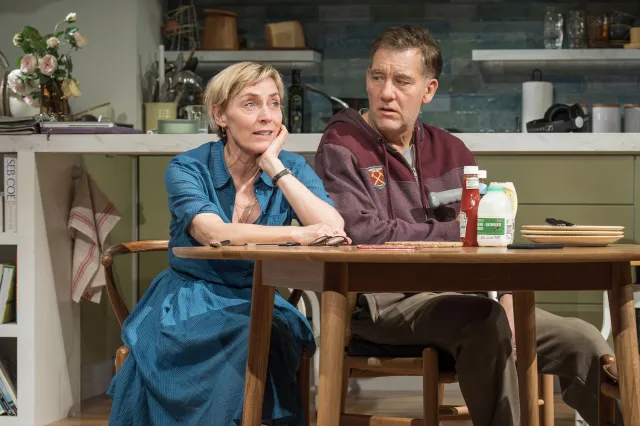
To start with, there was Beginning, about a couple meeting after a party and tentatively embarking on a relationship. Then there was Middle, set in the dark hours before dawn when a middle-aged marriage hit the rocks. So there had to be an End to conclude David Eldridge’s tenderly written and minutely observant trilogy of dramas.
Over ten years of writing, eight of performance, fishfinger and bacon sandwiches and a cup of cocoa, and from late at night to early morning, he has charted the myriad ways that love doesn’t run smooth. An early line in End, announces the biggest obstacle of all to everlasting devotion. “I’ve decided I don’t want any more treatment,” announces Alfie, as he stands gazing at the sunlight.
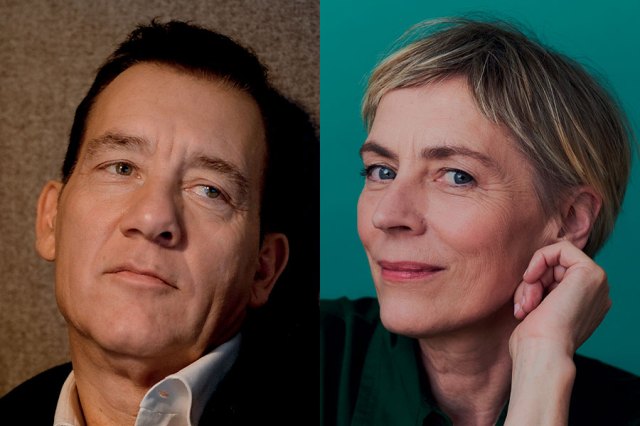
Clive Owen registers the pain passing across the man’s face as he speaks – both the physical discomfort of someone in the terminal stages of cancer and the agony of knowing that he is dying too young. Saskia Reeves’ Julie, on the opposite side of the stage, registers the statement like a blow.
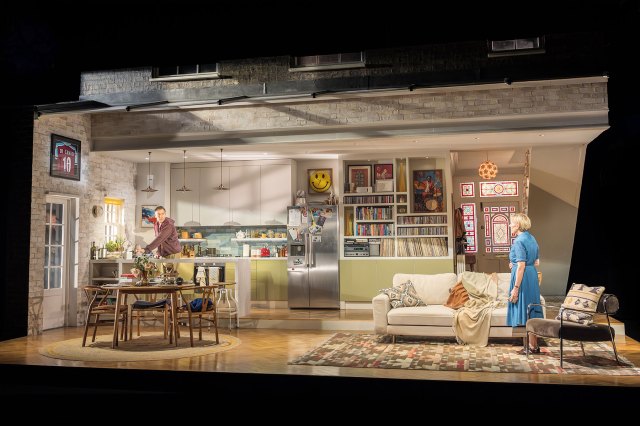
In real time, over the next 90-odd minutes, on Gary McCann’s wonderfully detailed, realistic set, with a stained-glass window in the hallway, and shelves of books and curated vinyl lining the kitchen diner, this long-term couple argue about what it means to die, and who has the right to decide what constitutes a “good end.”
Alfie wants to be alone, longs to be buried with his mum and dad in his beloved Essex. As a DJ, he is beginning to spend his time planning the music he wants to be played at his funeral. “I don’t want any of that John Lennon ‘Imagine’ bollocks.” Julie envisions walking to his grave in Highgate Cemetery, near where they now live, their upward mobility having carried them far from their working-class origins. She wants to hold his hand as he breathes his last.
Most of all, as an author of a successful series of detective novels, she wants to write about their life together. The idea horrifies him, but she is insistent. “If I don’t write it down, Alf, the good, and the bad and the indifferent, everything, it’ll all be lost. Everything. Not just you.”
The play, sensitively and thoughtfully drawn, gently directed by Rachel O’Riordan, is a version of that impulse to set difficult, challenging thoughts about the limitations and expectations of love on paper. Like Beginning and Middle, it sends out into the world a depiction of a whole series of conflicting wants, desires and emotions that sum up the sheer messiness of being alive and loving another person.
It’s full of laughter and some great jokes. But it’s also haunted by Alfie’s sense of the last of everything: the last time he will go to watch his beloved West Ham, the last time he will see his daughter, the last time he will make love to Julie, which they do – uncomfortably but passionately – on the sofa in the kitchen. (Beautifully staged by intimacy director Bethan Clark).
The play is full of inchoate longing and real pain. For anyone who has lost someone too young, it is both truthful and hard to watch. That’s partly because Owen and Reeves give performances of such honesty that the characters cease to be imagined and become real, every flicker of their shifting emotion beautifully recognised, from the spasms of pain that pass across his face as he hobbles around the room to the joy in her eyes as she dances to a song from her youth.
It’s an astonishingly realised portrayal of the way human beings can grope towards an expression of the real things they are feeling. The entire triptych is a considerable achievement, an assertion of Alfie’s final sense that music and art have meaning by “creating fleeting moments of joy in this dark, f*cked-up world” and of Julie’s that writing can make sense of the universe.






Featured In This Story

Related Articles
See all



Latest Reviews
See all




Latest Videos

Miss Saigon releases new trailer as West End run goes on sale
The heat is on… with a West End run next year!