
Tru with Jesse Tyler Ferguson and Charlotte d’Amboise at Menier Chocolate Factory – review
The London premiere, directed by Rob Ashford, runs until 14 November
 |
London
|
27 September 2026
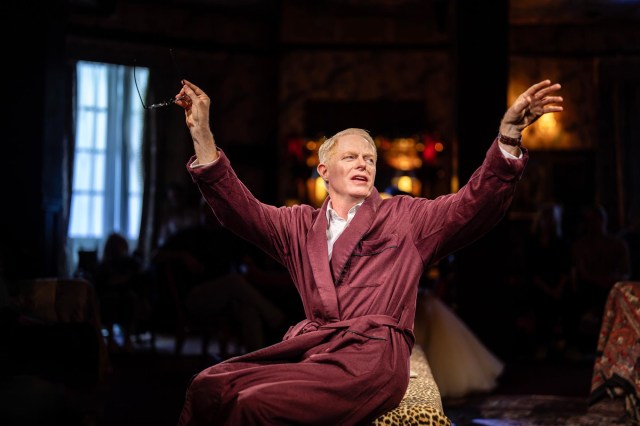
In 1975, American Esquire magazine purchased four chapters from an, as yet, unfinished new novel from Truman Capote (here played by Jesse Tyler Ferguson). In November 1975, they published the second of those chapters, La Côte Basque, and Capote’s social world imploded. It was clear to his circle of celebrity and influential friends that the characters were just thinly veiled versions of themselves, and that their past ten years of secret-sharing, gossiping and lascivious excesses were just fodder for his own glory. They unilaterally dropped him.
Set over 24 hours in early December, Tru is reeling from his ostracisation and struggling to get some sort of semblance of his old life back. In his New York apartment, he spends his time on the phone, talking to himself, or speaking into a tape recorder to bolster his recorded memoirs. Through this mélange of one-sided conversations and reminiscences, we’re able to build up a picture of what’s happening with him at the moment, as well as to discern how he got to where he is; an intriguing blend of whistlestop biography with current drama.
Ferguson is quietly commanding as Capote. In a script full of quotable quotes and witty asides, it would be so easy to turn this into a performative caricature, but whilst he primps, preens and flounces with great effect, he gives a nuanced and controlled performance that showcases Capote’s anger, disdain and, ultimately, pain at where he’s ended up. He inhabits his trademark effeminate southern drawl with a naturalism that doesn’t distract but rather adds to the poignancy of it all.
Jay Presson Allen’s script is adapted from Capote’s own words and works, and it shows. The best lines are unmistakably from the latter: the barbs, the throwaway put-downs and the gleefully indiscreet stories about the great and the good, told by a man who could never resist a good line, even at a friend’s expense. Allen has done a skilful job of stitching it all together into a single, meandering day in his company, but you do leave with the sense that the real glories of the evening belong to Capote rather than to the playwright.
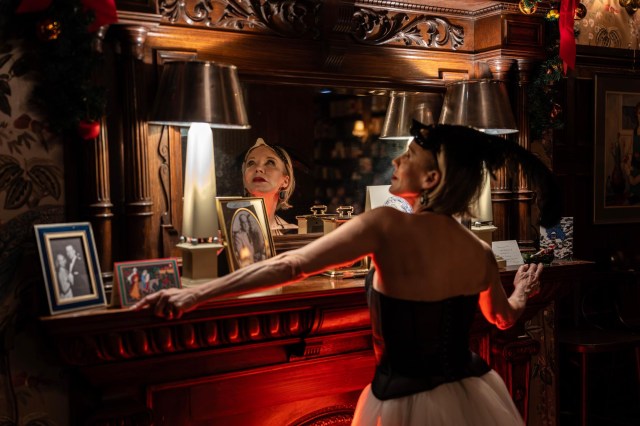
The star of the show, though, is the set. Paul Farnsworth has turned the Menier into an oversized Victorian parlour. The walls of the auditorium are lined with overstuffed bookshelves and objets d’art, rugs and carpets are laid across the floor, and the audience sits within the apartment itself, some on sofas, others at occasional tables. Ferguson moves through the room throughout, now and then acknowledging someone or drawing them into the conversation, as though we were guests who had stayed on after everyone else had gone home. It takes your breath away when you first walk in, and it gives you a real and rather privileged sense of being inside his world, sharing his space, rather than watching it from a distance.
The one niggle is that the story never really goes anywhere. Capote reminisces, he converses on the phone, he cajoles and he sulks, all in the hope of clawing back the life he has lost, but nothing much changes between the start of the evening and the end of it.
It is hugely entertaining along the way, very funny and, in flashes, genuinely poignant, and you could argue that this is a piece about the journey rather than the destination. Even so, it could have done with more of a narrative anchor; something to carry you through the 90 minutes beyond the pleasure of his company.
Tru delivers a beautifully realised evening in the company of one of the great wits of the last century, led by an understatedly magnetic Ferguson and housed in a remarkable set that puts you right inside Capote’s apartment. Despite the story never quite building to anything substantial, it is rarely less than great fun and every so often it catches you with something much sadder. Well worth pulling up a chair for.






source on Google
Featured In This Story

Featured Artist

Related Articles
See all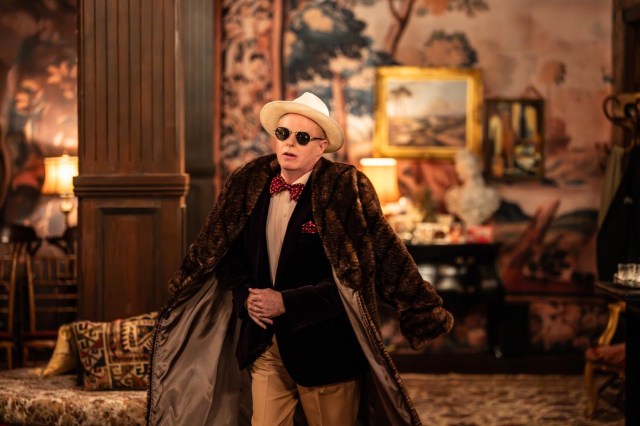

Latest Reviews
See all



Latest Videos
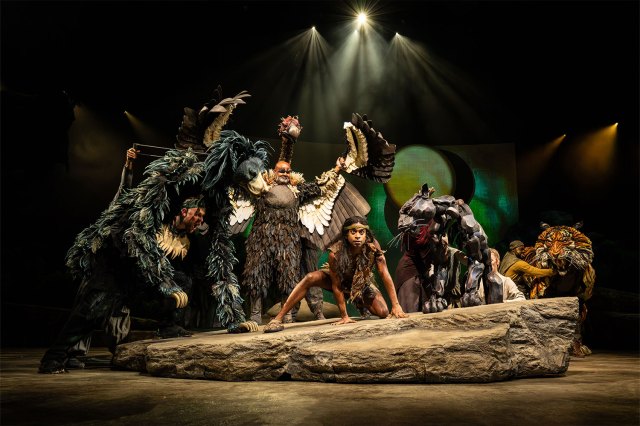
National Theatre releases first look at The Jungle Book’s puppets
Puppets take to the Olivier stage!