
Shadowlands with Hugh Bonneville and Maggie Siff in the West End – review
Bonneville plays C S Lewis in William Nicholson’s play, running at the Aldwych Theatre until 9 May
 |
London
|
|
London
|
14 February 2026

There’s comfort in an old-fashioned, well-made play and when Hugh Bonneville steps forward at the beginning of Shadowlands and starts to speak, there’s a sense of reassurance, of a good story about to be told.
William Nicholson’s 1989 play about the writer Clive Staples Lewis, creator of the Narnia books, Oxford lecturer on the history of English and purveyor of a conservative Christian theology that grapples with the nature of suffering, is a good story, fluently expressed.
Lewis was a particular type of fusty Englishman, surrounded by the comfort and intellectual discourse of academia. When in his 50s, he meets Joy Davidman, an American fan and fellow Christian convert 17 years his junior, with whom he has been exchanging letters, he is poleaxed first by love – and then by grief, as she is diagnosed with terminal cancer.
His easy assumption that “suffering is God’s megaphone to wake a deaf world” is suddenly confronted by the intensity and unruliness of first-hand experience as the happiness he has unexpectedly found is snatched away from him.
Nicolson’s play, adapted from a television film and later made into a movie, is expertly directed by Rachel Kavanaugh, who firmly emphasises the humour and incongruity of this passion between a celibate English don and a straight-talking American poet, on the run from her alcoholic husband with a Narnia-reading child in tow. But she cannot disguise the way it skates along the surface of multiple moral dilemmas.
An inconvenient former lover for Lewis, the alcoholism of his brother and an extra child for Davidman, are all neatly tidied away. So is any real examination either of Lewis’s muscular Christian belief – the subject of his book Surprised by Joy – or the impact on him of the death of his mother when he was eight. Things are mentioned rather than explored.
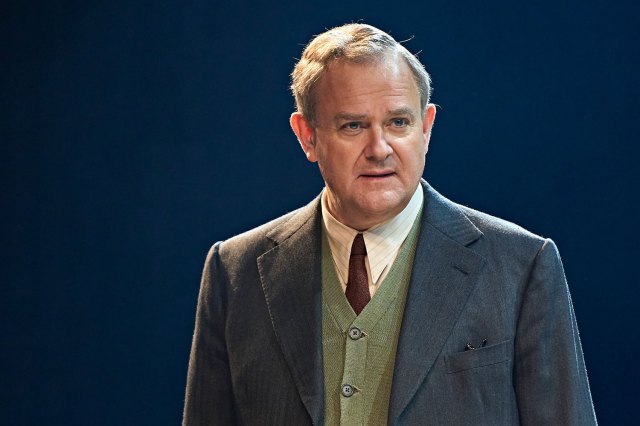
But, as evidenced by years of starring in Downton Abbey, Bonneville is an actor who can tease feeling and nuance out of the most straightforward script. He’s wonderful as Lewis, awkward and endearing, but also catching the man’s self-righteousness stuffiness, what Davidman correctly identifies as his self-imposed loneliness and unwillingness to allow himself to feel. The moments towards the close, when he is suddenly overwhelmed by feeling are deeply affecting.
The detail of his portrayal is matched by Maggie Siff’s Joy. The script gives her little to do except stride around being outspoken and shocking Lewis’s friends. But she makes Davidman a force to be reckoned with in other ways too, someone who is prepared to seize happiness in ways the man she adores is not.
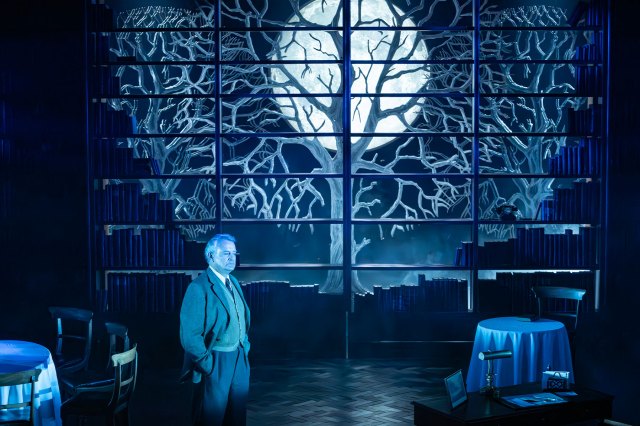
Around them, sometimes literally on Peter McKintosh’s revolving set, with its walls lined with books and its battered tables and chairs suggesting the complacent intellectual insularity of Oxford life, float a cast of supporting characters most notably a gently shambling Jeff Rawle as Lewis’s brother, Tony Jayawardena as a pompous academic and Timothy Watson as a waspish professor who is prepared both to dislike Davidman but to recognise her impact on his friend.
They are little more than sketches, however, in a work that focuses firmly on the relationship at its centre. Its theology and its psychology don’t stand up to too much scrutiny, but like the fruit cake its characters eat over endless teas, it is satisfying while it lasts.






source on Google
Featured In This Story

Related Articles
See all

Latest Reviews
See all



Latest Videos
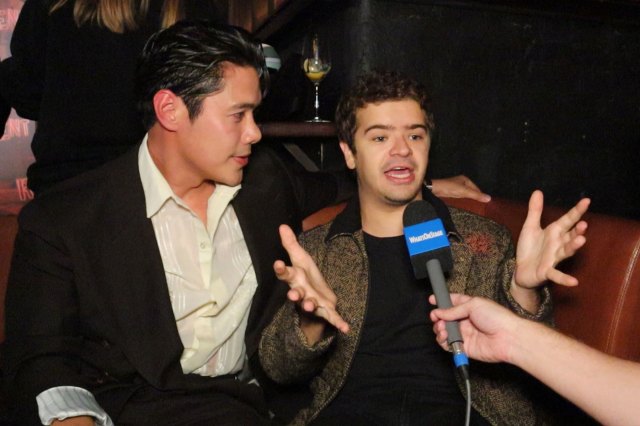
Gaten Matarazzo and the cast of Rent on living “La Vie Bohème” in the musical’s 30th anniversary year
Luke Sheppard’s West End revival is now officially open at the Tom Stoppard Theatre!