
Penelope musical review – the wait is over for the next great show based on a Greek classic
Grace McLean plays the figure with verve and hypnotic quality
 |
Edinburgh
|
|
Edinburgh
|
8 August 2026
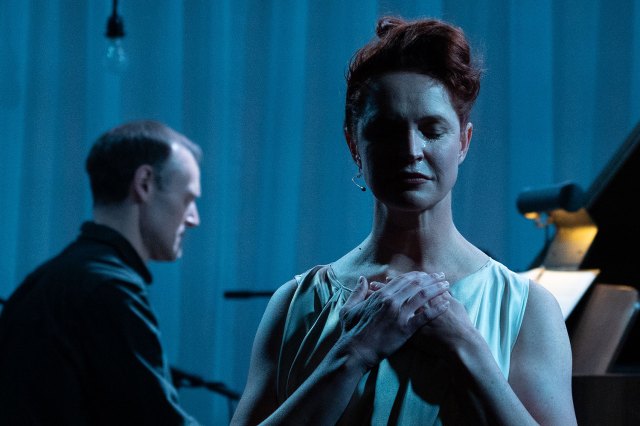
Amidst the current cultural resurgence surrounding Homer’s epic The Odyssey thanks to Christopher Nolan’s box office-epic, featuring Anne Hathaway’s turn as a suitor-defying, shroud-weaving wife, comes a brilliant new musical telling its own stunningly contemporary perspective on the character. Penelope, by Alex Bechtel, Grace McLean and Eva Steinmetz, deftly shifts the spotlight away from the heroic wanderer onto the woman left behind in Ithaca.
While myth presents Penelope as the ultimate paragon of passive patience, this production completely upends that narrative (“I’ve been staring out of the window so long it’s turned into a door”). Grounded entirely in Penelope’s internal psyche, the show bypasses a literal recounting of Odysseus’s protracted journey or the bloody slaughter of her persistent suitors. Instead, it offers a sharp, nuanced character study (“I could wait forever if you told me what forever was for”). Composed with exquisite flair by Alex Bechtel, evoking the intricate, genre-bending theatricality that only the best creatives can conjure, the score is brought to life by a tight, exceptional three-piece band.
Suffs’ Grace McLean commands the stage effortlessly, holding the audience in the palm of her hand. Early on, the writing exposes Penelope’s deep-seated complex: wearing a humble silver band, she acutely feels forever second-best to the dazzling Helen of Troy. The cruel irony that her husband was stolen away for two decades because of Helen (after courting her in his youth) is a bitter pill, driving home a cynical, complex view of her marriage rather than a romance of simple devotion. She explicitly refuses to be defined merely by the act of waiting. One passage sees Penelope conjure up new lives for herself, escaping south, beyond Ithaca.
There’s a resonant motif here: Penelope’s daily ritual at the loom sees her weaves a tapestry, only to unpick her work thread by thread before dawn to stall her suitors. Much in the same way, that act becomes a striking metaphor for the craft of live performance itself: every single performance operates like a story starting completely over; McLean weaves a vivid narrative, only to unweave it, reset, and begin anew tomorrow.
Amusing, haunting, and deeply enchanting, Penelope transforms ancient myth into an essential, breathtaking hour of theatre.






source on Google
Guide

Latest Reviews
See all





Latest Videos

Kimberly Akimbo musical releases UK premiere trailer
The five-time Tony Award-winning musical is currently on stage at Hampstead Theatre