
One Flew Over the Cuckoo’s Nest at the Old Vic – review
Based on the novel by Ken Kesey, adapted by Dale Wasserman, Clint Dyer’s new production runs until 23 May
 |
London
|
|
London
|
16 April 2026
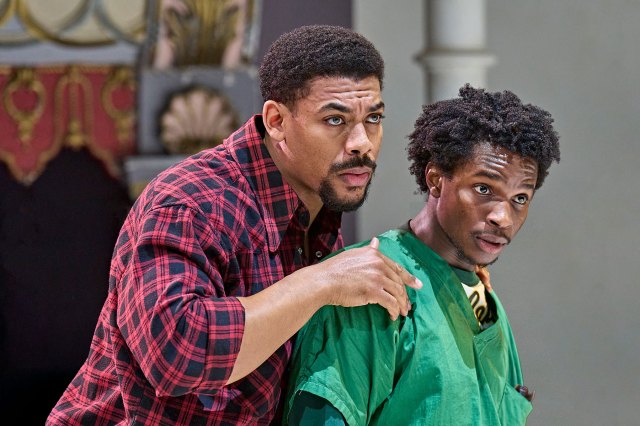
There is a moment, early on, when the drums hit, the bodies move, and the air in the Old Vic shifts. You realise very quickly this is not a polite revival. This is a reclamation. And from that opening allusion to Congo Square, this One Flew Over the Cuckoo’s Nest announces itself as something urgent, muscular and entirely alive.
Clint Dyer’s direction is razor sharp, finding rhythm in both chaos and control. The ward is rendered with astonishing precision; Ben Stones’ set transforms the Old Vic into a claustrophobic, watchful institution that feels less like a stage and more like a system closing in. You forget where you are. The walls breathe, the space contracts, and the audience becomes complicit. Paired with Chris Davey’s lighting, which flickers between harsh exposure and uneasy shadow, the production never lets you settle.
At its centre, Aaron Pierre is electric as McMurphy. It is a performance of real authority, full of swagger, humour and danger, but also threaded with something more fragile underneath. He commands the stage without ever flattening the ensemble around him. Opposite him, Olivia Williams’ Nurse Ratched is chillingly precise. She does not raise her voice. She does not need to. Control radiates from her in quiet, devastating ways.
And then there is Chief Bromden, played by Arthur Boan, who anchors the piece with a stillness that cuts through the noise. His presence lingers, grounding the play in something deeper and more reflective. Around them, the ensemble is faultless. Giles Terera’s Harding, Jason Pennycooke, Javone Prince, Mo Sesay and Kedar Williams-Stirling each bring texture, comedy and heartbreak in equal measure. Not a single performance feels incidental.
What makes this production resonate beyond its already formidable craft is its predominantly Black cast. It does not feel like a concept layered on top. It deepens the story. Set against the historical backdrop of institutional power and control, it reframes the narrative with an added weight, echoing real histories of marginalisation and surveillance. The result is a piece that speaks to the present as much as it honours the past.
The accents are pitch perfect, pulling you cleanly into the world. The audience responds instinctively. Laughter comes easily, often loudly, even from those unfamiliar with Ken Kesey’s novel or the film adaptation. That is the mark of its clarity and confidence.
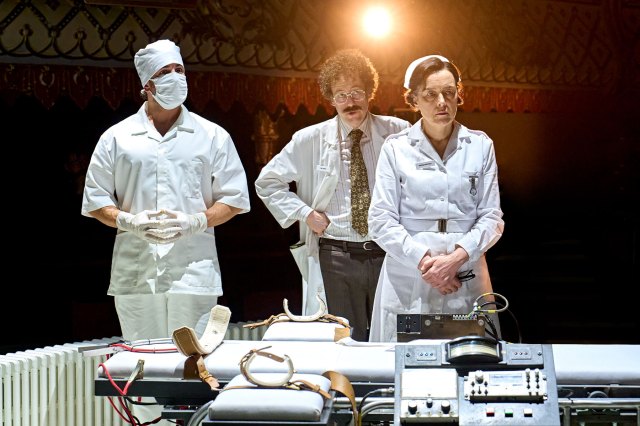
This is not a production that leans on legacy. It stands firmly on its own terms while paying quiet, confident homage to what came before. Bold, precise and deeply affecting, it grips from first beat to final silence, powered by a company firing on every level.
This is not a revival trading on nostalgia. It knows exactly what it is doing and executes it without hesitation – a staging that will be talked about long after the ward doors close.





source on Google
Featured In This Story

Related Articles
See all


Latest Reviews
See all





Latest Videos
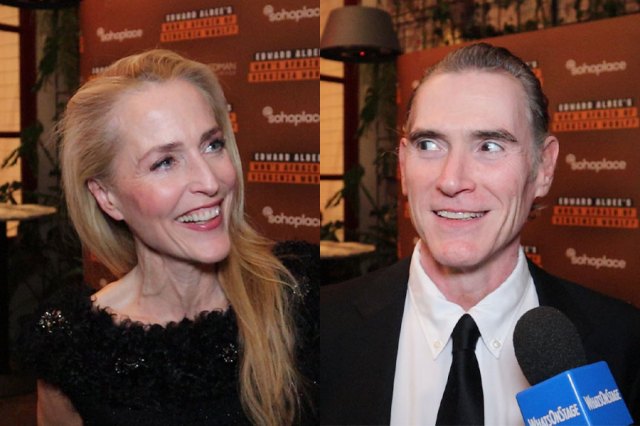
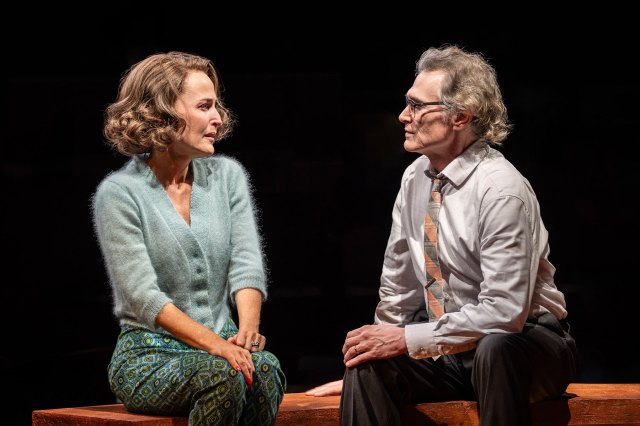
Gillian Anderson and Billy Crudup on staging a ‘boxing match’ in the round in Who’s Afraid of Virginia Woolf?
Marianne Elliott’s revival of the Edward Albee classic is running at London’s @sohoplace