
Monique Touko and Ryan Calais Cameron to co-direct The Afronauts world premiere at the Royal Court
The show opens this autumn
 |
London
|
|
London
|
28 May 2026

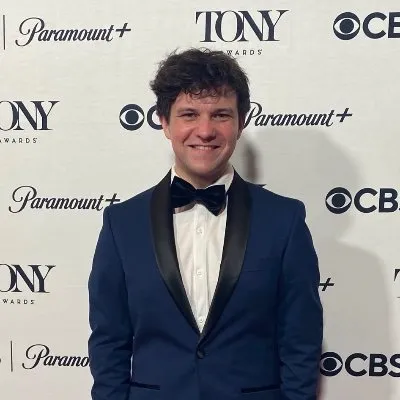
Royal Court Theatre announces the world premiere of The Afronauts will be co-directed by playwright Ryan Calais Cameron and director Monique Touko.
The production marks the finale of the Royal Court’s 70th anniversary programme. Calais Cameron’s previous work at the venue includes For Black Boys Who Have Considered Suicide When the Hue Gets Too Heavy, while Touko previously directed the sold-out world premiere of G by Tife Kusoro at the venue, alongside productions including Jaja’s African Hair Braiding and Marie and Rosetta.
Set in Zambia in 1964, The Afronauts tells the “true(ish)” story of the Zambian Space Program. The play follows a schoolteacher who assembles a group of aspiring astronauts as the newly independent nation attempts to compete in the global space race.
Talking to WhatsOnStage mere minutes ago, Touko noted on her journey from G to Afronauts: “What I did with G was kind of Afro-surrealist and now I’m stepping into Afrofuturism. So I think in terms of genre, I’ve been able to be really experimental, which is so exciting.”
The announcement follows the Royal Court Theatre receiving a Gold Award at the 2026 Chelsea in Bloom festival. A floral installation inspired by The Afronauts was created by Moyses Stevens and featured a life-size astronaut emerging from Sloane Square surrounded by African and tropical flowers as part of this year’s “Out of This World” theme.
The sheer scale and historical significance of Cameron’s script immediately captured Touko’s attention. “I was blown away by how expansive it was and how it felt like a theatrical challenge,” she shared, adding that the play’s core themes deeply resonated with her career focus.
“Anything that is about Africa and the advancement and the liberation of my people, I’m always kind of supporting that and winning that.” The production represents a new professional milestone for the director, who was drawn to the collaborative nature of the project. “The idea of collaboration was quite exciting to me. I’ve never co-directed before. So to be able to lean on Ryan, to be able to do this together was something that was really exciting… I couldn’t say no.”
Calais Cameron is currently associate playwright at the Royal Court following the recent West End run of Retrograde.
The Afronauts is presented as part of Genesis Next Generation at the Royal Court, a Genesis Foundation project.
For Calais Cameron, bringing Touko onto the creative team offers vital artistic support for a massive script that pushes the boundaries of new writing. “To be working with Monique, you know, you have an extra creative force in the room to be able to go, ‘Okay, it’s not just me having to think of how to make all of these wonderful things happen,'” Cameron explained.
He described the piece as an inspiring, human-centered journey of creativity and hope, noting that it explores a real historical event about people with big dreams.
It will be running from 14 November to 19 December 2026, with press night on 23 November.
For Cameron, the play represents the culmination of a decade-long relationship with artistic director David Byrne, from the New Diorama Theatre and now at the Royal Court. “This is a long almost a decade-long relationship, you know, from then to For Black Boys…and now being here and just seeing our relationship grow and that level of trust and support,” Cameron reflected.

He recalled pitching the ambitious concept two years ago: “I’d had this idea. And it was going to be like, it’s crazy and it’s too massive, but if I’m going to do another play at this point of my career, it’s going to be this.”
The production also marks a series of creative firsts for Cameron as a writer. “The style is something that I’ve never did before, the genre, you know, I mean, being in sci-fi, Afrofuturism. So I’m trying to find something that feels real and exists in the past that feels like it can be relevant today, and it feels also incredibly futuristic at the same time,” he noted.
He first discovered the history through a YouTube documentary about the “nine craziest ideas,” where the historical figures were largely mocked. “I was like, ‘this is incredibly inspiring,'” Cameron said. “At the heart of it is… the human story.
“It’s the human story of people that existed in a time that had same and similar hopes and dreams that we have today… Why is it okay if certain people have a certain dream and they support it, and some people have a certain dream and they’re mocked and they’re laughed upon?”




Related Articles
See all


Latest Reviews
See all






Latest Videos
Waitress tour with Carrie Hope Fletcher releases new footage
When you see this!