
End of the Rainbow with Jinkx Monsoon at Soho Theatre Walthamstow – review
The RuPaul’s Drag Race favourite is starring as Judy Garland until 21 June
 |
London
|
|
London
|
22 May 2026
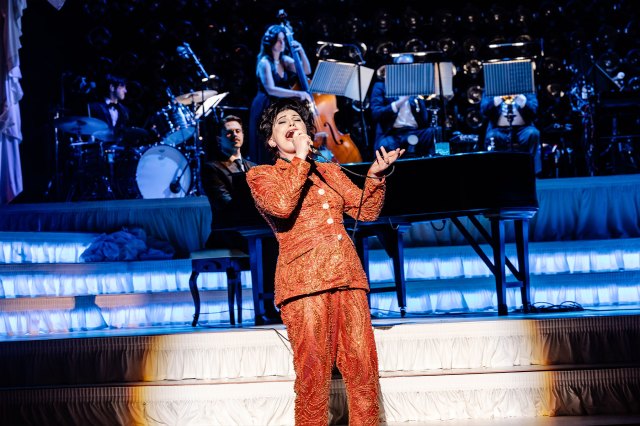
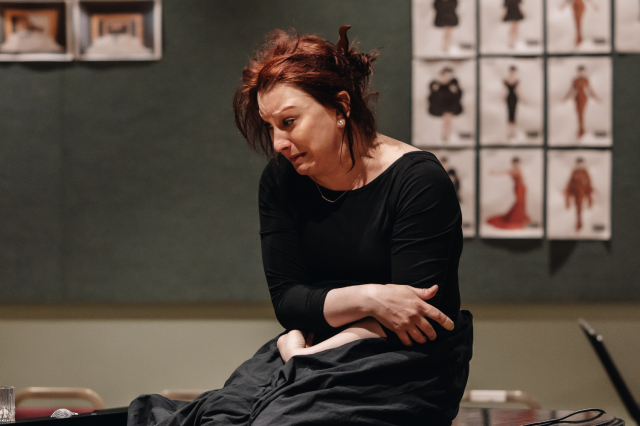
The legions of Jinkx Monsoon fans will be living their best lives at this glossy revival of Peter Quilter‘s overwrought but undeniably compulsive Judy Garland play. As star vehicles go, End of the Rainbow has a lot to offer. Jinkx as Judy gets to sing her heart out (her approximation of the famous quavery voice fretted with steel verges on the uncanny at times), reflect, flirt, rage, emote… and fall flat on her sequinned behind while under the influence of alcohol and drugs. It’s an epic role, and La Monsoon tackles it head-on.
Her energy, commitment, and skills as a comic and mimic are tremendous, but ultimately this feels more like a highly accomplished impersonation than a fully rounded characterisation. She’s magnetic but seldom approaches the manic euphoria or the volcanic depths found in Tracie Bennett’s legendary Olivier, Tony and WhatsOnStage Award-nominated performance in the original West End and Broadway version.
The production by Rupert Hands is partly responsible for this. Aside from the portions of Garland’s disastrous 1968 “Talk of the Town” concert series that we get to see, most of Quilter’s script takes place in the opulent London hotel room where a fast-fading Judy is holed up with her English pianist and Mickey Deans, the younger, cynical chancer managing her and about to become husband number five.
Jasmine Swan’s white froufrou set, instead of attempting to recreate a suite at the Ritz, is more of an abstract affair, resembling a semi-flattened wedding cake topped off with a grand piano and chandelier. This works fine for the concert sections, but makes even the most harrowing “real life” scenes look like they’re part of a cabaret show, and therefore harder to emotionally invest in. It’s as though the setting has painted everything else into a corner.
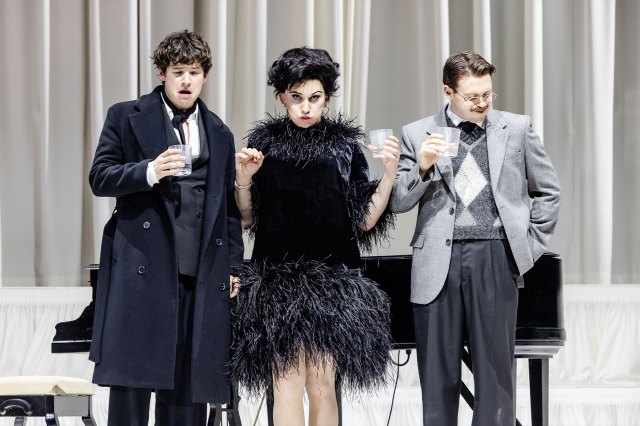
The flat supporting performances don’t help either. Jacob Dudman, all wavering American accent and ill-fitting suit, is neither menacing nor charismatic enough as the unscrupulous Deans, while Adam Filipe, who nicely conveys the innate decency and kindness of the accompanist Anthony, reads as years too young. There’s an exquisite scene near the end where, sensing that Judy is on her last legs, Anthony, although gay, offers her a life with him away from the spotlight. This sequence should hurt, as two broken, seasoned souls fleetingly sense in each other a mirror for their isolation and a last chance at happiness and true companionship. Monsoon plays it beautifully, but it goes for very little when her scene partner is as fresh-faced as he is here.
Nick Barstow’s band is terrific, and Tony Gayle’s sound design and Prema Mehta’s lighting make a decent job of differentiating between on- and off-stage despite the misconceived set. Quilter’s script remains a bit of a mixed bag, suspended halfway between hagiography and a genuinely searing examination of the tawdry underbelly of fame, but there’s some real, potty-mouthed wit in there. It doesn’t attempt to soft soap Garland’s well-documented addiction problems, but the slurred temper tantrums become a bit repetitive.
Swan’s costume recreations of some of her most iconic looks and Dominique Hamilton’s wig design successfully evoke the divine Judy, and the irresistible star quality is very much Jinkx’s own. “Get Happy” is one of the best-known numbers featured here; her fans won’t need any encouragement.






source on Google
Featured In This Story
Related Articles
See all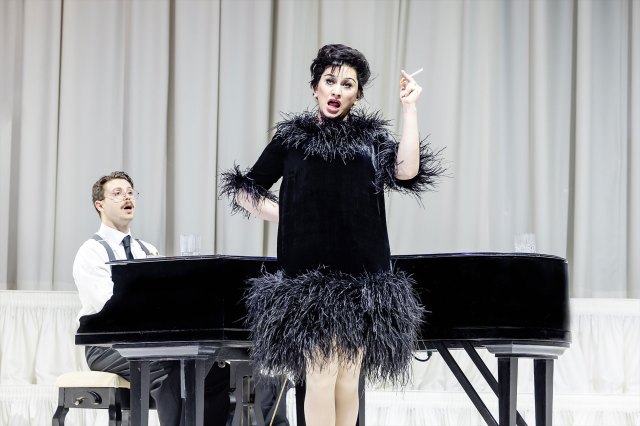
Latest Reviews
See all

Latest Videos
New musical Nero releases first listen with Andrew Barth Feldman
It is from the writers of Spring Awakening