
Did Sam Ryder reach for the stars? Jesus Christ Superstar review round-up
His “Space Man” rocked Eurovision – now he sets his sight on the Messiah
 |
London
|
|
London
|
8 July 2026
Sarah Crompton, WhatsOnStage
★★★★★
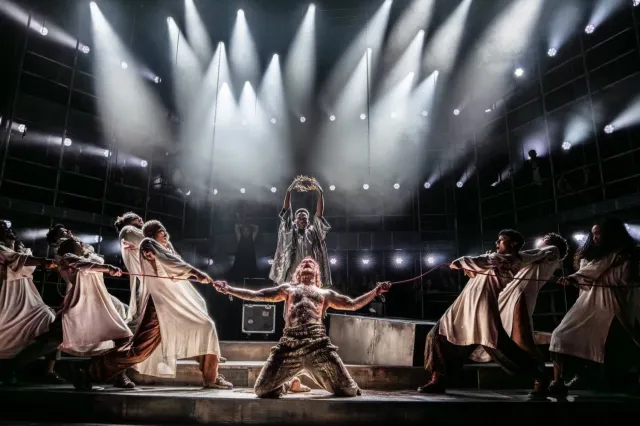
“Tim Sheader’s initial production of Andrew Lloyd Webber and Tim Rice’s rock masterpiece Jesus Christ Superstar has been on a long journey since it was first unveiled in 2016 at Regent’s Park Open Air Theatre. It’s got bigger and more sophisticated with time.
But what has never altered is how intensely and intelligently it keeps its focus on the relationship between Jesus and his betrayer Judas, which makes the show so much more than a hard rock version of the bible story. When those characters are played by Eurovision’s saviour Sam Ryder and the exceptional Tyrone Huntley, Olivier-nominated when he played the part ten years ago, the production is in very safe hands indeed.”
Listen to more of Sarah’s thoughts in our free podcast:
Dominic Cavendish, The Telegraph
★★★★★
“The key to [Ryder’s] success is that he plays JC with sincerity, not starriness. First materialising amid whirling acolytes, he is still and aloof. In Timothy Sheader’s immaculate production – first seen to Olivier-winning effect at Regent’s Park 10 years ago, and harnessing Drew McOnie’s pin-sharp choreography – this is a religious leader ensnared by his own cult; there’s something frightening, if hypnotic, about his volatile, restless followers.
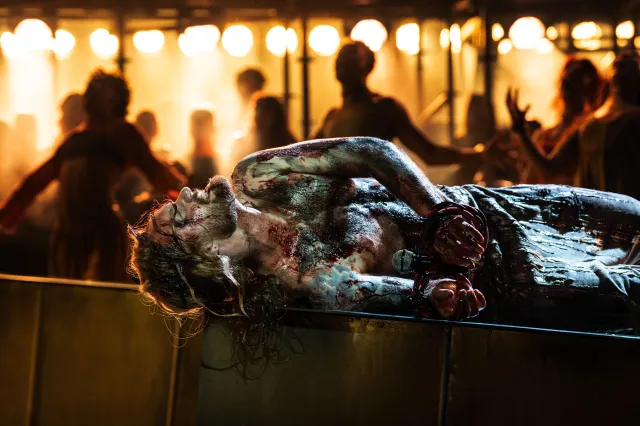
“For a moment, you worry that Ryder is too meek and mild a hero, even anodyne. But daring us to be disappointed tallies with the show’s accusatory argument about the pressures of showbiz expectation. And that achieves a blistering pay-off in the climactic title number, its infectious gospel energy offset by the visceral spectacle of a bloodied Christ being assaulted. It’s as if we are implicated in the mob brutality and betrayal.”
Nick Curtis, The Standard
★★★★
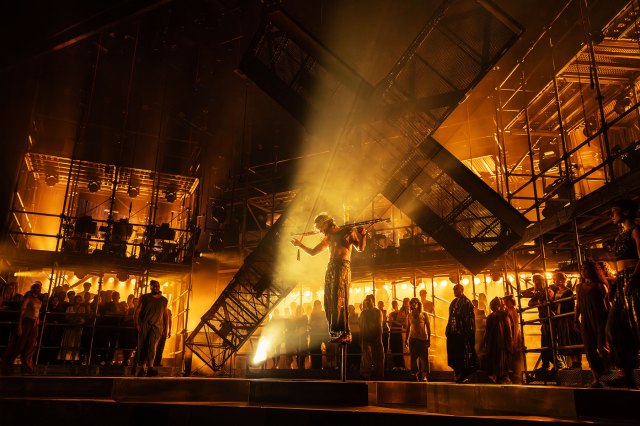
“Sheader’s production, with choreography by Drew McOnie that embraces sinewy undulation and ecstatic abandon, has the bleary, transportive mood of a festival. The ambivalently gendered ensemble, mostly in bejewelled makeup and crop tops, wouldn’t look out of place at Burning Man or Berghain. David Thaxton’s Pilate has his laurels tattooed on his high-fade scalp and SPQR on his bicep. The priests led by Bob Harms’s sepulchral Caiaphas move like a menacing, hieratic cross between Kraftwerk and Lene Lovitch.”
Alice Saville, The Independent
★★★★
“Tyrone Huntley has a raw, haunted energy as the obsessed Judas, who’s determined to hold this emotionally unavailable spiritual leader to account. Desmonda Cathabel is stellar as Mary Magdalene – glamorous as a 60s chanteuse, her voice as sweet and flowing as the scented oils she rubs Jesus with. As the show’s dark relief, David Thaxton makes an excellent, tormented Pontius Pilate, the polar opposite of Jesse Tyler Ferguson, making an enjoyably camp despots-who-lunch cameo as Herod.”
Arifa Akbar, The Guardian
★★★
“Huntley emotes much better alongside the songs and brings an edge but it seems a little one-sided. The friction between these two central players does not take off dramatically. Ryder’s portrayal is so woolly that you don’t know what Jesus stands for. So it becomes difficult to pinpoint what, exactly, Judas dislikes: is it that Jesus has gone too far, as Judas repeats, or not far enough? He suggests that Jesus has lost sight of Judea’s occupation by the Romans, and of the poverty around them. These are eternally unanswered questions around the figure of Judas but it still feels like a flaw in characterisation.”
Andrzej Lukowski, Time Out
★★★
“There’s a slightly odd gimmick of rotating the actor playing Herod over the course of the run. He has one song, and it doesn’t require an amazing voice. When I saw it, US sitcom star and stage stalwart Jesse Tyler Ferguson did a fine job, and looked wonderful in the spectacular ceremonial robes designed by Scutt. The likes of Boy George and Richard Armitage will be doing it over the coming weeks and I guess it’s interesting to cast such a varied bunch, but ultimately it’s a bit of a red herring to concern yourself over what’s effectively a cameo.”
Sam Marlowe, The Stage
★★★
“Characters sing into hand-held microphones and, for the crucifixion, Ryder’s Jesus is lashed with electrical leads to a pair of crossed mic stands. His first appearance is also at the mic, with his guitar, and Ryder cuts a suitably rock-star figure throughout, entirely apt and at home in this environment.
“But as an actor, Ryder doesn’t quite convince; there’s a posturing, presentational flavour to his performance. And vocally, while he unsurprisingly has no difficulty soaring to the falsetto heights of the role, he’s less comfortable in the lower register, where there’s not only a lack of firepower, but sometimes of audibility, the words blurry and breathy.”
Dominic Maxwell, The Times
★★★
“Tim Sheader’s production is somehow both spectacular and sparse. The stage is dominated by spotlights, smoke and scaffolding. Characters enter and exit for their song down a giant cross-shaped ramp that will eventually rise up to loom over the crucifixion. A crack band plays one of the great modern scores — first heard as a double album in 1970 before reaching Broadway in 1971 — on the first floor of the scaffolding. A few audience members can pay £25 to stand beneath them. It’s the most genteel of mosh pits — dress code is dark clothing, no logos — but adds to the concert-like sense of event. Those tickets are sold out, alas.”




source on Google
Related Articles
See all




Latest Reviews
See all


Latest Videos
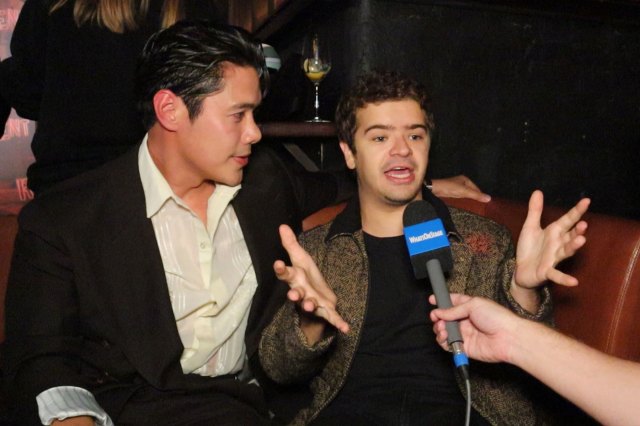
Gaten Matarazzo and the cast of Rent on living “La Vie Bohème” in the musical’s 30th anniversary year
Luke Sheppard’s West End revival is now officially open at the Tom Stoppard Theatre!