
Arcadia at the soon-to-be Tom Stoppard Theatre – review
Carrie Cracknell’s production makes its home at the rechristened West End theatre
 |
London
|
|
London
|
1 July 2026
Is there a more deserving playwright than Tom Stoppard to have a theatre named after him? Watching his awe-inspiring craft in action in the West End transfer of Carrie Cracknell’s Arcadia is a reminder of unimaginable depth, sophistication and, above all, an unwavering belief in one’s audience.
Across the three-hour show, time and again Stoppard relies on our ability to grasp a whole coterie of high-concept ideas, run with them and, in the midst of all of that, find truth and heart in a dozen different characters.
The 1993 play is set entirely in a Derbyshire country house, but spans two different time periods – the early 1800s and the late 1990s. Between them, a pseudo-detective story emerges, as the latter period grapples to knit together obscured histories, while the earlier time tries to wrangle with philosophies only made plain in the 20th century. It touches upon determinism, thermodynamics, poetry, grouse shooting and literary factionalism. Oh, and Lord Byron is in the next room.
If that sounds dense and knotty, it’s also remarkably funny – Stoppard knew exactly how to plant a zinger amidst the wordy monologues to keep the tempo ticking along neatly. Cracknell is faithfully adept in transplanting all of this to the stage – placing the revival in the round, allowing figures and ideas to whirl around one another like planets in some conceptual solar system.
Here’s the big news: in direct contradiction to the second law of thermodynamics, I have to confess I’ve warmed to the show since its initial outing earlier this year. Where at the Old Vic it felt more distant, abstract and, perhaps, coolly remote, in the snug confines of the Stoppard Theatre, Cracknell’s staging roars with newfound heat and passion.
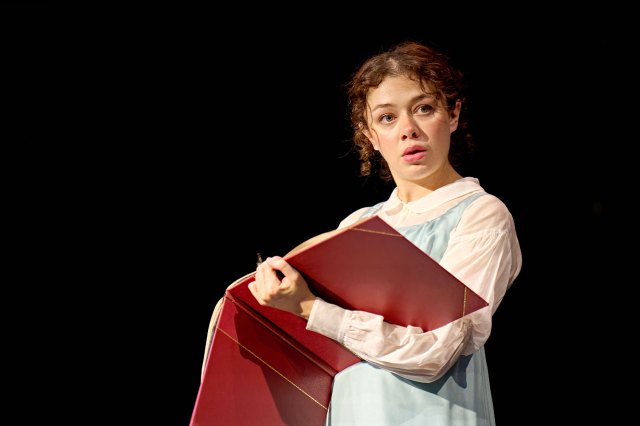
Part of this is thanks to deeper, richer performances from returning cast members: Isis Hainsworth as the young genius Thomasina, launching probing questions about carnal embrace at her lothario tutor Septimus Hodge (Seamus Dillane) while diving feet-first into early ideas of entropy. Her transformation from wide-eyed 13-year-old 19th-century student to young woman is a masterclass in control and tender love for character. Dillane’s Hodge seems more riveting too – betraying some unspoken sadness while in awe of this young student he knows he has an unquenchable connection to.
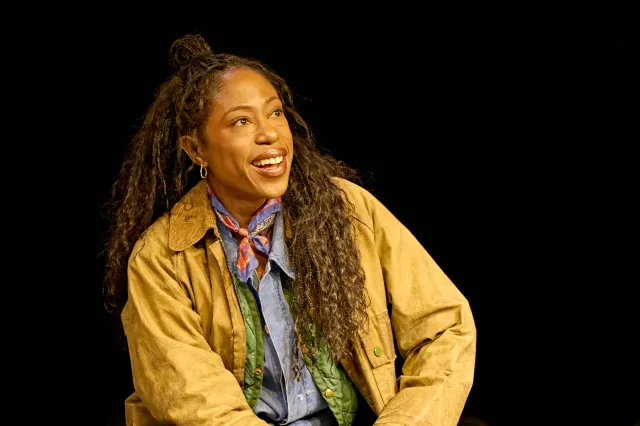
It’s the new company members, largely part of the later storyline, where things truly sparkle. Nikki Amuka-Bird’s Hannah Jarvis, a writer and horticulture enthusiast studying the history of the Derbyshire estate, conjures wells of compassion and melancholy, equal parts taciturn and tenacious. As her note-perfect foil, Oliver Chris’ Lord Byron-obsessive academic Bernard Nightingale dabbles with caricature yet always lets a simmering intellectual rigour shine through. Turtle-neck wearing and tortoise-swerving in a neatly packaged bow.
There’s suitably non-intrusive work from the wider creative team, and while the pace dwindles slightly in the dying embers of Stoppard’s work, it’s hard not to be moved as the inexorable passage of time pulls these characters away from us. The production emerges as one of the many wonderful tributes that will no doubt guarantee Stoppard’s place as the greatest playwright of the last century.






source on Google
Featured In This Story
Related Articles
See all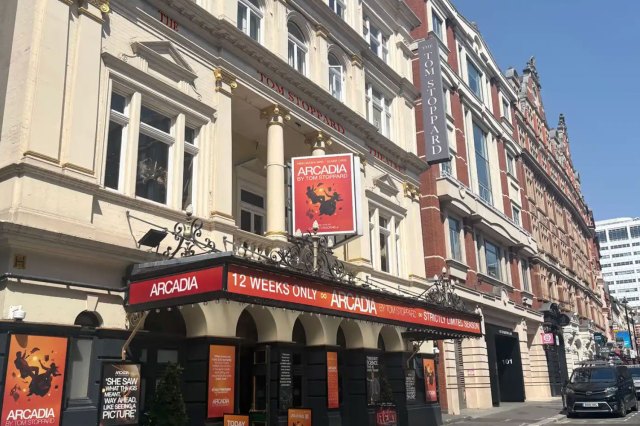

Latest Reviews
See all

Latest Videos

West End vs Broadway: Paranormal Activity – Ami Okumura Jones and Cher Álvarez on transatlantic terror
‘Tis the spooky season, after all…