
Could West End workers really go on strike?
Equity has warned of a “summer of turbulence” in a new press release
 |
London
|
|
London
|
27 April 2026
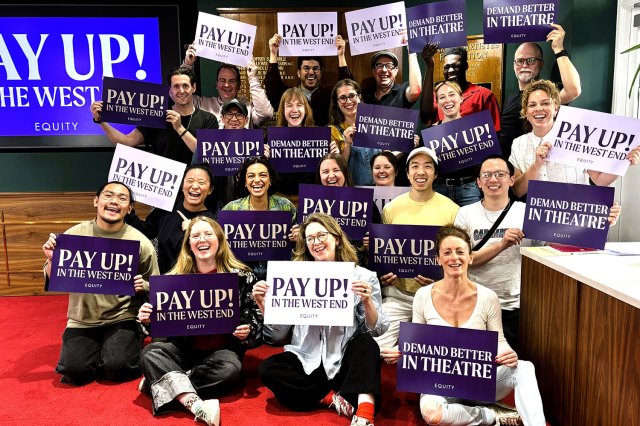
An email landing in news desk inboxes this afternoon from the performing arts and entertainment trade union Equity warned of a “summer of disruption” due to industrial action.
The reason? Minimum pay and terms settlement negotiations between Equity and the Society of London Theatre (SOLT) have hit a snag after “constructive” beginnings, with Equity saying that there were still question marks over “expectations on pay, holiday, rehearsal working time, injury, and stage management differentials.” They add that “SOLT have also declined to offer payments for newly defined roles, like fight and social media captains, or resolve issues around stage management covering other roles.”
As a result, Equity is conducting a historic ballot (the first since the 1980s) to ask relevant parts of its membership whether they were willing to “take strike action on Saturdays and implement an overtime ban” – in effect disrupting stage performances in the West End and beyond on the most lucrative day of the week.
Unions are, of course, incredibly important in an industry that relies heavily on freelance workers – giving individuals a chance to feel represented, delivering agency through solidarity rather than isolation and lack of ability to negotiate.
During a period of sky-high inflation, alongside a cost-of-living crisis, there are naturally important questions to ask about fair pay, career accessibility within the arts and sustainable hours. This is all the more important for those hailing from underrepresented backgrounds within the arts – we should be an industry full of those able to support themselves without needing third or fourth sources of income.
At the same time, producers are warning of an incredibly turbulent time, often swallowing increased costs around materials and, in the case of venues, energy prices. A recent SOLT report states that “36 per cent of theatres expect to run an operating deficit this year.”
SOLT, acknowledging the ballot, have told us in a statement that “discussions to date have been constructive, conducted in good faith, and have made meaningful progress in a number of areas.
“We remain committed to the jointly agreed process, and to continued productive discussions with Equity, with the aim of reaching a fair, sustainable minimum terms agreement as soon as possible.”
If Equity’s members vote that they’d be open to industrial action, could it come off? Last May, general secretary Paul Fleming described Equity as “industrial action ready” after his re-election campaign.
Strike actions on Saturdays and overtime bans wouldn’t amount to a total shutdown of the West End, so may be a less extreme form of industrial action.
But widespread strikes in the UK theatre world are rare – it’s been potentially over a century since something comparable happened on these shores. Over in New York it’s slightly different – there was a stagehand strike in 2007 that closed shows for 17 days.

Workers in other parts of the creative industries have utilised industrial action to encourage change – take, for example, the 2023 Writers Guild of America and SAG-AFTRA strikes.
Workers at the Tate galleries took seven days of strike action in 2025. More broadly, here has been (as many who had to cycle to work last week would tell you), a significant increase in industrial action since the pandemic than in the previous decades.
Of course – Equity’s press release and its indicative ballot could simply amount to sabre-rattling – any union negotiator will tell you that having bold headlines in industry-facing outlets can help raise the temperature as a means of shaking up negotiations.
A similar playbook was used during the 2023 negotiations (with that agreement expiring at the end of this month), where the potential for strike action was covered in national outlets like the BBC and The Standard. Comparable tactics have also been used on Broadway, and by Broadcasting, Entertainment, Communications and Theatre Union BECTU.
Whether or not 2026 will finally see anything happen in London remains to be seen. SOLT and Equity have always had a constructive relationship with each side driving a hard bargain – and we expect this to be a part of that process.




source on Google
Related Articles
See all


Latest Reviews
See all






Latest Videos
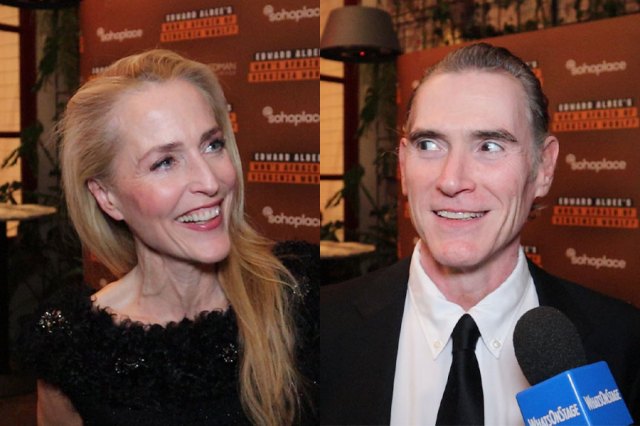
Gillian Anderson and Billy Crudup on staging a ‘boxing match’ in the round in Who’s Afraid of Virginia Woolf?
Marianne Elliott’s revival of the Edward Albee classic is running at London’s @sohoplace