
Would you rather be alone in the woods with a man or a bear? This new play explores the viral question
The new play has its Edinburgh Festival Fringe premiere
 |
Edinburgh
|
|
Edinburgh
|
23 July 2026
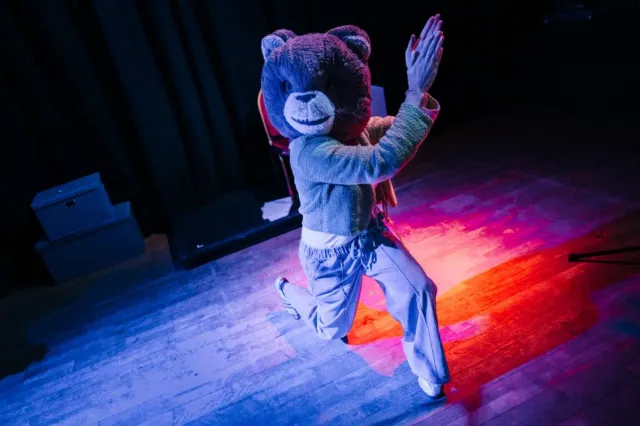
It is a question that, once asked, you can’t stop thinking about: Would you rather be alone in the woods with a man or a bear?
The thing is, the bear makes no secret of its intentions.
Co-created by Katie Hurley and Sarah Hehir in association with Croydonites Festival, the darkly comic Man or Bear follows a mother and teenage daughter who find refuge with a stranger. Examining three generations of women in the shadow of male violence, it is an unsettling reflection on modern-day misogyny. Hurly stars alongside Amaia Naima Aguinaga in the piece, which was developed closely through first-hand research and accounts, supported by charities including SafeLives.
We spoke to the writers ahead of their appearance at the Edinburgh Festival Fringe. Man or Bear plays from 6 to 30 August (not 17, 24), 13:45 at Summerhall (Red Lecture Theatre).
For those unfamiliar with the viral question, please can you provide some context?
The ‘Man or Bear’ debate originates from a TikTok video posted in April 2024. The question asked nine women: “Would you rather be stuck in a forest with a man or a bear?” Eight out of the nine women answered bear. The tone of the women’s response varied from light-hearted to deadly serious. Some gave reasons. Others didn’t. But it kickstarted a viral debate that was met with everything from cries of “Not All Men” to threats of rape and murder. The most positive response from men was a genuine desire to understand why women chose the bear, but mansplaining the danger of bears was more common in my experience, even among those who consider themselves feminists and allies.
What were your first thoughts when you heard it, and how have they developed while creating the show?
Across social media and in the workshops we did with women and girls, their justification for choosing “bear” exposed how society reacts to negative male behaviour and the impact this has on women. These included: if a bear attacked me, people would believe me; if a bear attacked me, nobody would ask me what I was wearing; if a bear attacked me, nobody would warn me that I might ruin his future if I reported it. None of these women needed a man to explain that a bear is a dangerous wild animal. They were asking society to wake up to the gaslighting and the victim blaming. And it’s not that women want to be left alone with a bear, it’s just that at least with a bear you know where you stand. There is no uniform for a dangerous man. It could be anyone. Take the Gisele Pelicot case for example, which was also playing out as we were in research and development All ages, races, religions, class, and occupations. It’s horrifying, and yet the stranger in a dark alley threat is still a powerful one peddled by the patriarchy.
First-hand experience was put into researching for the piece. What did that entail and what did you discover?
As an all-female team, we brought our personal experience into the research and development workshops. These were collaborative and designed to build trust while safely sharing stories in a creative way using movement, writing, improvisation and games. We took a similar approach in workshops with female-identifying participants in schools, colleges and community groups. One of my favourite activities was a version of Game of Life that we made specifically for this project. It usually ended with us laughing (despairing) at the absurdity of a society that claims to be committed to equality. We shared the most personal, infuriating and often disturbing experiences in an atmosphere of friendship and trust. Throughout the process, we invited our participants to “work in progress” sharings. At the post-show discussions, we were heartened to hear that our three female characters and their stories really resonated with the groups who had helped create them. We also learnt that younger women and girls were aware of red flags and knowledgeable about abuse while still vulnerable in a society that still turns a blind eye to toxic male behaviour – even (especially) in world leaders.
Entrusted with true accounts from women, what sort of responsibility do you feel?
We’ve been careful not to use any direct accounts from our participants. But we have tried to incorporate the patterns of behaviour they have experienced and the fear and hopelessness they’ve felt. Rather than asking for real accounts, our workshops started with exploring unhelpful female stereotypes and moved on to envision a utopian future for women. More often than not, once trust was built, the group were keen to talk about their own experiences. We always had a qualified psychotherapist in the room in case people needed support. We are keen to encourage our team, workshop participants and our audiences to become advocates: using whatever voice and platform they have to tackle the worrying rise in Violence Against Women and Girls. VAWG was declared a National Emergency by police chiefs in 2024.
Man or Bear follows three generations of women in the shadow of male violence. Can you tell me more about the characters?
Connie, Paige and Angel are fierce, funny and brilliant. Each character also takes on the role of the patriarchal archetype defined by their age and status in the play. Connie is Crone, Paige is Mother and Angel is Virgin. We meet Paige on the day she finally leaves a relationship with a man who has been stepdad to her teenage daughter for over a decade. Paige’s initial euphoria at escaping falters as she faces all the challenges that come with suddenly having to live as a survivor of abuse: low self-esteem, financial insecurity and fear all play into the precariousness of her new world. Angel is Paige’s 15-year-old daughter. She’s already got a lot on her plate when she is witness to something she can’t unsee. This secret becomes the catalyst through which Angel finds a voice and starts to speak out about things that those around her would prefer not to hear. Connie is Paige’s new landlady and neighbour. What starts as a functional relationship becomes a close friendship with both mother and daughter. There is something in the shared space and stories that gives Connie the confidence to shed some of the shackles she has come to accept and to spread her wings.
Who is involved with bringing the show to Fringe and how are you all feeling as you prepare?
We’re all feeling a mix of excitement and nerves as we prepare for Edinburgh, which I think is probably true for most companies heading to the Fringe. We really believe in this show – not only in the importance of its message but also as a piece of entertaining theatre. We cannot wait to finally share it with audiences. At the same time, we’re very aware of the challenges that come with bringing work to Edinburgh, particularly financially. As independent artists from working-class backgrounds, there’s always uncertainty around selling enough tickets and the affordability of the Fringe for audiences themselves, especially the cost of accommodation. We’re incredibly grateful to have received support from Arts Council England to research and develop and rehearse the show but Edinburgh is being funded through a combination of crowdfunding and projected box office income, which, as you can imagine, brings with it a level of pressure and risk.
While not all of the team will be in Edinburgh, we know they’ll be cheering us on from home. That’s part of the magic of the Fringe, anything can happen. It’s exciting, unpredictable and terrifying all at the same time.




source on Google
Guide

Latest Reviews
See all





Latest Videos
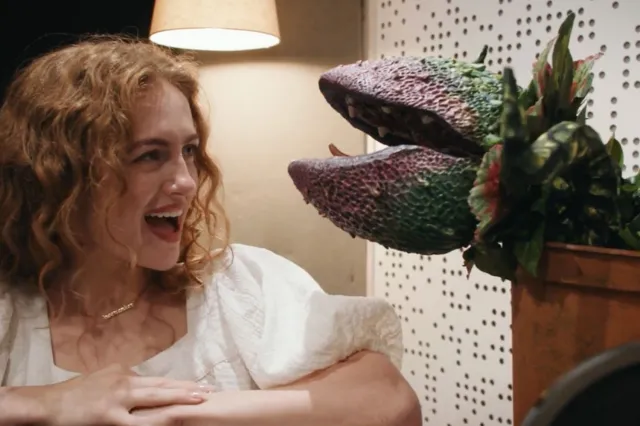
Watch Maisie Smith perform “Somewhere That’s Green” ahead of Little Shop of Horrors revival
The show opens in Manchester before moving to Liverpool