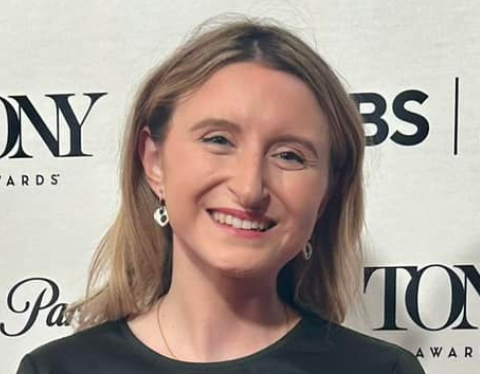
Playwright and performer Abigail Weinstock on autism, masking and misdiagnosis
She is bringing her semi-true story to Edinburgh Festival Fringe
 |
Edinburgh
|
|
Edinburgh
|
27 July 2026
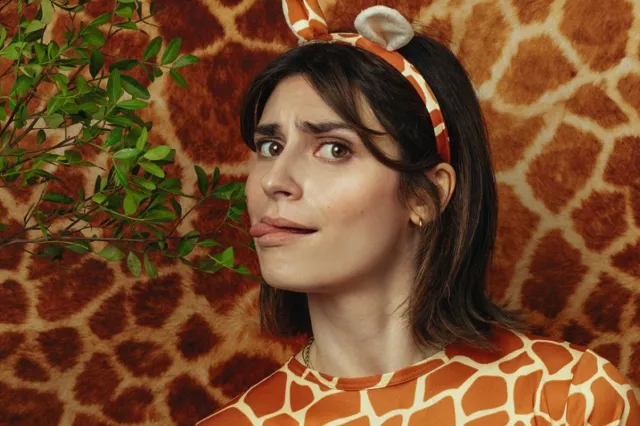
As a gay, Jewish, late-diagnosed autistic woman who also happens to be above average height, Abigail Weinstock’s autobiographical one-woman show is the consequence of spending 30 years believing that something was wrong with her.
Giraffe, a story about finding belonging by embracing difference, follows Eliana, who secretly suspects she is a sociopath, after being handed a restraining order for taking a vested interest in her new neighbour. Forced outside of her home, she moves in with a single mother and her mute young daughter, whilst attending a terrifying therapy group to satisfy the court’s demands.
The new comedy, directed by Emma Jude Harris, is arriving at the Edinburgh Festival Fringe this summer.
We sat down with Weinstock ahead of her arrival at the festival, playing at Pleasance Courtyard (Cellar) from Wednesday 5 to Monday 31 August (not 15, 25) at 13:45.
Giraffe is described as being semi-autobiographical – can you share some similarities and some differences between yourself and the character you have written and play, Eliana?
Absolutely. I would be delighted to clarify that I have zero history of stalking or restraining orders in my personal life, which is more than can be said for Eliana… In terms of similarities, I’d say Eliana is an extrapolation and exaggeration of my real-life circumstances, experiences, and (nightmarish) thought processes. In particular, we have both been shaped by our experience of being autistic and not receiving a diagnosis until far too late.
Can you talk us through what Eliana experiences over the 60-minute runtime?
At the start of the show, Eliana receives a temporary restraining order for stalking her neighbour. She has two weeks until a return hearing will determine whether the order should be made permanent, and so she goes on a journey to obtain the necessary evidence to get her off the hook. Along the way, she encounters – amongst many other thrilling plot elements – a drama-therapy group from hell, unexpected romance, and the formation of a life-changing bond with the mysteriously mute little girl she nannies for.
You’ve experienced feeling like you have to hide parts of your identity. Can you describe the impact that this has had on you personally and the art that you make?
Great question! I’d say “trying to hide” has been a huge part of my identity. My experience of undiagnosed autism in particular has been spending a lifetime trying to do whatever it takes to “blend in” with the crowd – at huge expense to my self-esteem and sense of identity. But hey, it also makes for great comedy, and comedy is at the core of most things I make. Much to the dismay of my writing agent, who really wants me to ‘just try something else.’
There is a pain gap between girls and boys, and girls, in particular, face misdiagnosis with autism, among other things. How does Giraffe speak to that?
Absolutely. Giraffe is primarily a show about the consequences of missed, late, or inaccurate diagnosis of neurodiversity in women. Hundreds of thousands of women and girls in the UK alone are believed to be living with undiagnosed autism, with a suicide rate nine times higher than the general population. Raising awareness about what autism in women can look like, and what can happen when it’s missed, is of vital importance to me.
Above all, the show is a comedy. Was this a conscious decision and how does it feel to perform it?
My background is in comedy, so I knew if I made a semi-autobiographical show, it would primarily be comedic. It has since been pointed out to me that the show is also quite sincere, which I am very slowly coming to accept… and maybe even embrace?! Given the message behind it, I reckon it’s important to get that balance right.
What makes Giraffe an ideal show to both take to and for audiences to see at the Fringe?
It’s a story I’ve been sitting with for a while and trying to create in a variety of different formats. Turns out, Giraffe, circa solo-show-at-the-Fringe, has been an excellent outlet for it and I’m really excited to finally be able to bring it to life. I’m biased, of course, but I think it’s ideal for audiences to see because it’s going to be the best show in the history of the Edinburgh Fringe. I’m joking, of course… I’m obviously convinced the whole thing is terrible. Hopefully by August I’ll be able to confidently assert that it’s funny, moving and with an important message at its core.
I hear that Giraffe is in development for a TV adaptation?
Giraffe began life as a TV pilot under option with an amazing and lovely production company. I’d love to make the screen version of it one day, so part of taking it to the Fringe is to hopefully demonstrate the show’s potential in that arena too.
Any final advice for those seeking self-acceptance?
Do the absolute opposite of everything I’ve ever done… Really, it’s a huge journey and I’m working on it every day – but trying to take out the self-blame and comparison to others is very helpful.




source on Google
Guide

Latest Reviews
See all



Latest Videos
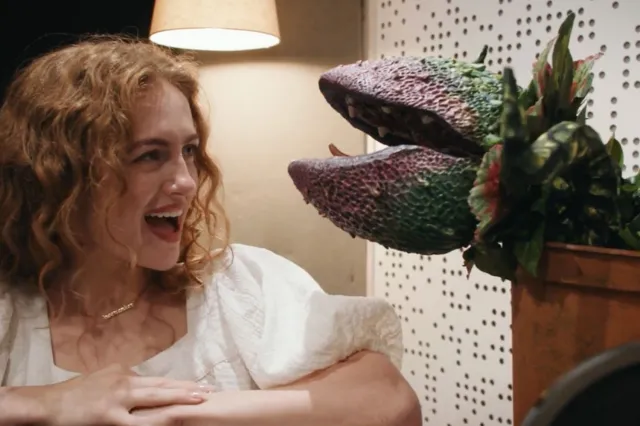
Watch Maisie Smith perform “Somewhere That’s Green” ahead of Little Shop of Horrors revival
The show opens in Manchester before moving to Liverpool