
Educating Rita at Curve – review
Cara Nolan’s revival of the Willy Russell classic runs until 17 October
 |
Leicester
|
|
Leicester
|
2 October 2026
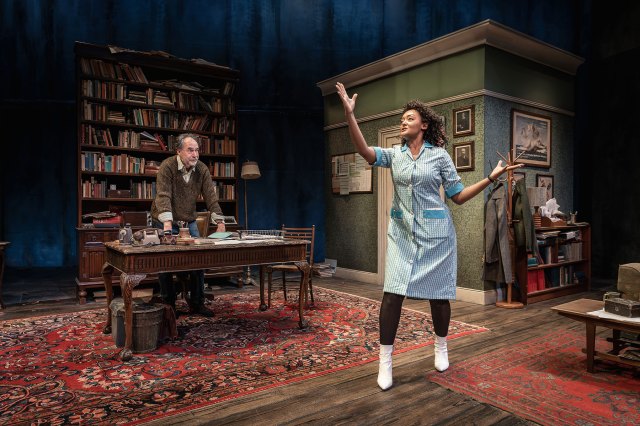
Willy Russell’s Educating Rita is a play about choice, change and class clashes. The story follows Rita, a vibrant 26-year-old working-class Liverpudlian hairdresser who enrols on an Open University course to take control of her life and shape her own future, and Frank, a jaded, disillusioned middle-aged professor trapped in a cycle of academic apathy and alcoholism.
As Rita embraces student life, their relationship becomes increasingly complicated, and her transformation has a profound effect on them both. Although Cara Nolan’s production at Curve depicts the mechanics of that journey, it fails to capture the emotional depth of the relationship that drives the play.
Alexandra Mardell as Rita and Dominic Mafham as Frank handle Russell’s substantial dialogue with confidence, but the delivery often proves problematic. In the first half, lines are rattled off at such speed that moments of humour lose their impact. Jokes arrive where expected rather than emerging naturally from circumstance. Too often, we are aware of watching a performance rather than becoming immersed in the lives unfolding on stage.
Mardell does not seem fully comfortable in Rita’s skin. With a limited range of facial and physical expression, it is difficult to register the subtle shifts in confidence and outlook that define the character’s development. As a result, Rita never quite feels fully realised. However, Mardell grows into the role more convincingly in the second half as Rita becomes increasingly assured in her new identity. Her evolving appearance effectively signals her growing embrace of university life and the opportunities it presents her.
Mafham’s Frank is equally underdeveloped. His alcoholism is established through dialogue and the occasional poured drink, but apart from one inebriated scene, there is little sense of a man steadily unravelling. He remains largely coherent and measured throughout.
Russell’s writing is so vivid that spoken recollections can feel as immediate and affecting as events taking place before our eyes. Here, however, some of the most poignant passages pass by too quickly to achieve their full impact. Rita’s accounts of her mother’s distress, her growing sense of being caught between two worlds, the overdose of a friend and the collapse of her marriage should carry considerable emotional weight. Instead, they are skimmed through, leaving little room for reflection.
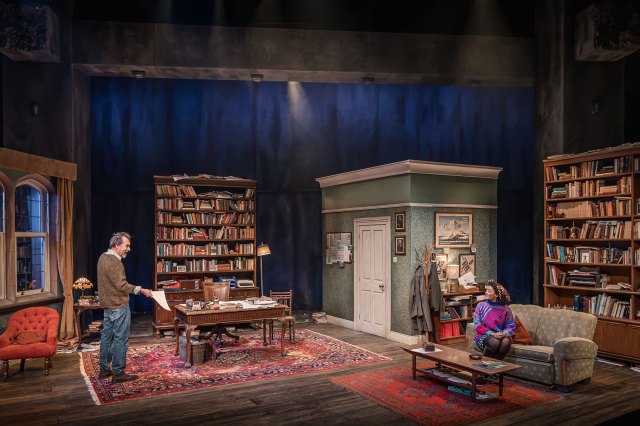
Michael Taylor’s design keeps us firmly within Frank’s academic office. Had the space adapted to reflect Frank’s journey, it would have acquired greater dramatic importance. Instead, the set remains largely unchanged throughout. Rita’s clothing and appearance effectively suggest the passing of time, but Frank undergoes little visible transformation.
Katy Morison’s lighting periodically dims at moments that appear intended to carry significance, although the precise purpose is not always clear. Jack Baxter’s jaunty scene-change music similarly feels at odds with the story. It remains largely consistent throughout, offering little sense that each encounter represents a distinct stage in the characters’ evolving lives.
The brilliance of Educating Rita lies in the precision of Russell’s dialogue and the shifting dynamics between its two central characters. This production has the words but rarely the emotional truth behind them. Most significantly, there is no convincing connection between Rita and Frank. Their relationship lacks the warmth and authenticity required to make their eventual drift from fascination to friction, and finally to a bittersweet parting, fully convincing. We never truly grasp what that transformation costs either character. As a result, the comedy and poignancy of Russell’s play never achieve the impact they promise.






source on Google
Featured In This Story
Related Articles
See all

Related City Guide

Latest Reviews
See all




Latest Videos

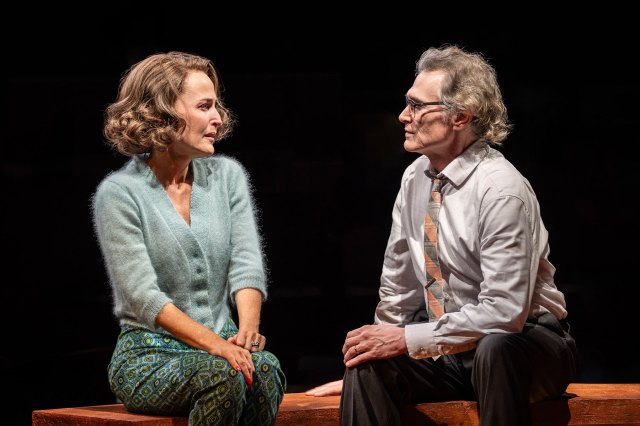
Gillian Anderson and Billy Crudup on staging a ‘boxing match’ in the round in Who’s Afraid of Virginia Woolf?
Marianne Elliott’s revival of the Edward Albee classic is running at London’s @sohoplace