
American Psycho review – the musical thriller returns to the Almeida
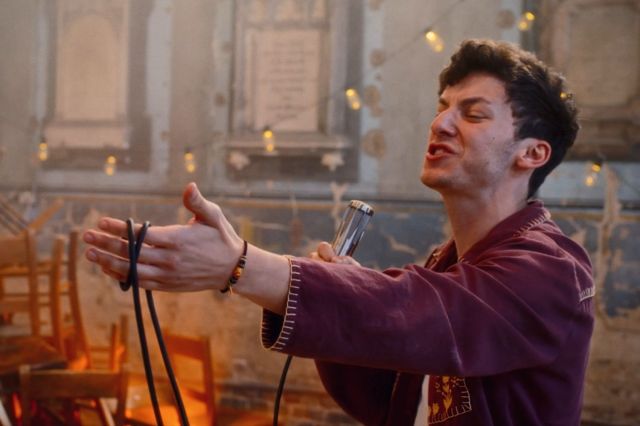
Arty Froushan stars as Patrick Bateman in Rupert Goold’s final production as artistic director of the venue
 |
London
|
|
London
|
1 February 2026

Those lucky enough to see the original 2013/14 run of American Psycho at the Almeida Theatre will tell you, this musical isn’t some shallow emulation of the Christian Bale-led, Huey Lewis-pumping 2000 film of the same name. It isn’t even a play-for-play remake of Bret Easton Ellis’ original 1991 novel. Instead, it has gained its own unique place amongst UK theatre fans, even an ill-received Broadway spell failed to impede its largely cult status as many pined for its return to our shores.
And return it now has: Rupert Goold’s last directorial offering before he leaves the venue he has run with eye-watering success. It feels apt to end with the very show he started with, macabre cautionary tale bookends that speak directly to the present moment.
That story, for any who don’t know, is of a disillusioned banker, Patrick Bateman, filling the emotional void in his life with consumerist jargon, macho-posturing and, eventually, a homicidal rampage through New York.
The world has changed a lot since 2013 – occasionally making this rejigged, rewritten Psycho feel oddly nostalgic and other times eerily prescient. It packs in all manner of themes – the moral and emotional failings of the mega-rich, the ever-present, often invisible dangers of toxic masculinity and the ways in which materialism smothers anything that feels genuine or novel.
The meteoric rise of shows like Succession and Industry have now made attempts to skewer those mega-rich cliques feel like well-trodden terrain – so much so that many of the satirical elements of the near-three-hour show (numbers like the brand name-check “You Are What You Wear”, the materialistic fetishisms of business cards or the faux luxury of an unexpected Hamptons vacation in “At The End Of An Island”), don’t feel as groundbreaking as they would have done.
It received a glowing review from WhatsOnStage, being described as “a bloody good time.”
The toxic masculinity discourse, however, is much more ripe for exploration. Bateman is the quintessential incel – bubbling with violent thoughts and erupting with casual and vicious misogyny. Book-writer Roberto Aguirre-Sacasa clearly recognises this opportunity to go one step further than he would have done in 2013 in this new re-staging: adding an appearance by a future President, back then riding high thanks to the success of The Art of the Deal, and name-checking an island-owning child-trafficker.
A musical still needs good tunes to work, and Duncan Sheik’s offerings are, for the most part, bang on the money: synth-laden earworms peppered with re-arranged covers of ’80s’ classics, the music acts like an intoxicating insight into the fractured prism of Bateman’s mind. There’s even a wonderful scene taking jabs at audiences who flocked to see Les Mis on Broadway when it first opened.
New beats have been added for anyone revisiting the show, while the mocking “Oh Sri Lanka” is turned into a send-up of late-20th century gentrification.
Goold directs with a typically kinetic style on Es Devlin’s magnificent catwalk-style stage, a major departure from the original end-on configuration seen just over 12 years ago. It works brilliantly for the dance-heavy moments, allowing choreographer Lynne Page to put the fun in funereal as Bateman moves from one morbid encounter to the next.
A further box of tricks here comes in the form of Jon Clark’s tremendous lighting design, often garishly overwrought, like a nightmarish ’80s music video. It walks cheek-by-jowl with Finn Ross’ video design, utilising Devlin’s stage like some mighty digital canvas to play out an ensanguined Jackson Pollock painting.
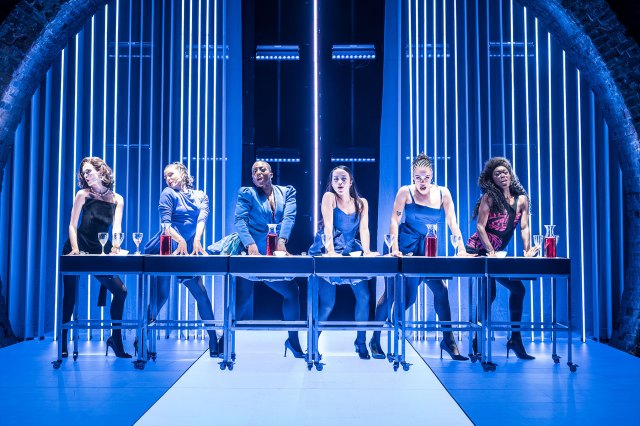
Casting direction, in itself a creative art, isn’t given enough space in the majority of reviews, so it’s worth alighting on here: Natalie Gallacher has plundered the MT world for a top-tier ensemble, boasting regulars like Oli Higginson as the macho co-worker Tim Price or Daniel Bravo as the alpha Paul Owen. Emily Barber, seen in the musical comedy Operation Mincemeat, delivers some tremendous gags as Bateman’s blinkered and long-suffering girlfriend Evelyn, while Tanisha Spring oozes charisma as her good friend (and Patrick’s side-fling) Courtney.
In general, Aguirre-Sacasa has ensured that the women in Bateman’s life are given ample chance to provide extra dimensions to this flawed figure – particularly Anastasia Martin as work assistant and naif Jean, suggesting that, perhaps, there was always another direction for Bateman’s life to go.
I’ve left the man at the heart of the action (and rarely leaving the stage) to the end: Arty Froushan as that now iconic, translucent rain mac-wearing cultural figure. Satisfyingly, Froushan’s tenor Bateman is worlds away from Bale’s interpretation in the film – it’s also a slightly different spin to the baritone drawl that Matt Smith brought to the part when it first ran at the Almeida.
Turning a winning smile into a sneer, you get the sense of a man deluded into believing he’s an alpha when really he’s just a bit of a dud – losing out on big accounts at work, unable to secure reservations at the Dorsia, hanging his Onica painting upside down or making wildly naff takes about popular culture. Froushan takes all of this and yet somehow melds it with an underlying charisma – the man who thinks he’s cool while walking down the street listening to Huey Lewis.
He sings and dances well – commanding dance-heavy ensemble numbers like the macabre “Killing Spree”, and allows the nihilistic numbness of Bateman’s existence to never feel one-note or repetitive.
It’s not a perfect show, and its true impact is perhaps left that bit too late in the final scenes. That said, it’s still a hypnotic, bloody good time – one that perhaps says more about the macabre dimensions of modern masculinity than anything else on a UK stage right now.






source on Google
Related Articles
See all
Latest Reviews
See all


Latest Videos
New musical Nero releases first listen with Andrew Barth Feldman
It is from the writers of Spring Awakening