
Vincent in Brixton at the Orange Tree Theatre – review
The play’s first major revival, directed by Georgia Green, runs until 18 April
 |
Richmond
|
|
Richmond
|
23 March 2026
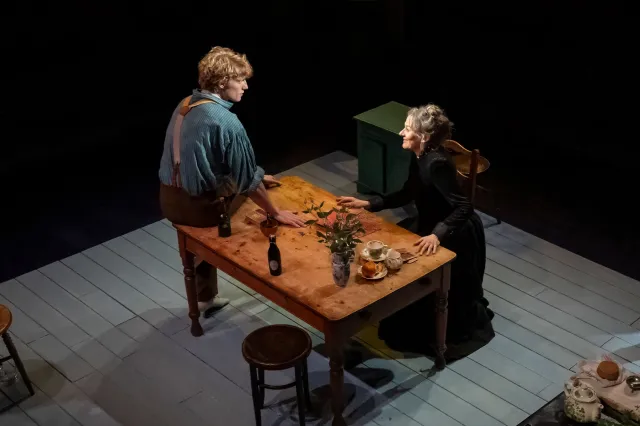
“I just wanted to be the cause of something remarkable,” says the lonely widow Ursula at the poignant close of Nicholas Wright’s play, Vincent in Brixton, gazing longingly at the young man who has so disappointed her.
He is Vincent van Gogh, aged 20, as unformed and unsteady as a colt, searching for both a meaning to life and his own vocation. We know where he will end up, as he sits calmly drawing a pair of boots placed on a table in a dying light – and it’s our foreknowledge that makes this sensitive play so engrossing.
It quietly and convincingly imagines van Gogh’s life in England, when he is working for a commercial art gallery, shaking off the influence of his pastor father, and looking at art without being absolutely convinced he can produce it. He ends up boarding in Brixton, in a household his landlady Ursula describes as “progressive.” The house is shared with her daughter and another boarder and aspiring artist Sam, a foundling who is also making his way in the world.
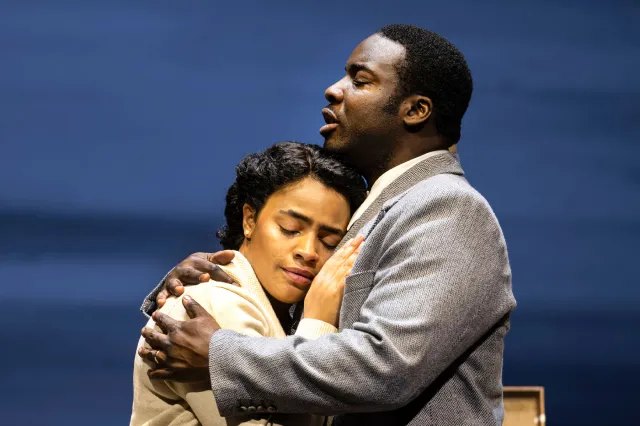
In Georgia Green’s beautifully controlled and observed production, Jeroen Frank Kales, making an astonishingly good stage debut, bursts into this household like a wild force, his tactless naivety gradually laying bare the secrets that it holds. As his affections shift from Ayesha Ostler’s pretty daughter Eugenie to Niamh Cusack’s melancholy mother Ursula, he triggers raw feelings that have been long suppressed.
With the smallest of calibrated gestures and expressions, Cusack charts Ursula’s unfreezing, her wariness at Vincent’s mood swings and the changes in his uncomfortable odyssey, her realisation that something special lies inside him. She is entirely heartbreaking in the most understated way.
Yet the dramatic thrust of the play, as it unfolds on Charlotte Henery’s realistic set, with a warm stove and the smell of Sunday lunch cooking, does not only lie in their story. Wright is interested in what forms van Gogh’s character, what turns this ungainly young man who plants sweet peas in the garden into the genius who painted Sunflowers.
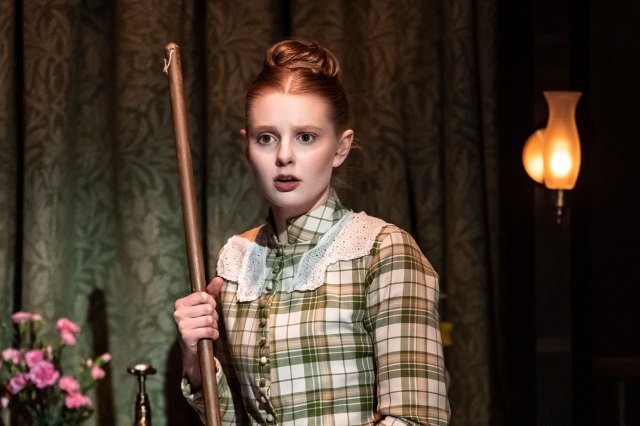
It examines the difficulty of his background – the arrival of his concerned and interfering sister Anna (a gloriously officious cameo from Amber van der Brugge, in another wonderful stage debut) precipitates a crisis – and suggests how both his talent and his torment might spring from the same source. When he shows Ursula a sketch of a landscape, she recognises its skill but suggests that the “anger and confusion” he felt when he was painting it was the most important thing. “And you left that out.”
Our hindsight fills in the dots, shooting forward to what van Gogh will become, which Wright leaves subtly understated. The performances do the rest: Kales is sensationally raw and affecting as Vincent, buffeted from dream to dream by his own shifting feelings; Cusack suggests that Ursula’s unnatural unhappiness is part of what draws them to one another. Their exceptionalism makes them misfits.
The central couple are strongly supported not only by van der Brugge, but also by Rawaed Asde as Sam, a man willing to accept his lot in life, and Ostler as the gentle daughter, who helps to bring a shadowy story to clear life.






Related Articles
See all
Latest Reviews
See all




Latest Videos

Miss Saigon releases new trailer as West End run goes on sale
The heat is on… with a West End run next year!