
 |
Nationwide
|
|
Nationwide
|
7 July 2026
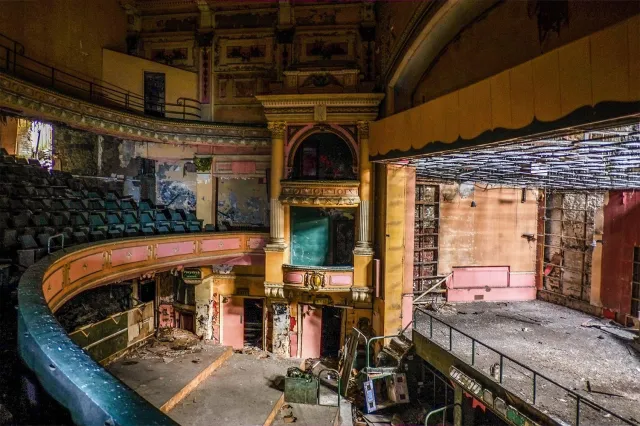
Theatres Trust has announced the 2026 edition of its Theatres at Risk register, marking the campaign’s 20th year with both encouraging success stories and renewed concern over the future of UK theatre buildings.
Published during the charity’s 50th anniversary year, this year’s register includes 39 theatres considered at risk of closure, redevelopment or severe decay. The annual list highlights venues that could be revived with the right investment, expertise and community support.
Two theatres have been removed from the register following significant progress towards reopening. Sheffield’s Abbeydale Picture House has reopened its basement as a lounge and bar, with plans to restore the remainder of the building as a live entertainment venue hosting music, comedy and other events. Meanwhile, Edinburgh’s Leith Theatre has secured major funding for its restoration, appointed a design team and continues to move towards a full reopening.
However, two theatres have also been added to this year’s register. Preston Guild Hall joins after remaining closed since 2019 because of legal disputes and, more recently, the discovery of reinforced autoclaved aerated concrete (RAAC) in parts of the building. Barrow-in-Furness’s Forum has also been added following its closure due to asbestos, with demolition proposals currently under consideration. Both council-owned venues were built during the 1970s.
Joshua McTaggart, CEO of Theatres Trust, said: “We are delighted to say that Abbeydale Picture House and Leith Theatre are no longer considered at risk. Their inclusion on the Theatres at Risk register achieved its purpose, raising awareness to build local support and help unlock funding for these special theatres.
“Removing them from the register is not the end of the journey and there is still work to be done to ensure their long-term resilience. Theatres Trust will be there to support both organisations with the operational challenges they may face as they move towards fully reopening.”
He continued: “While it is fantastic to celebrate these successes in our 50th anniversary year, we must temper that with the reality that we are also adding two more theatres to the register. That means two more communities losing access to the joy and opportunities that theatre brings.
“Sadly, these buildings are just the tip of the iceberg, and we are beginning to identify a potential trend for theatres built in the 1970s now facing a higher likelihood of challenges that could lead to long-term or even permanent closure. Without sustained long-term support for theatres at the local, regional, and national level, we could see many more theatres from the 70s added to our Theatres at Risk register.”
First launched in 2006, the Theatres at Risk register identifies theatres facing significant threats while helping to build support for their preservation.
Over the past two decades, more than 80 theatres have either been restored and reopened or replaced with new venues, with successes including Bradford Live, Stockton Globe, Walthamstow Granada and Wilton’s Music Hall.
The list in full:
Amulet Theatre, Shepton Mallet
Borough Hall, Greenwich
Brighton Hippodrome
Brunton Theatre
Burnley Empire
Clair Hall, Haywards Heath
Co-op Hall, Ramsbottom
Conwy Civic Hall (Cube)
Derby Hippodrome
Doncaster Grand
Epstein Theatre
The Forum, Barrow-in-Furness – New addition
Garrick Theatre, Southport
Garston Empire
Harlequin Theatre
Hulme Hippodrome
Imperial Theatre, Walsall
Intimate Theatre
Joe Longthorne Pavilion, Blackpool
King’s Theatre Dundee
Mechanics Institute, Swindon
Motherwell Concert Hall and Theatre
Netherton Arts Centre
Oswaldtwistle Civic Arts Centre and Theatre
Plymouth Palace
Preston Guild Hall – New addition
Prince of Wales, Cannock Chase
Regent Theatre, Great Yarmouth
Roundhouse Theatre, Dover
Spilsby Sessions House
Streatham Hill Theatre
Tameside Theatre, Ashton-under-Lyne
Thameside Theatre, Grays
Theatr Ardudwy, Harlech
Theatre Royal Margate
Theatre Royal, Manchester
Tottenham Palace Theatre
Victoria Theatre, Salford
Winter Gardens Morecambe




source on Google
Related Articles
See all

Latest Reviews
See all



Latest Videos
Gaten Matarazzo and the cast of Rent on living “La Vie Bohème” in the musical’s 30th anniversary year
Luke Sheppard’s West End revival is now officially open at the Tom Stoppard Theatre!