
The Market Deeping Model Railway Club at Nottingham Playhouse – review
William Ivory’s world premiere play, directed by Adam Penford, runs until 25 July
 |
Nottingham
|
|
Nottingham
|
13 July 2026
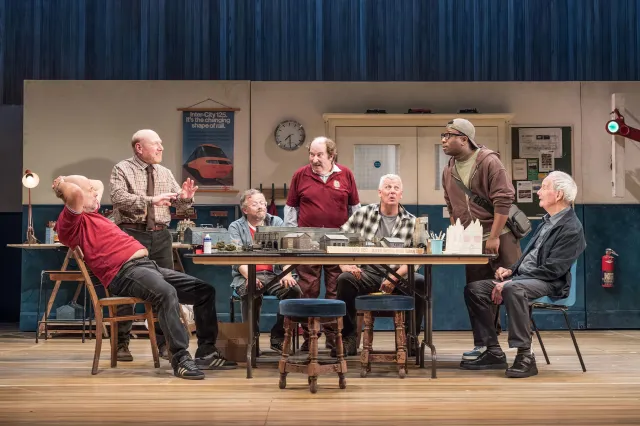
What drives adults to pour thousands of hours into tiny, meticulously crafted trains? It is a passion frequently misunderstood. William Ivory’s new play, receiving its world premiere at Nottingham Playhouse, gently derails that assumption to find something deeply human. Inspired by the real-life Market Deeping Model Railway Club, the play is less about trains than the people who build their lives around them, and what happens when those lives begin to come apart.
Having spent years crafting their prized layout, the characters must confront competition, conflict, and profound change. The result is a thoughtful exploration of community, revealing the emotional stakes tied up in our creations and the relationships formed around them.
Adam Penford directs with clear affection for the material, and the cast responds with performances that are, without exception, excellent. Adrian Scarborough anchors the production as Graham, the club chairman struggling to hold everyone together while his own marriage quietly unravels. He moves effortlessly between comic bluster and genuine tenderness, never allowing one to undermine the other.
Lucy Briers, as his wife Linda, brings a restless, adventure-hungry energy, which makes her frustration with Graham entirely understandable rather than nagging. James Bradshaw is naturalistic and easy to like as Neil, while Matt Bardock gives Chris a scruffy fierceness. Paul Bradley makes Jerry endearing in his vulnerability, and Geoffrey Beevers is a joy to watch as George, combining fragility with grit. Babatunde Aléshé brings warmth and humour to Jordan, whilst Deka Walmsley imbues Ken with a melancholic pathos that proves unexpectedly moving.

The play’s weakness lies in its uneven treatment of the characters. Graham, Linda, and Ken are written with genuine interiority; their histories and motivations feel fully realised. Neil and Chris, by contrast, are pitted against each other as competing ideologies rather than fully rounded people. Their clashes often serve the script’s agenda, reducing political disagreement to a series of familiar stereotypes. Jordan functions as both a symbol of diversity and modernity and a useful source of comedy, but never quite develops beyond those roles.
The dialogue becomes overextended in moments, which would carry greater impact through simplicity, and the pacing suffers as a result. Scene changes involving squads of stagehands, alongside intermittent musical interludes, repeatedly interrupt the momentum just as it begins to build. Consequently, the production sometimes lurches rather than flows.
Despite these shortcomings, the play is genuinely funny, through both physical and verbal comedy. There is considerable pleasure in watching this ensemble bounce off one another. Soutra Gilmour’s set is clever and delightfully nostalgic, using a signal-box light to mark when the club is in session, alongside train projections that root the production firmly in its subject without ever feeling gimmicky. Howard Hudson’s lighting and Alexandra Faye Braithwaite’s sound design and composition enhance and amplify every scene.
What Ivory has written, even with its rough edges, is a heartfelt celebration of the community spirit that is found and nurtured through shared hobbies. It presents clubs as places where people discover companionship, purpose and belonging through pursuits as seemingly unglamorous as model trains. The Market Deeping Model Railway Club shows that the real journey is not about the trains, but the people who keep them moving.






source on Google
Related Articles
See all


Latest Reviews
See all




Latest Videos

New musical Nero releases first listen with Andrew Barth Feldman
It is from the writers of Spring Awakening