
Love’s Labour’s Lost and Much Ado About Nothing at Braboeuf Manor – review
The Guildford Shakespeare Company and Orange Tree Theatre co-production double bill is being staged in Guildford and Richmond
 |
Guildford | Richmond
|
|
Guildford | Richmond
|
13 July 2026
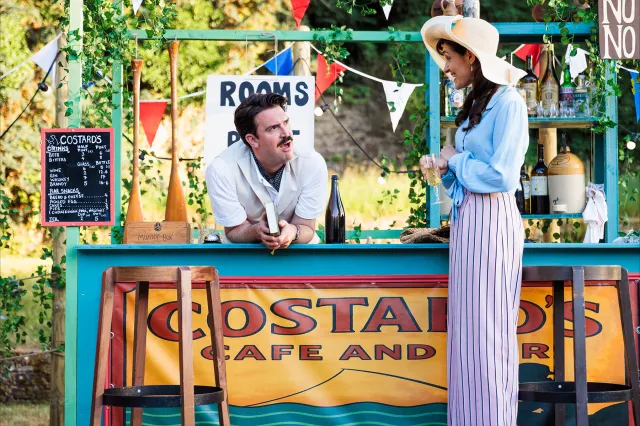
There is something quietly magical about watching Shakespeare outdoors as the light begins to soften. At the quaint Braeboeuf Manor in Guildford, the house and gardens do not simply provide a backdrop for Guildford Shakespeare Company’s Love’s Labour’s Lost and Much Ado About Nothing; they become another member of the company. The rustle of trees, birds overhead and golden evening sun make it feel as though these plays have wandered home.
Ingeniously woven into a single story, director Tom Littler’s double bill finds Love’s Labour’s Lost set in the shadow of the Second World War, before flowing into Much Ado About Nothing in 1945, as peace returns. It is an ambitious undertaking that mostly pays off, with the emotional baton passed smoothly between the two plays and enough wit to keep the audience smiling throughout. The comic beats land with impressive consistency, never feeling overworked, and the audience seems permanently caught between laughter and anticipation.
James Sheldon is the undeniable standout, bringing effortless charisma and razor-sharp comedic timing to every scene he inhabits. His performance has the kind of confidence that makes Shakespeare feel conversational rather than intimidating, finding every joke without ever appearing to chase one.
The production values deserve equal praise. Neil Irish’s costumes are immaculate, evoking the period beautifully, while the speed and precision of the cast’s costume changes are remarkable, particularly given that this was performed on one of the hottest days of the year. If anyone broke character while sprinting backstage in that heat, they certainly never let the audience see it.
Matt Eaton’s sound design is equally exceptional. At one point, the roar of fighter planes is so immersive that several audience members visibly glance skywards, convinced they are passing directly overhead. Later, the gentle peal of wedding bells drifts across the gardens so naturally that it becomes difficult to tell whether they are part of the score (Matthew Floyd Jones) or coming from somewhere beyond the estate. It is that rare kind of sound design that quietly blurs the line between performance and place.
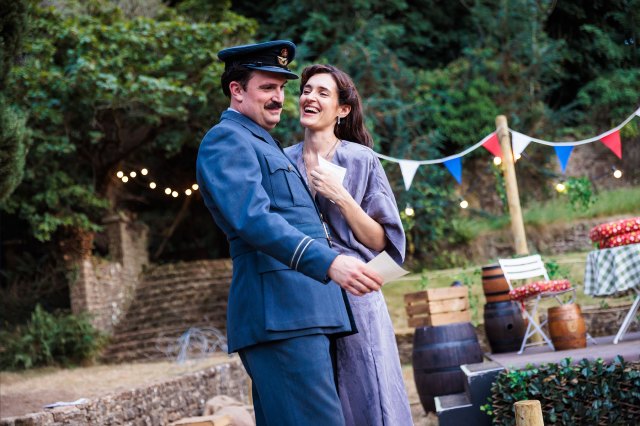
The only reservation lies with Much Ado About Nothing’s 1945 setting. On paper, placing the play immediately after the war is inspired, yet beyond the costumes, there is surprisingly little engagement with what that historical moment might mean. The returning soldiers, the relief, the lingering trauma and shifting social dynamics all offer rich dramatic possibilities, but the production rarely leans into them. Remove the uniforms and it could, at times, have been set in almost any decade.
Even so, this is a charming, intelligent evening of theatre that proves Shakespeare does not always need reinvention. Sometimes all it needs is the right garden, the right company and the confidence to let the words bloom.






source on Google
Related Articles
See all

Latest Reviews
See all

Latest Videos
New musical Nero releases first listen with Andrew Barth Feldman
It is from the writers of Spring Awakening