
RSC’s Twelfth Night at the Barbican – review
The festive period gets a gloomy makeover for this RSC show’s London run
 |
London
|
|
London
|
17 December 2025
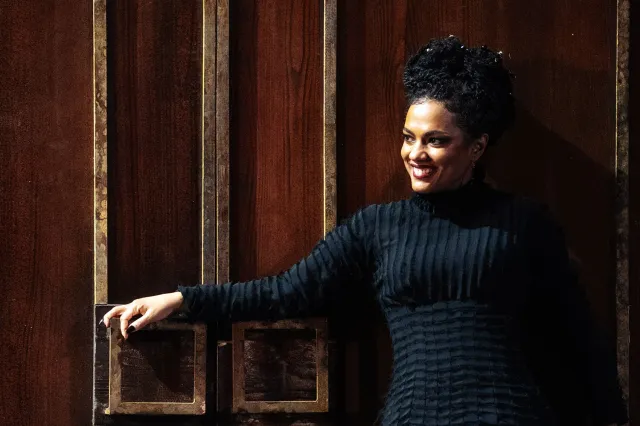
Prasanna Puwanarajah, best known as an actor, picked up a UK Theatre Award for his directorial debut when he brought his take on Shakespeare’s comedy to the RSC last Christmas. With the show now hopping 103 miles south (a quick breeze down the M40), it’s not hard to see why it was such a success – Puwanarajah’s sublime control of tone gives the classic Yuletide caper a fresh bout of novelty, and he is unafraid to ask difficult questions about these well-trodden tales and lines, emerging with an array of impressive answers.
Rather than using grief as a cursory starting point for proceedings, Puwanarajah leans heavily into themes of melancholy and loss throughout the first act of this near-three-hour staging. Aided no end by new compositions courtesy of rising star musician Matt Maltese, his Illyria is one swaddled in dark cloth, unable to be roused from its perpetual wake. Two figures arrive to help it emerge from slumbers and put the fun into funereal: Gwyneth Keyworth’s steely Viola, determined to find sanctuary after the ill-fated shipwreck that had apparently cost her twin brother his life, and the much more mysterious and anarchic Feste, an Emcee-esque Michael Grady-Hall.
Nothing here is done by the book. Comedy sequences, like the famous letter scene in which pompous courtier Malvolio is duped into believing he is the object of desire of his sorrowful mistress the countess Olivia, are unceremoniously hurried through, while Puwanarajah spends a fair few moments exploring why the anarchic drunkard Toby Belch’s (Joblin Sibtain) alcoholism may be a reflection of something much darker.
It’s a production that impresses more than it entertains. You admire the work Puwanarajah puts into supplying genuine pathos (including one of the most emotionally charged sibling reunions I’ve seen in a Twelfth Night), while longing for a few more gags along the way. Shakespeare is the master of structuring comedic scenes like some big comedy trifle (the chaos that follows Olivia’s impromptu wedding scene is arguably never bettered), and when Puwanarajah lets it off its leash, the humorous relief truly soars, giving the morose the necessary light. This is often aided by some off-the-cuff additions to the text, peppered throughout the more raucous sections.

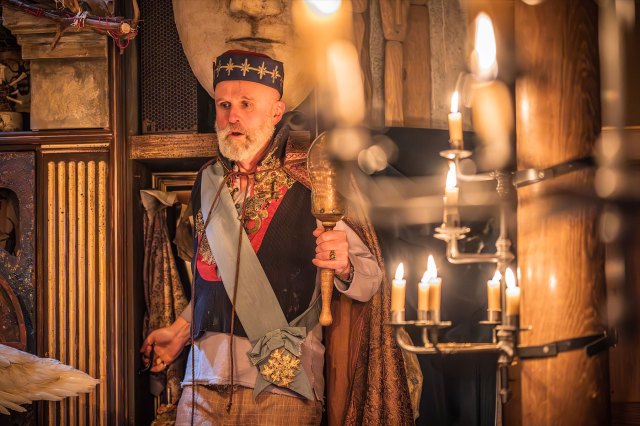
There are some cracking performances along the way. A Cockney-accented Samuel West channels the best of a well-to-do Gary Oldman as the pugnacious Malvolio (with a mightily impressive arrival during the yellow stockings scene), while a marvellous Freema Agyeman hits all the comedy beats as Olivia once the show’s proceedings brighten in act two. There’s also a juicy and enigmatic suggestion that Viola’s time posing as male courtier Cesario may have been more liberating than is often assumed. The electrifying Daniel Monks is also unafraid to present Orsino with an entitled air of pomp – especially when assuming the freshly revealed Viola will simply resort to being his mistress. If music be the food of love, then “Manchild” by Sabrina Carpenter would probably be this Orsino’s anthem.
Designer James Cotterrill cites artist Edward Gorey as his direct source of inspiration, with monochromatic and bare costumes and characters suited and booted as they flit between shadows. The main centrepiece is a lavish (and fully functional) organ, simultaneously supplying wistful and whimsy accompaniment to various scenes. Yet without the inclusive embrace of a thrust stage, the production feels occasionally distanced and muted: evasive, witty and wry, without ever truly surrendering to its audience.






Featured In This Story

Related Articles
See all
Latest Reviews
See all




Latest Videos
Once on This Island West End concert – watch performances in rehearsals
Check out the cast in action ahead of Sunday’s big night